At the table · 5 min
A place for everyone
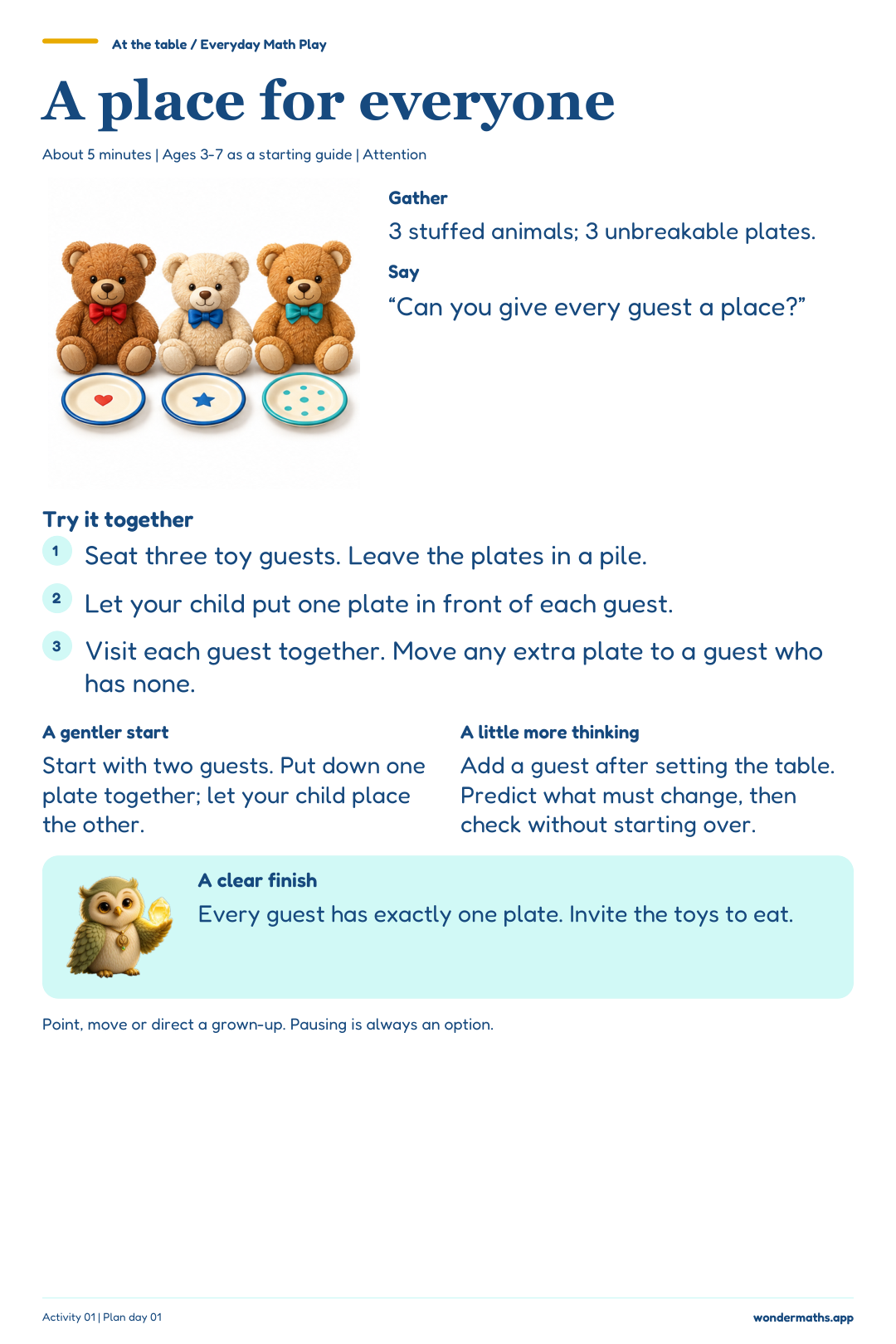
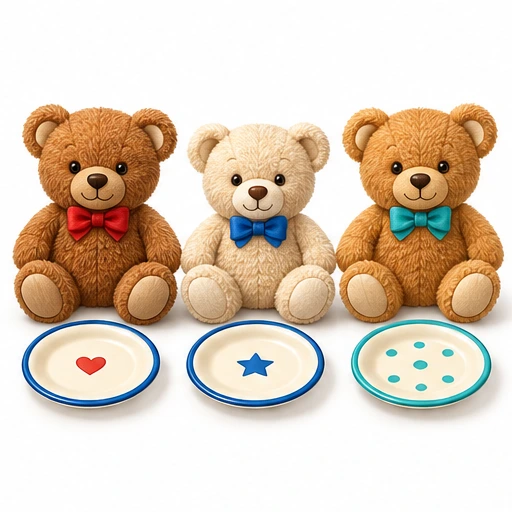
3 stuffed animals; 3 unbreakable plates.
Plan day 1 · Attention
For parents / Everyday Math Play
One small invitation, familiar things, and a finish your child can see. Thirty ways to explore together, wherever the day takes you.
Show me today's play ↓Browse all 30 activitiesYour day, your pace
At the table · About 5 minutes
3 stuffed animals; 3 unbreakable plates.
Let's play →Start anywhere. Repeat, swap or pause. There is nothing to catch up on.
Your plan choice stays on this device. No account needed.
Read Gather, offer the invitation and let your child act. Start with the three main steps. Choose a gentler start or an extra challenge to fit this moment.
Wait before offering a hint. Give one clue, then leave room. Your child can point, move objects or direct a grown-up. A pause is always an option.
Age labels are starting guides, not tests. Stay nearby and choose materials suited to your child. Specific notes appear beside water, scissors and movement activities.
Save the one-page parent guide ↓Six everyday settings
30 activities
At the table · 5 min
3 stuffed animals; 3 unbreakable plates.
Plan day 1 · Attention
At the table · 5 min
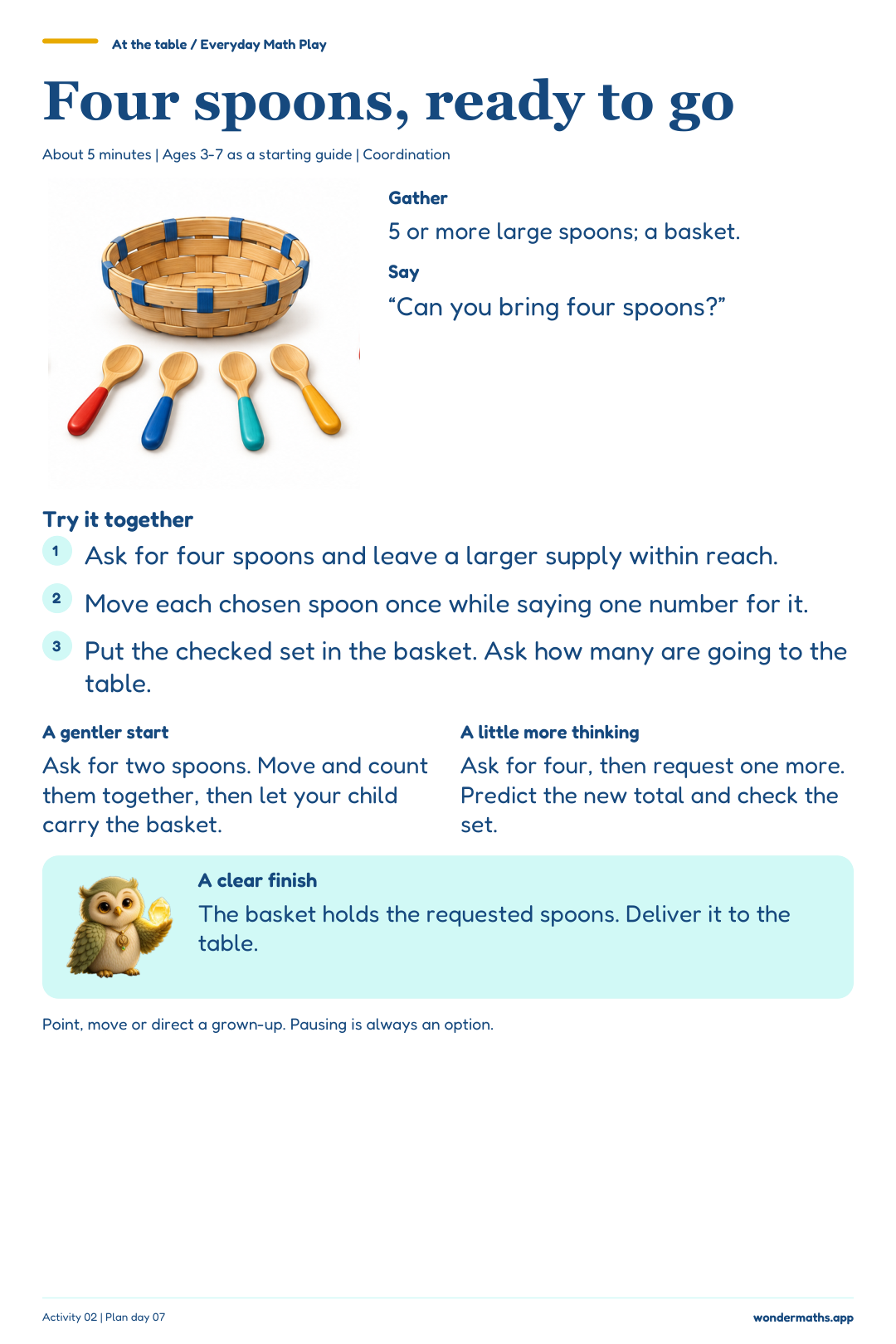
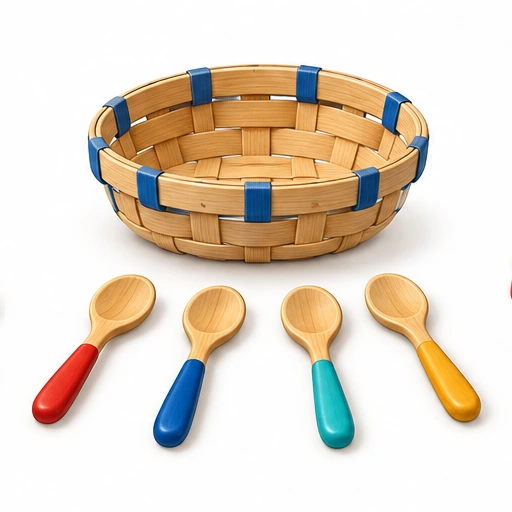
5 or more large spoons; a basket.
Plan day 7 · Coordination
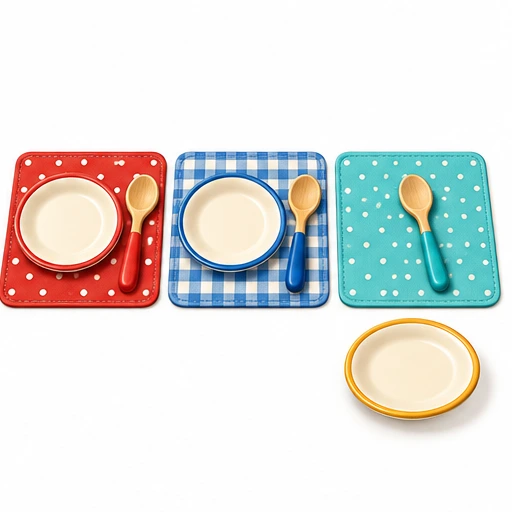
At the table · 5 min
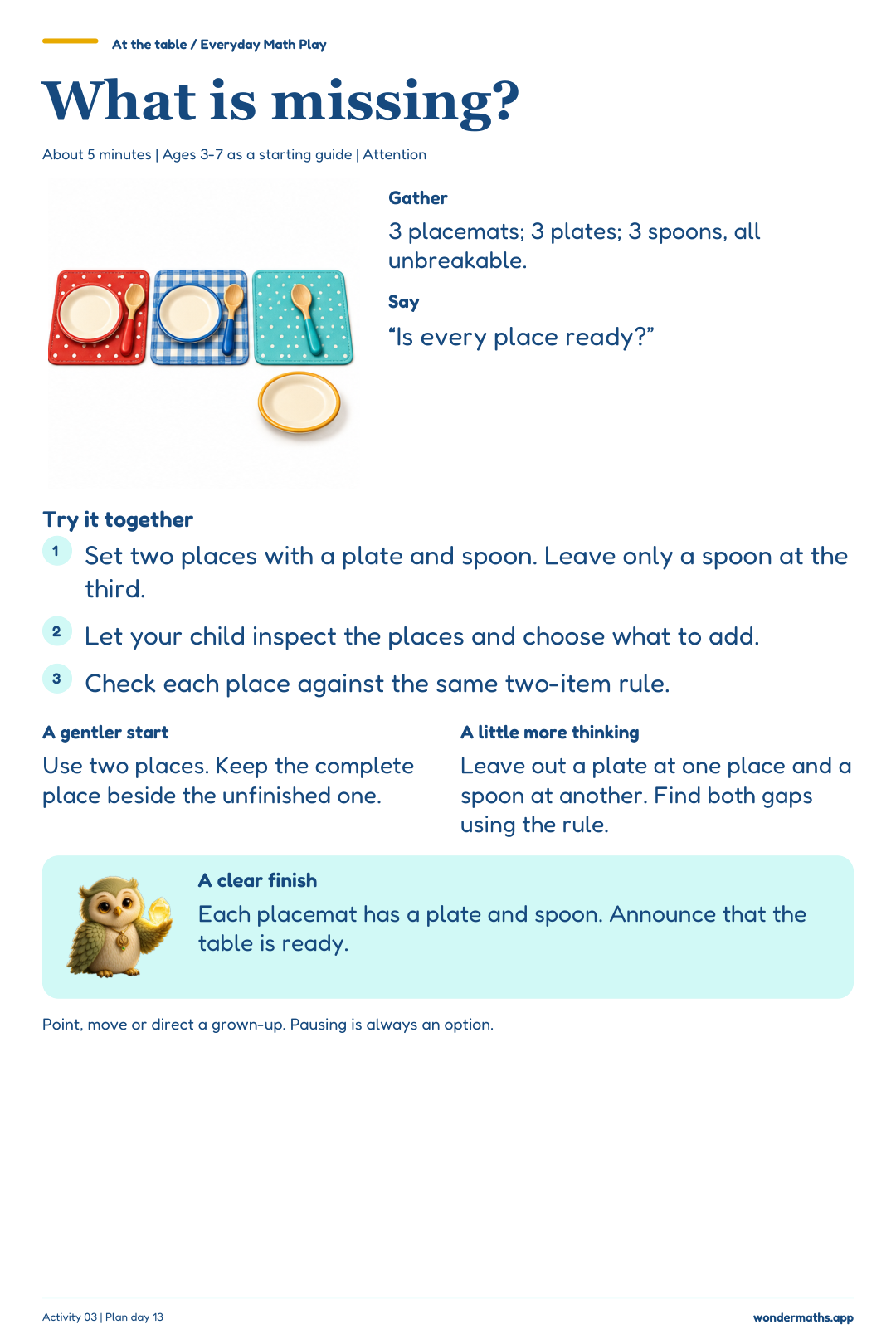
3 placemats; 3 plates; 3 spoons, all unbreakable.
Plan day 13 · Attention
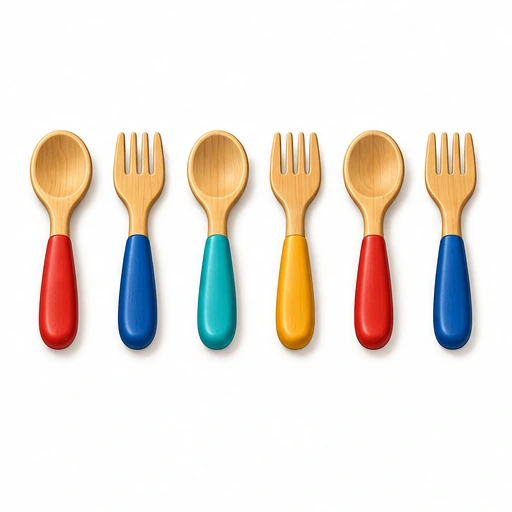
At the table · 5 min
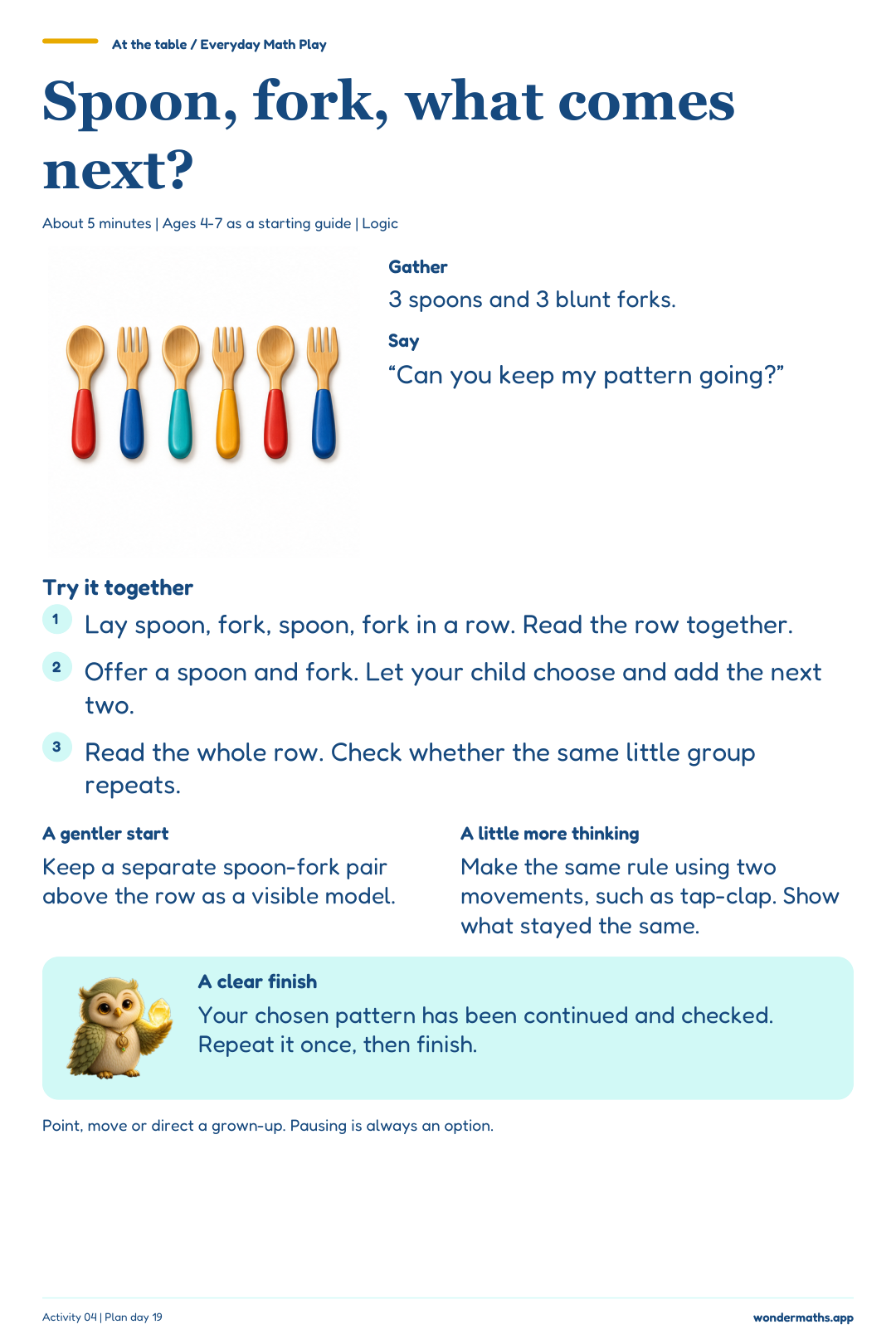
3 spoons and 3 blunt forks.
Plan day 19 · Logic
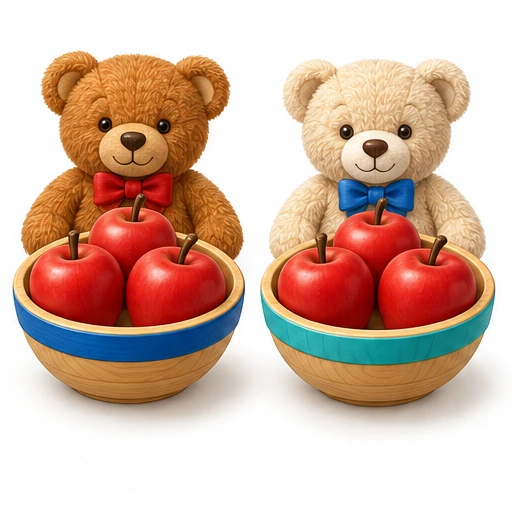
At the table · 5 min
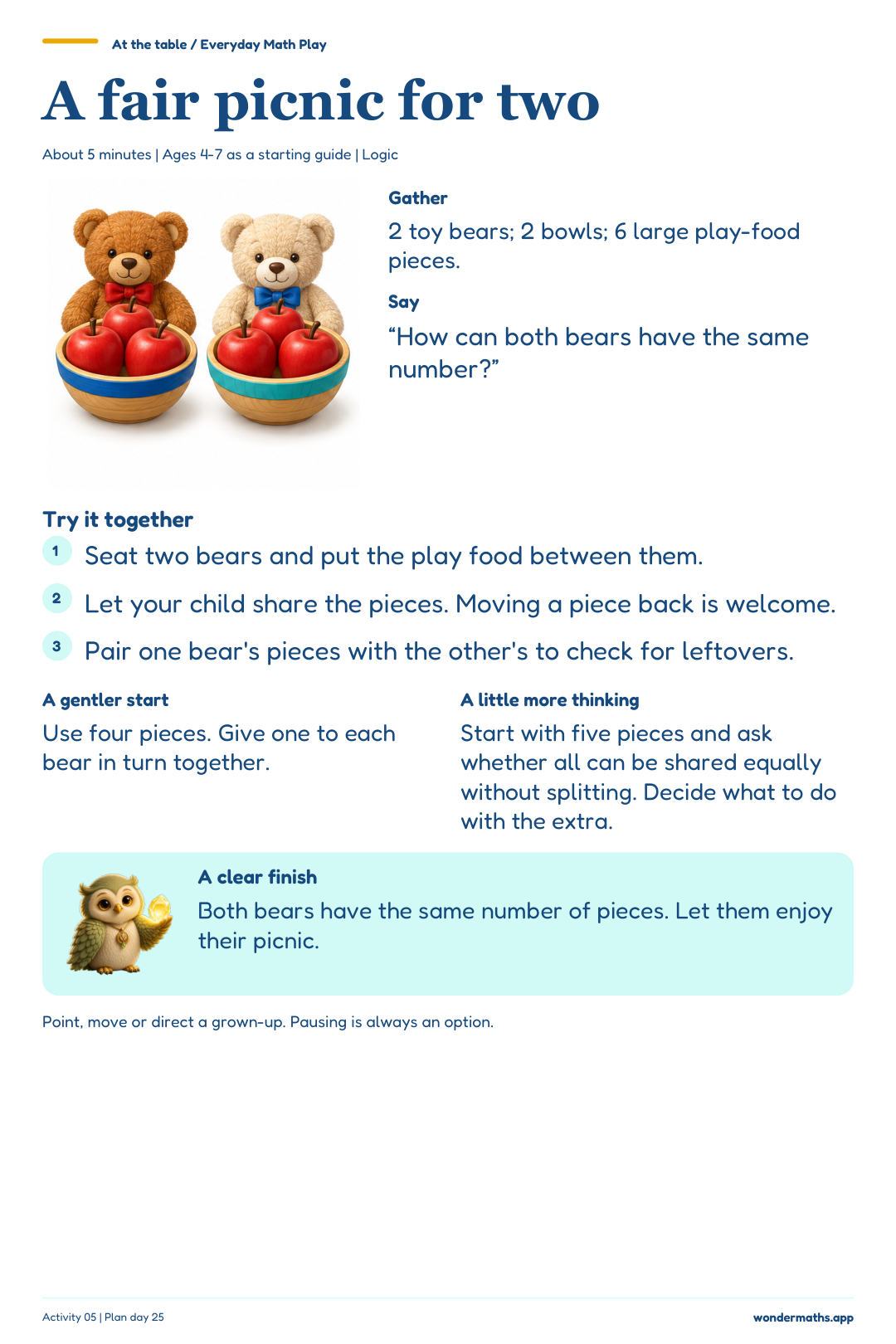
2 toy bears; 2 bowls; 6 large play-food pieces.
Plan day 25 · Logic
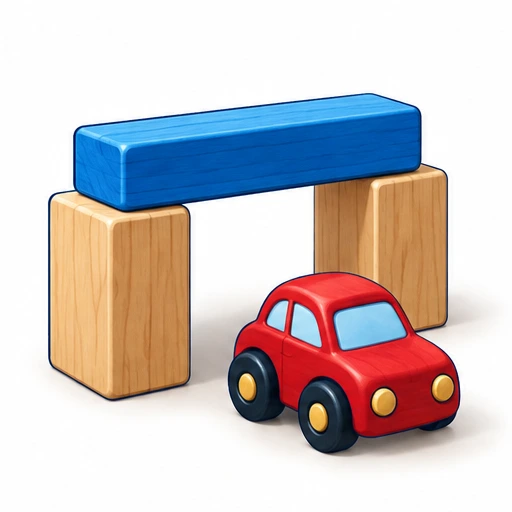
Blocks & toys · 7 min
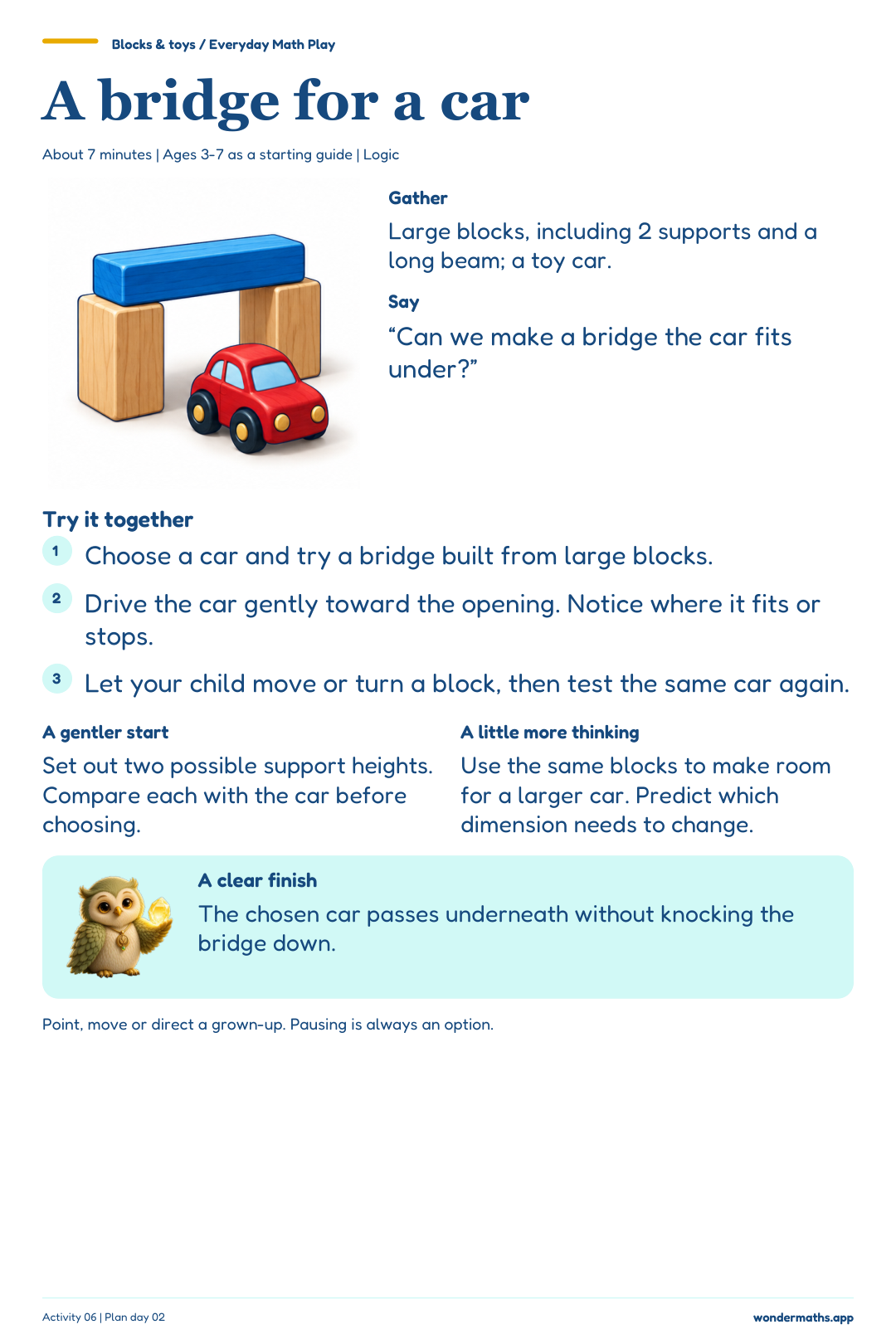
Large blocks, including 2 supports and a long beam; a toy car.
Plan day 2 · Logic
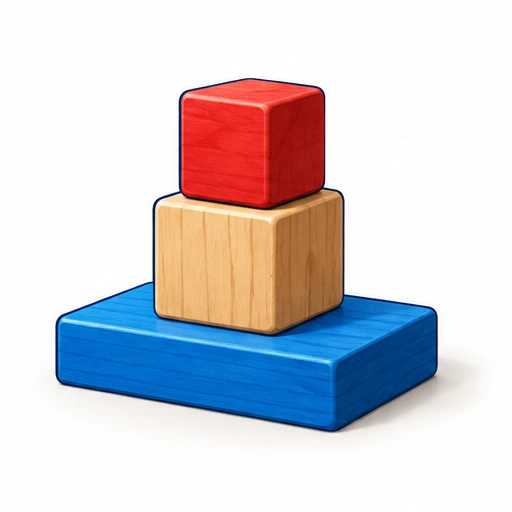
Blocks & toys · 7 min
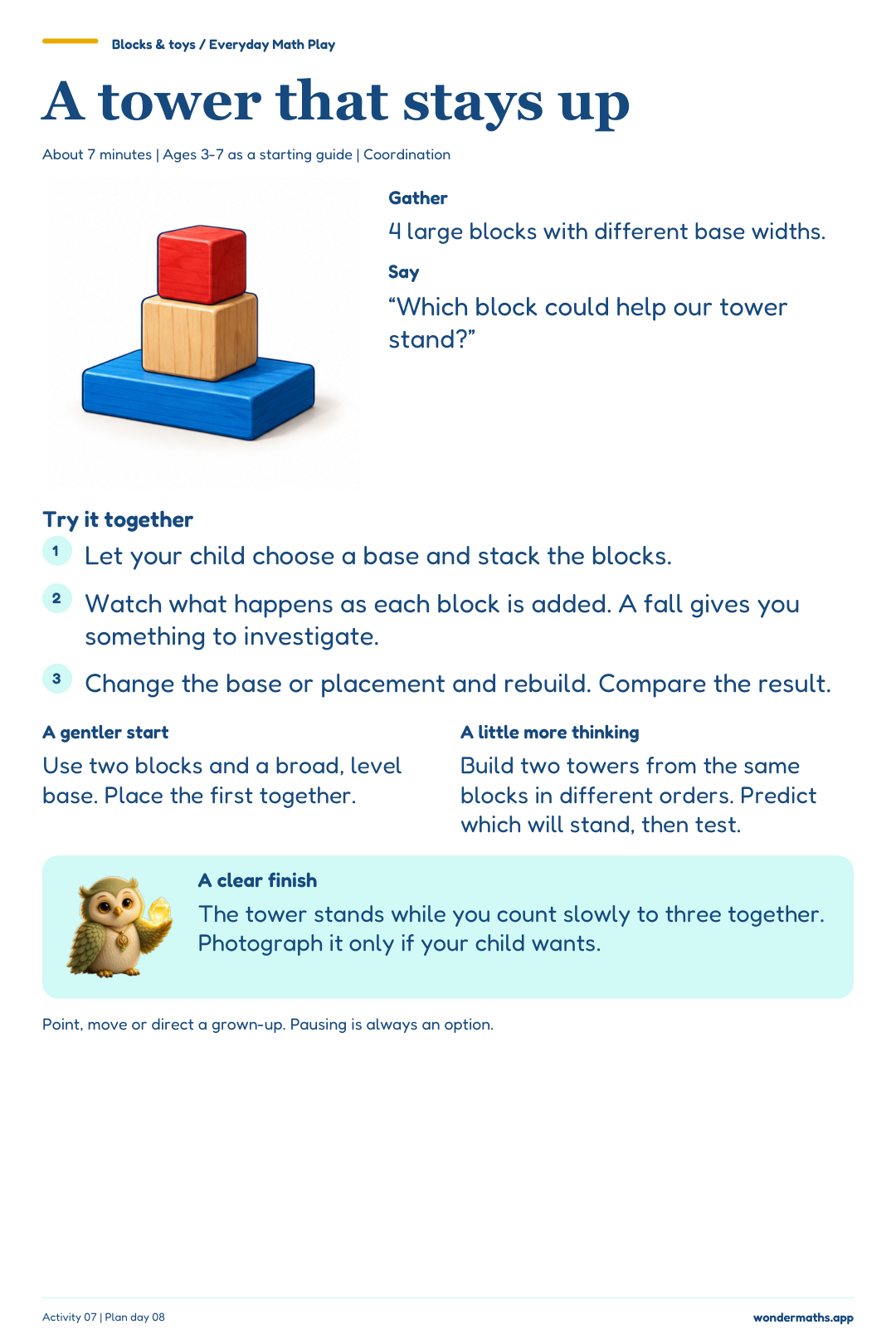
4 large blocks with different base widths.
Plan day 8 · Coordination
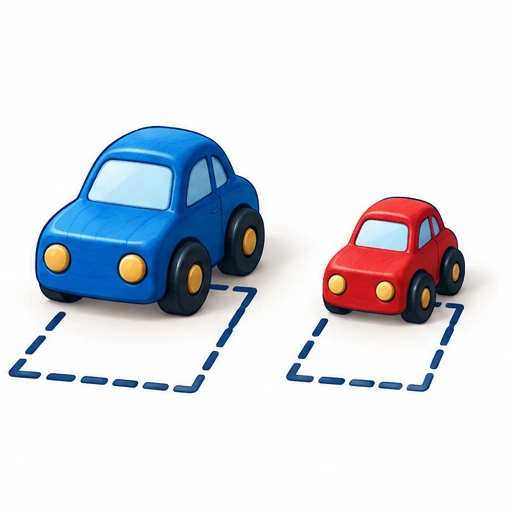
Blocks & toys · 5 min
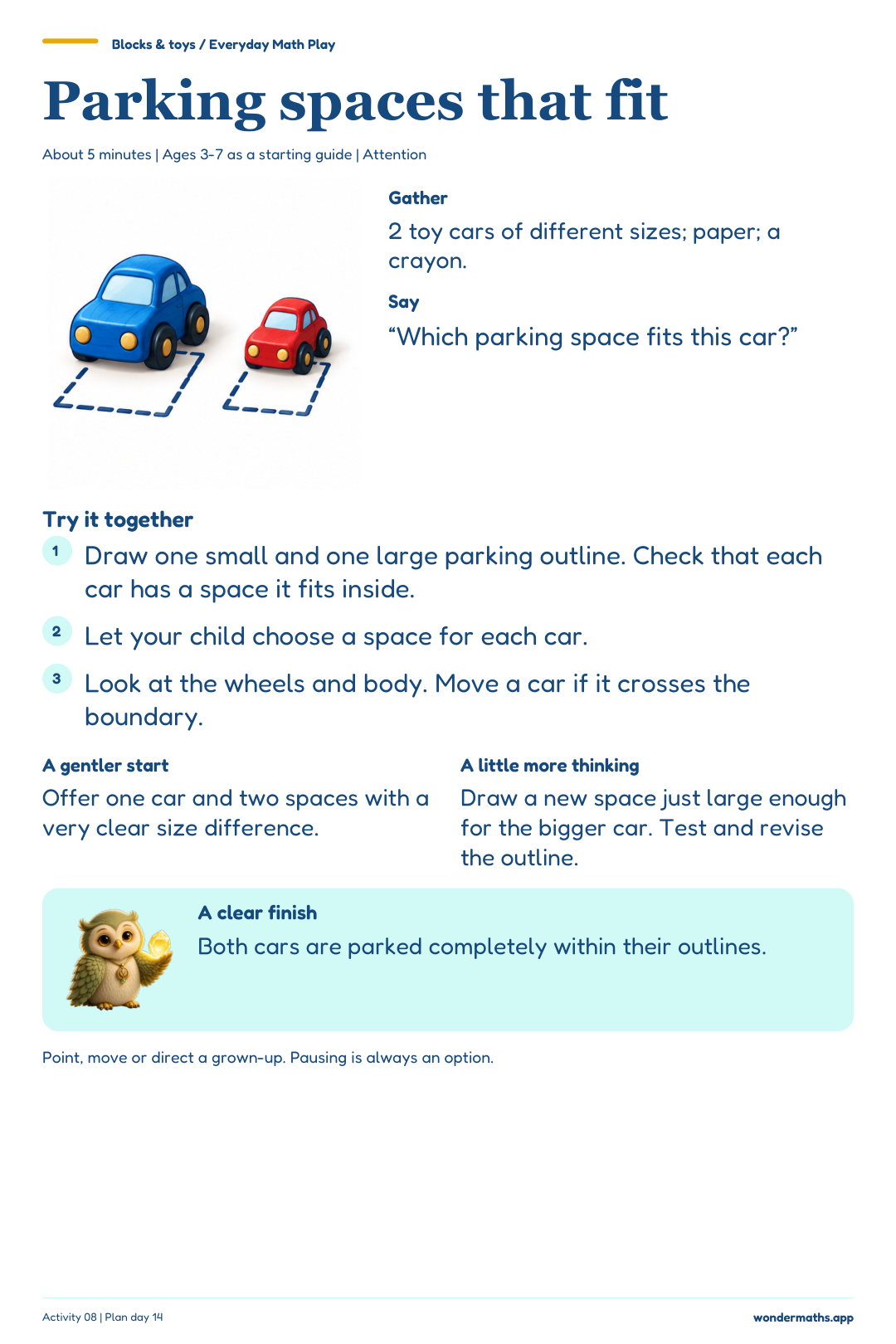
2 toy cars of different sizes; paper; a crayon.
Plan day 14 · Attention
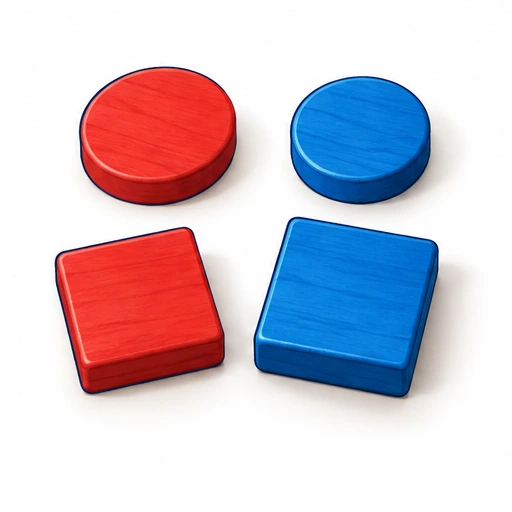
Blocks & toys · 5 min
A red circle, blue circle, red square and blue square, cut large from paper.
Plan day 20 · Logic
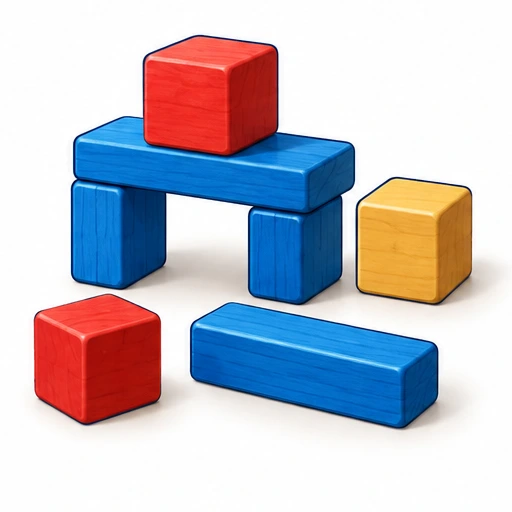
Blocks & toys · 7 min
2 matching sets of large blocks; a book as a screen.
Plan day 26 · Memory
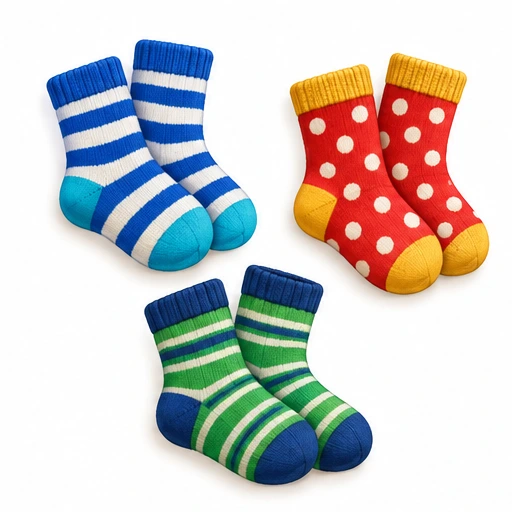
Getting dressed · 5 min
3 pairs of clean socks with distinct patterns.
Plan day 3 · Attention
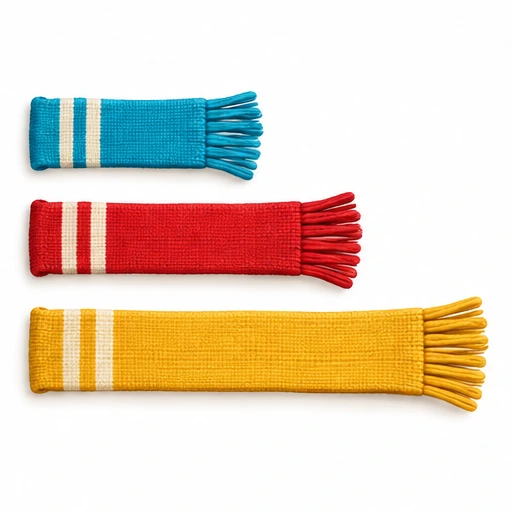
Getting dressed · 5 min
3 scarves or fabric strips of clearly different lengths.
Plan day 9 · Logic
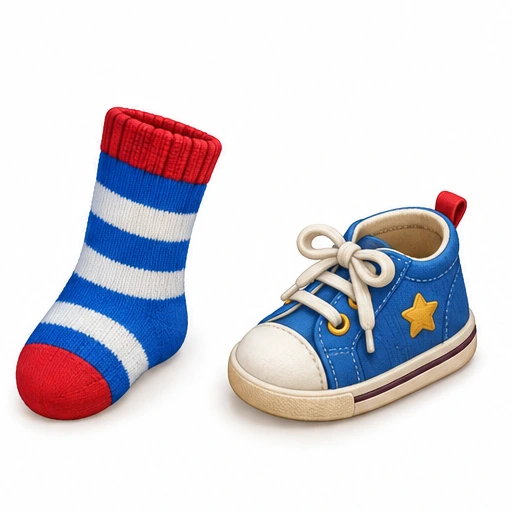
Getting dressed · 5 min
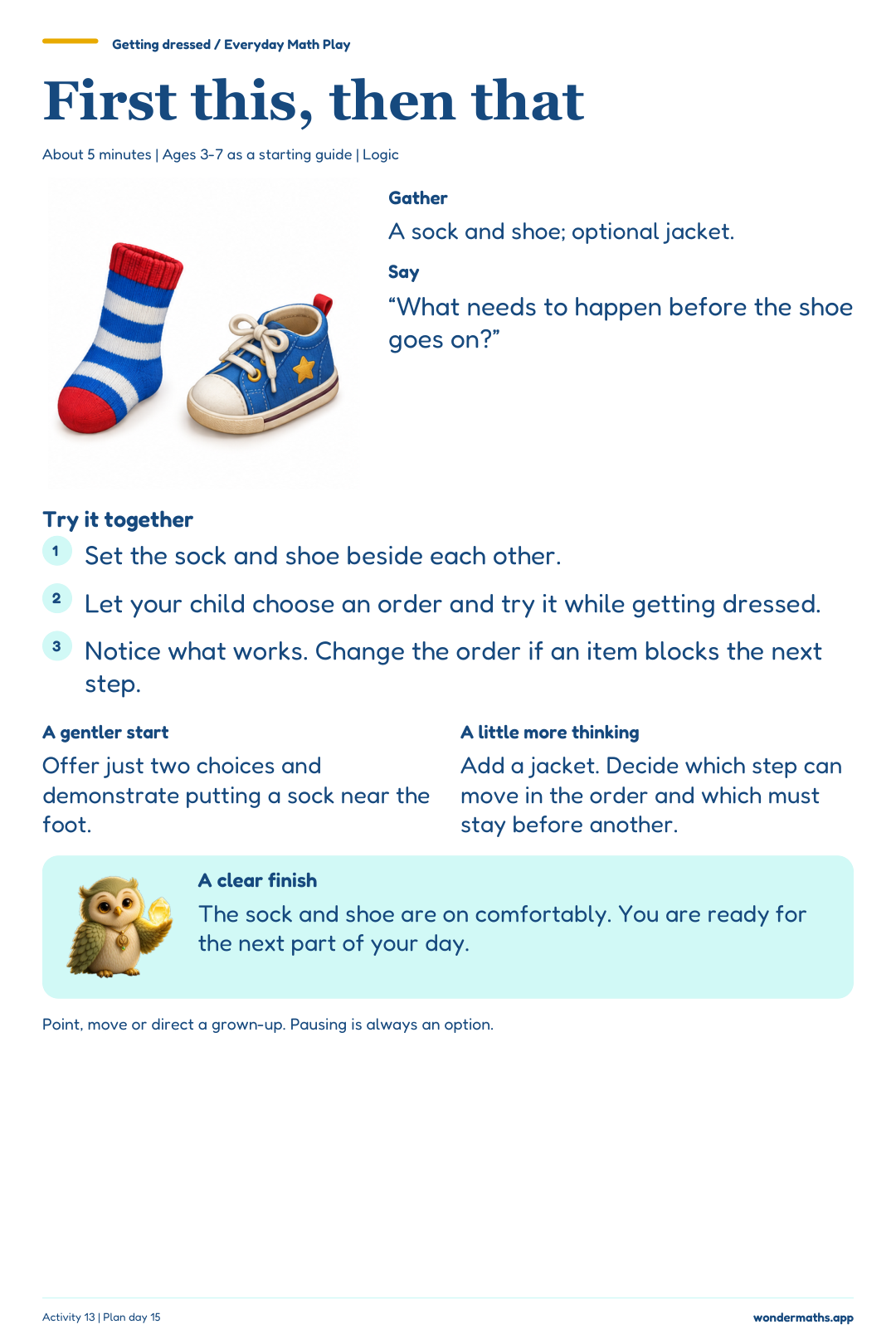
A sock and shoe; optional jacket.
Plan day 15 · Logic
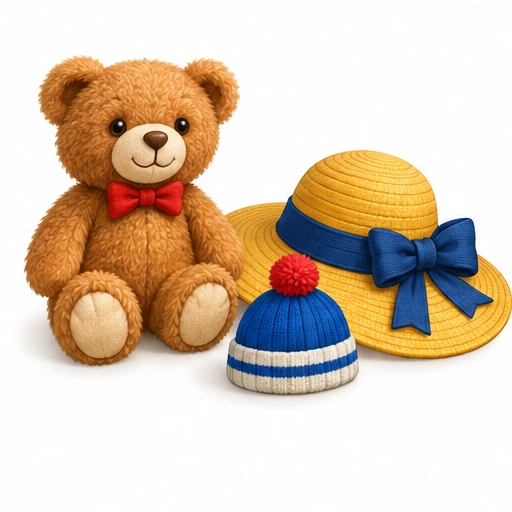
Getting dressed · 5 min
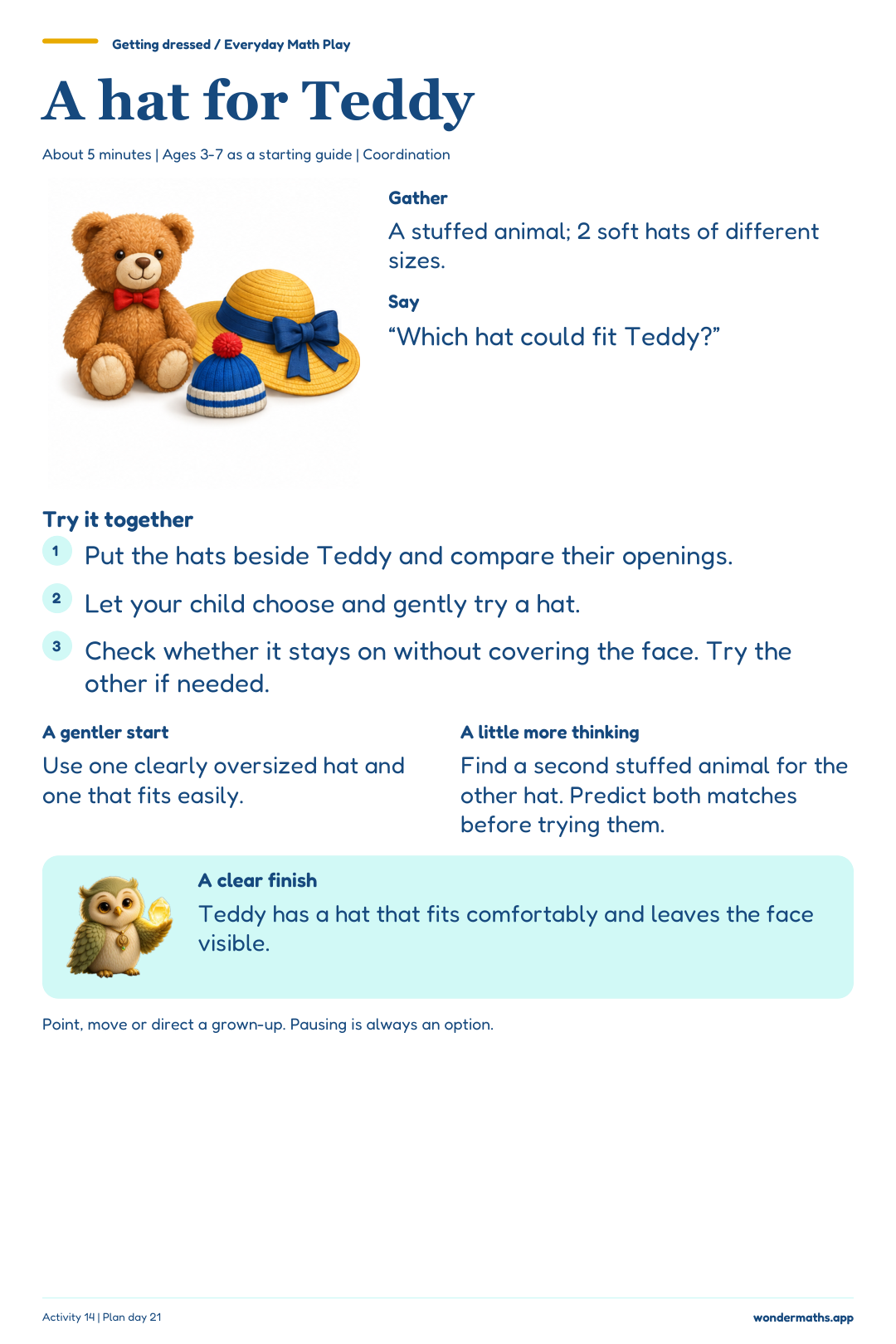
A stuffed animal; 2 soft hats of different sizes.
Plan day 21 · Coordination
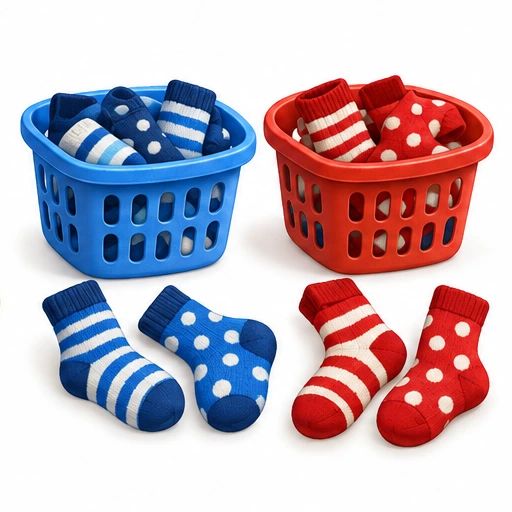
Getting dressed · 5 min
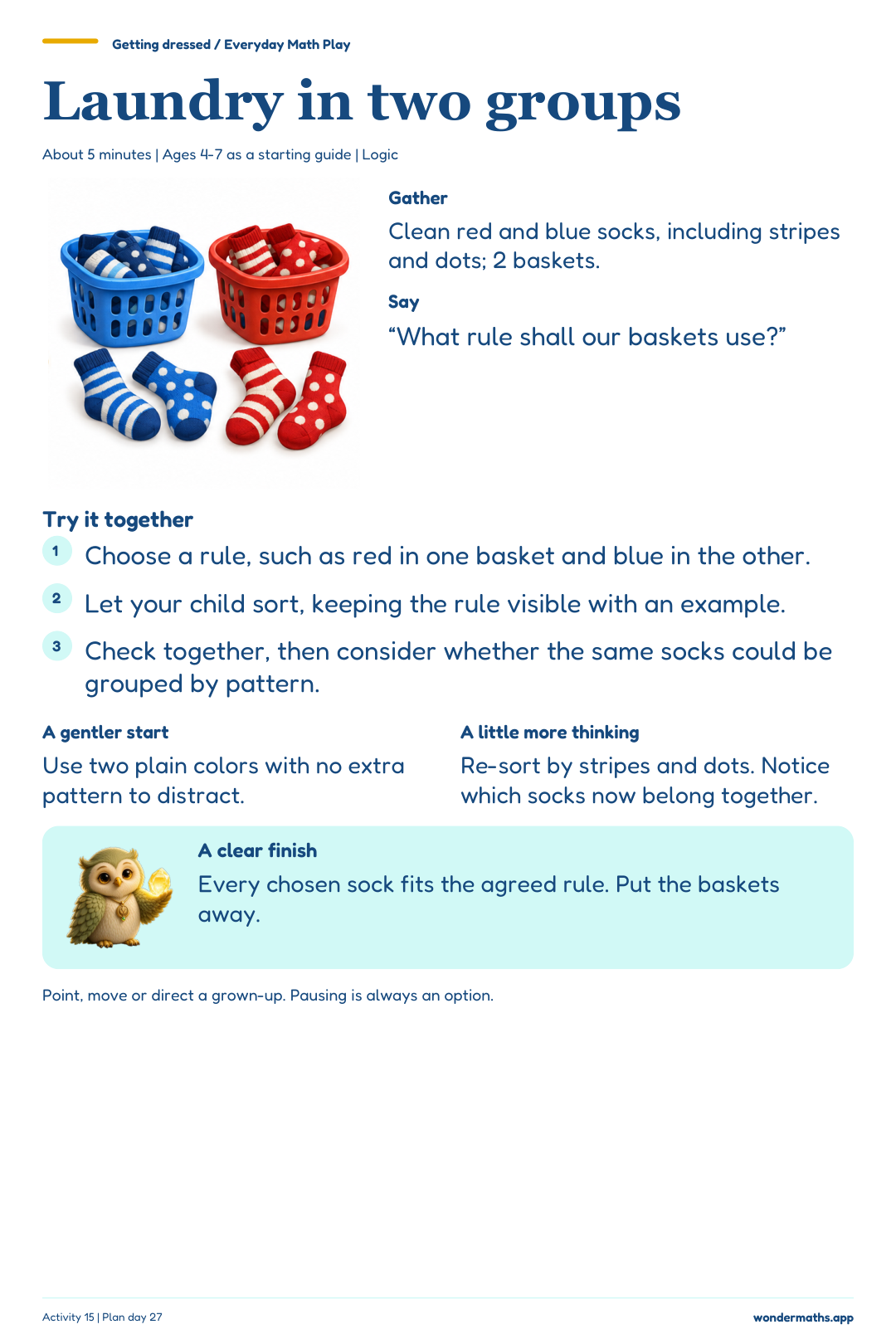
Clean red and blue socks, including stripes and dots; 2 baskets.
Plan day 27 · Logic
Out for a walk · 7 min
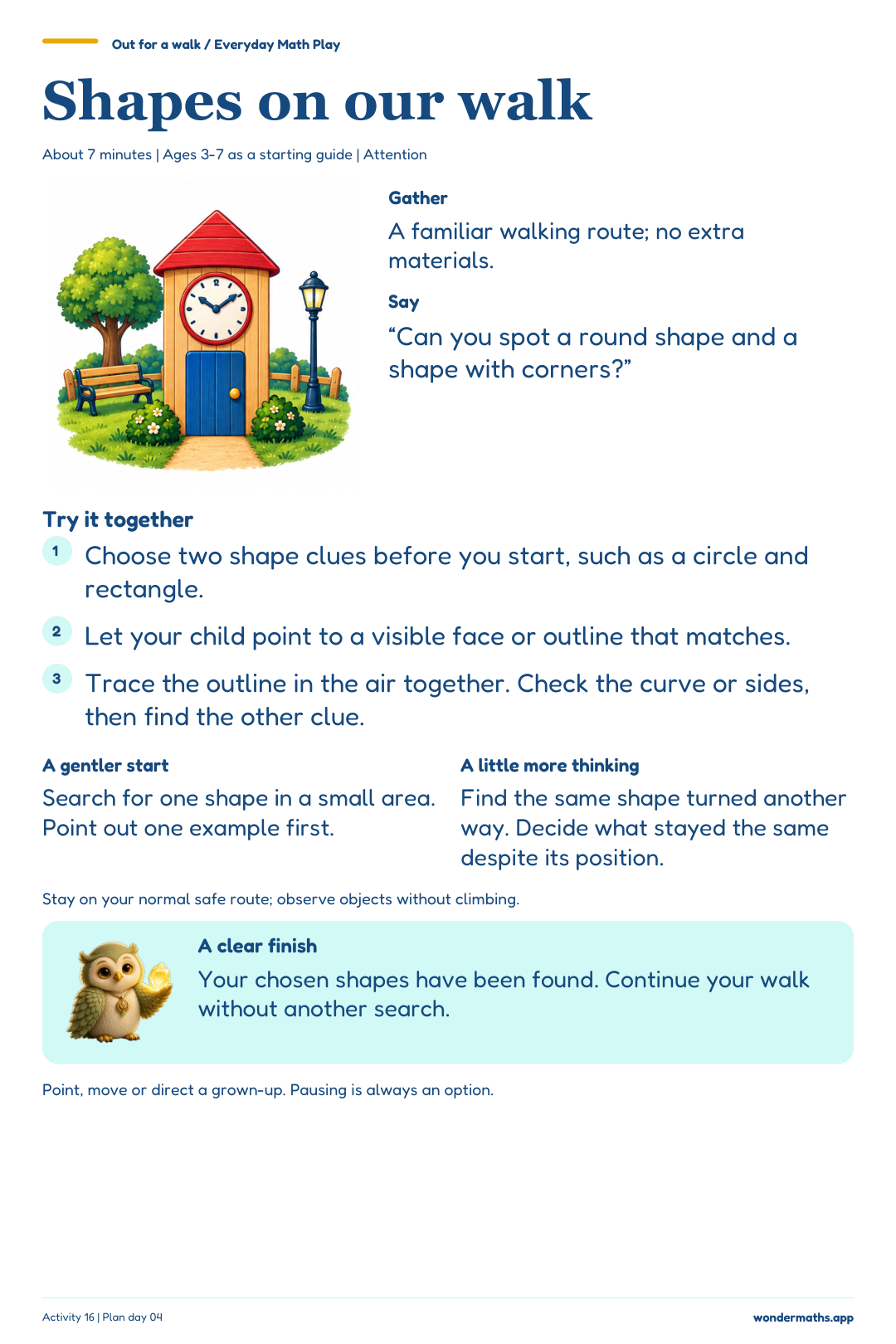
A familiar walking route; no extra materials.
Plan day 4 · Attention
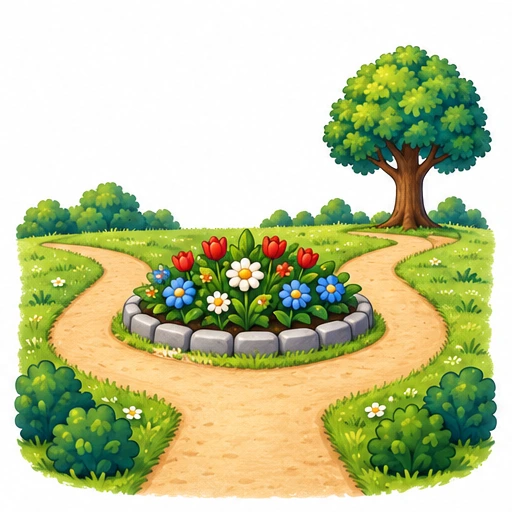
Out for a walk · 7 min
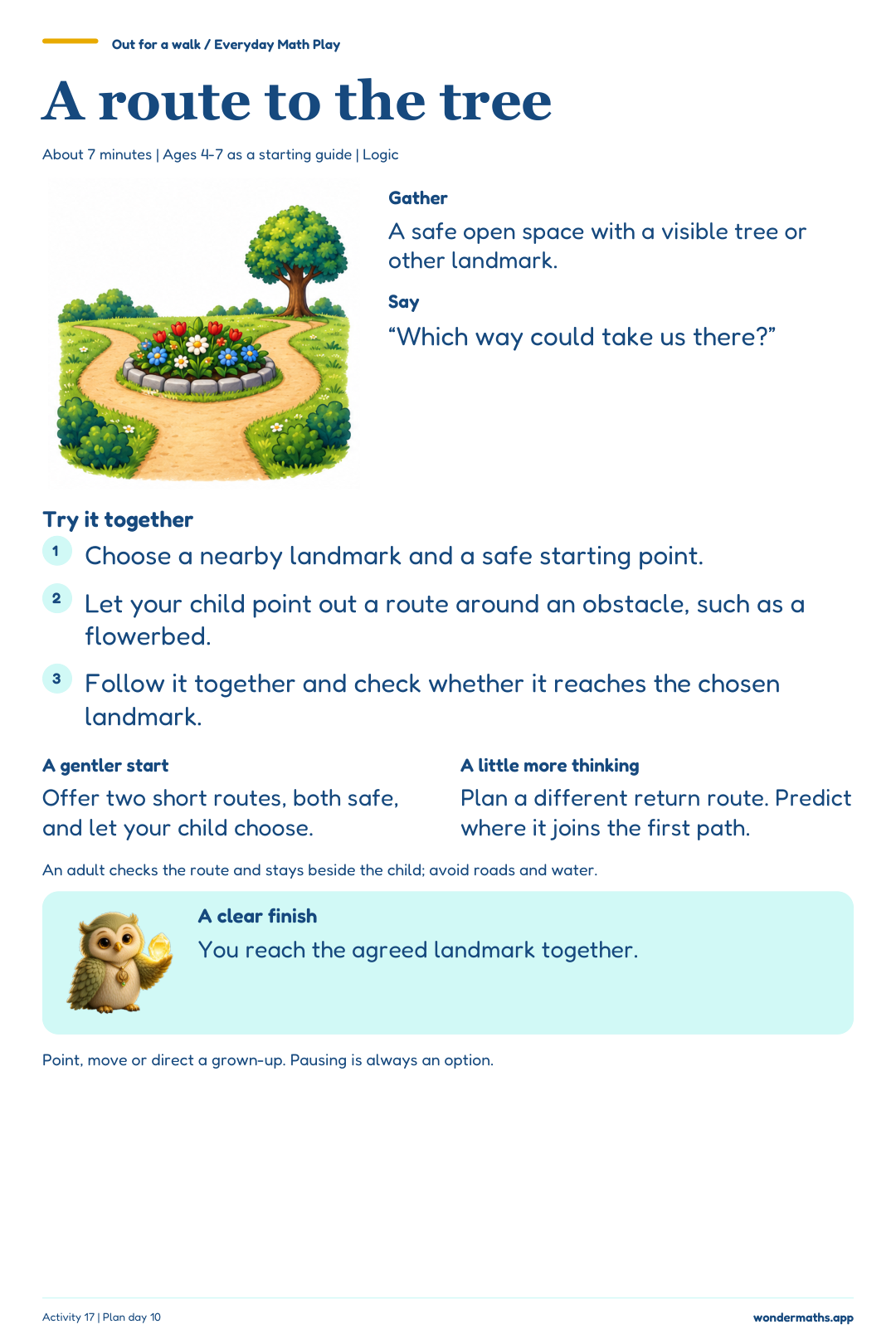
A safe open space with a visible tree or other landmark.
Plan day 10 · Logic
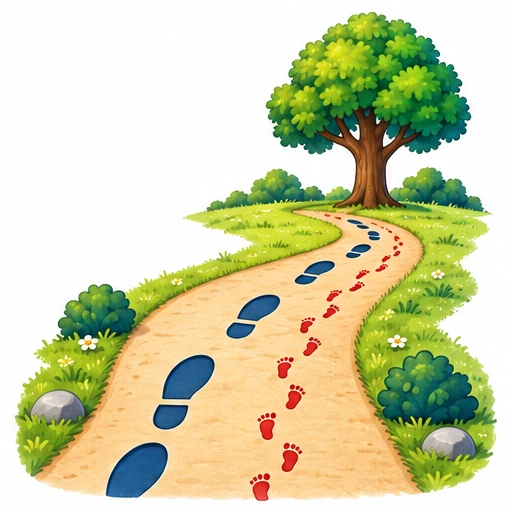
Out for a walk · 7 min
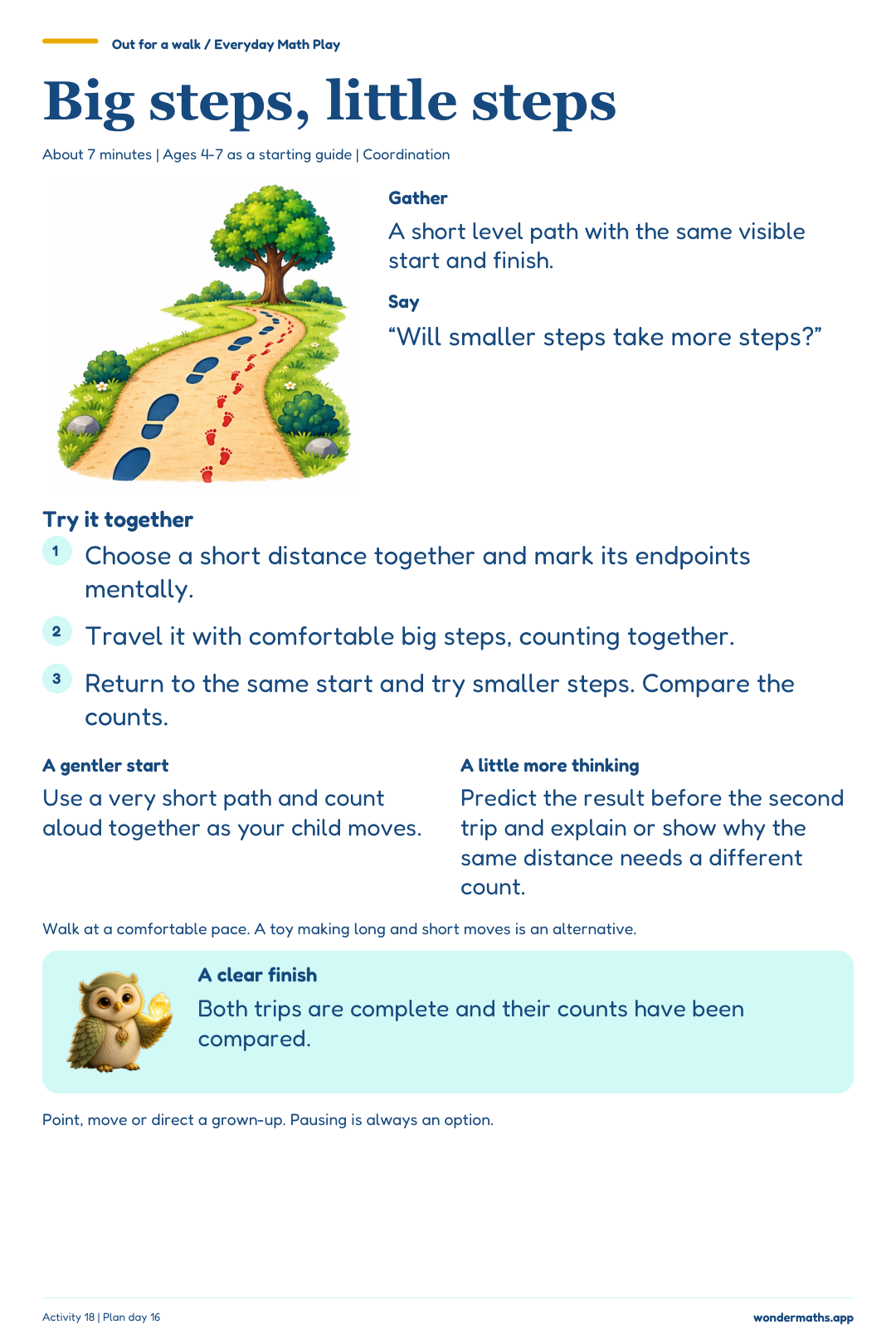
A short level path with the same visible start and finish.
Plan day 16 · Coordination
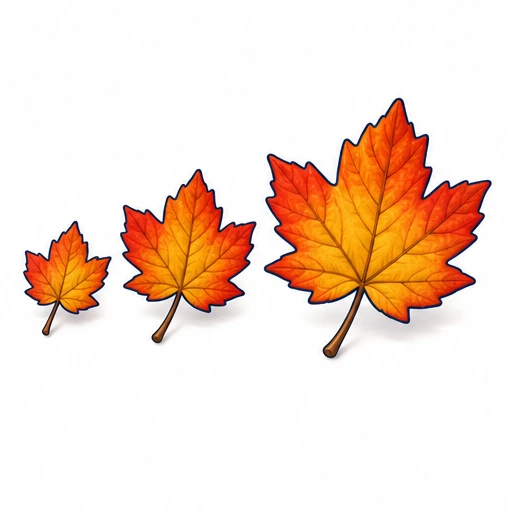
Out for a walk · 5 min
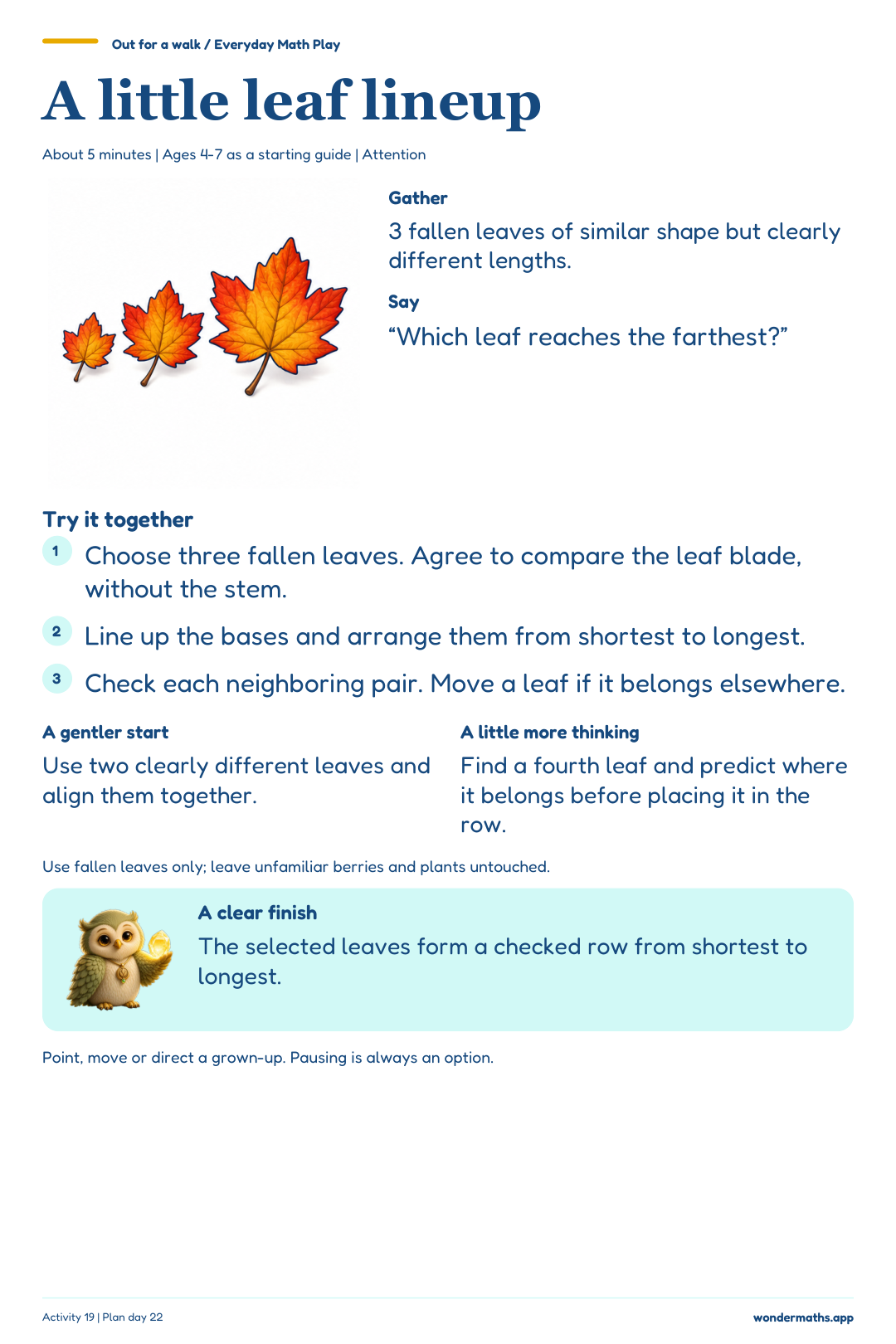
3 fallen leaves of similar shape but clearly different lengths.
Plan day 22 · Attention
Out for a walk · 5 min
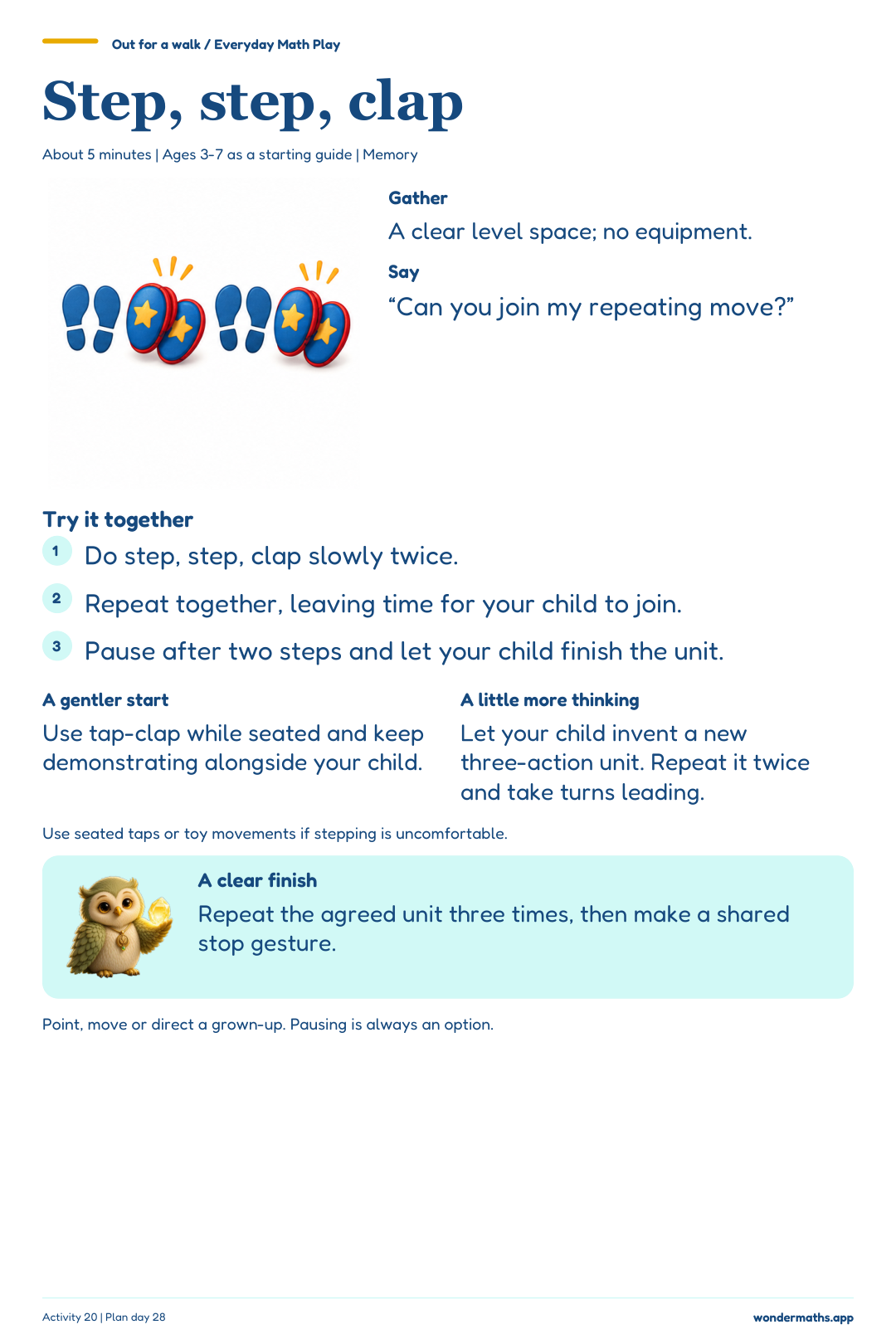
A clear level space; no equipment.
Plan day 28 · Memory
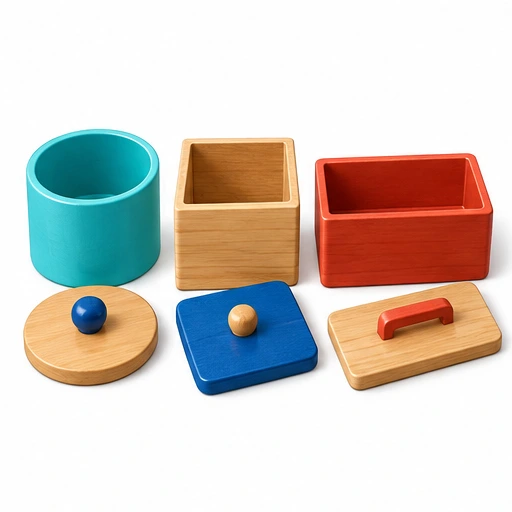
Around the house · 5 min
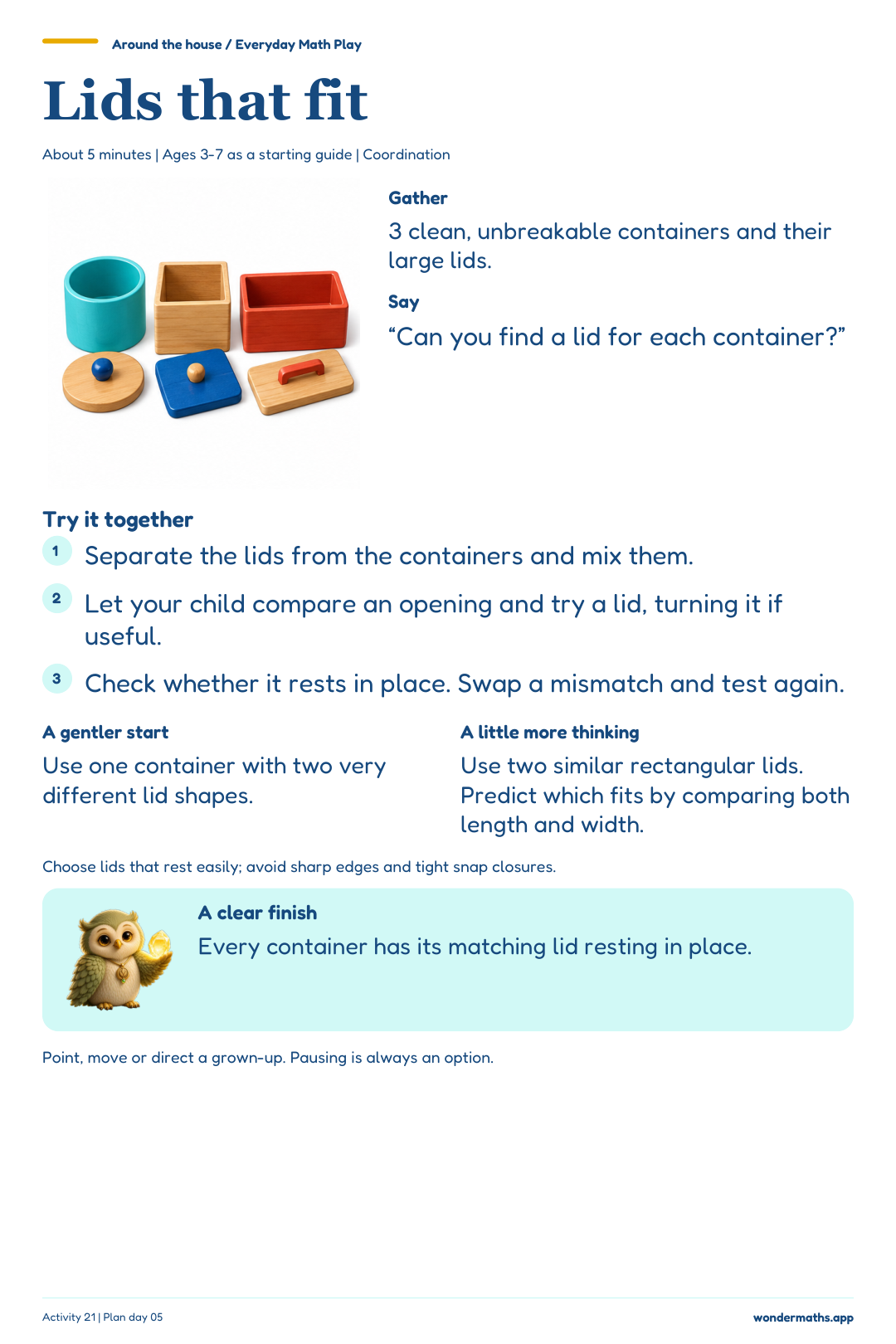
3 clean, unbreakable containers and their large lids.
Plan day 5 · Coordination
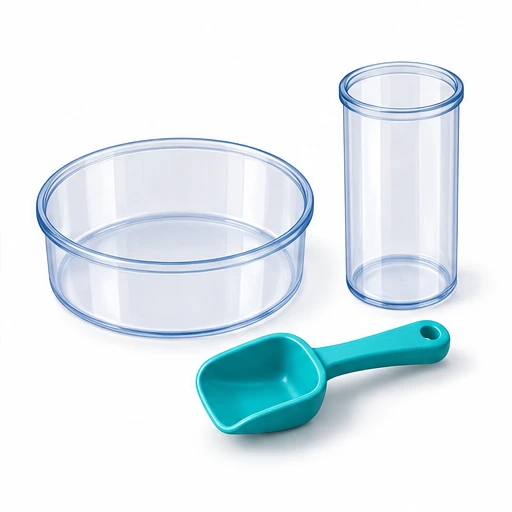
Around the house · 10 min
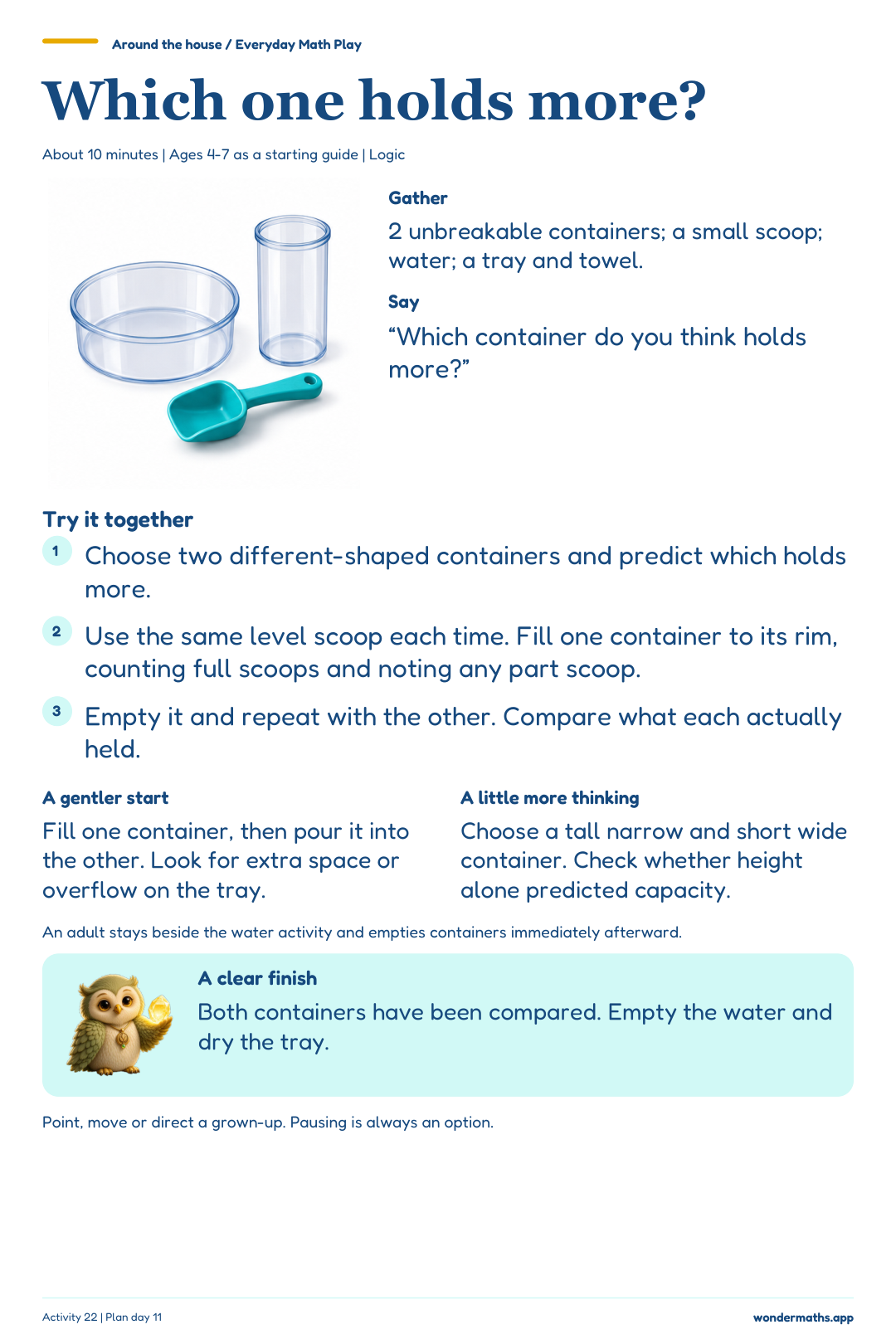
2 unbreakable containers; a small scoop; water; a tray and towel.
Plan day 11 · Logic
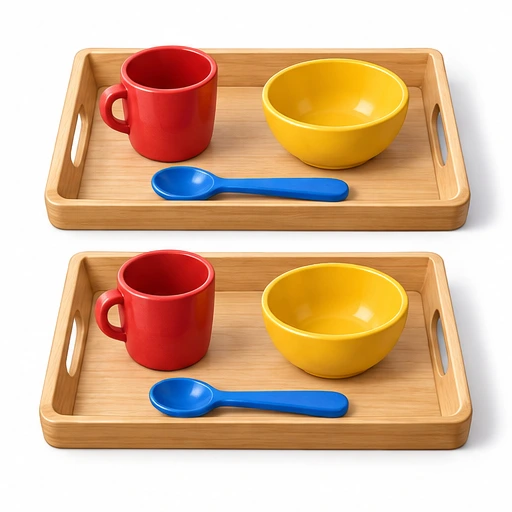
Around the house · 7 min
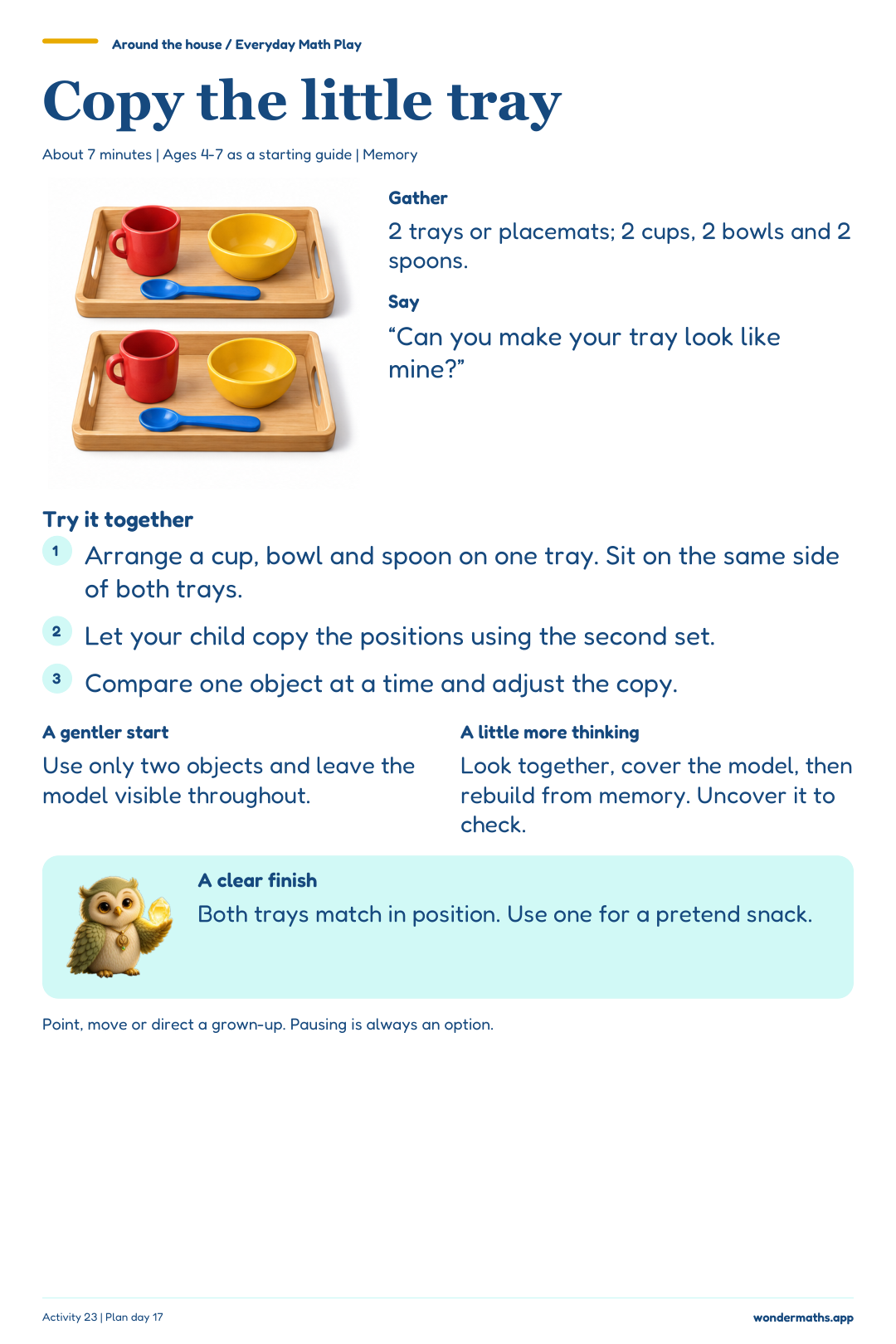
2 trays or placemats; 2 cups, 2 bowls and 2 spoons.
Plan day 17 · Memory
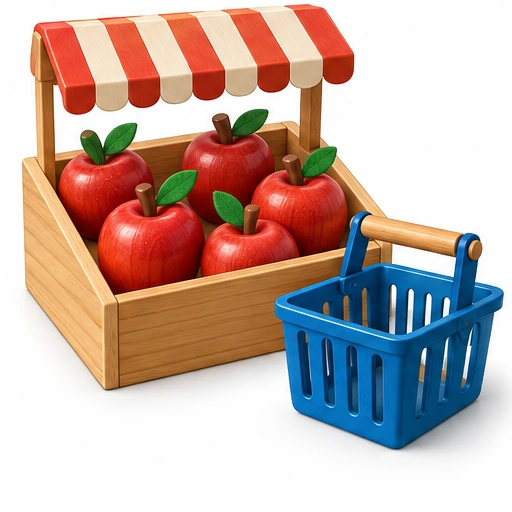
Around the house · 7 min
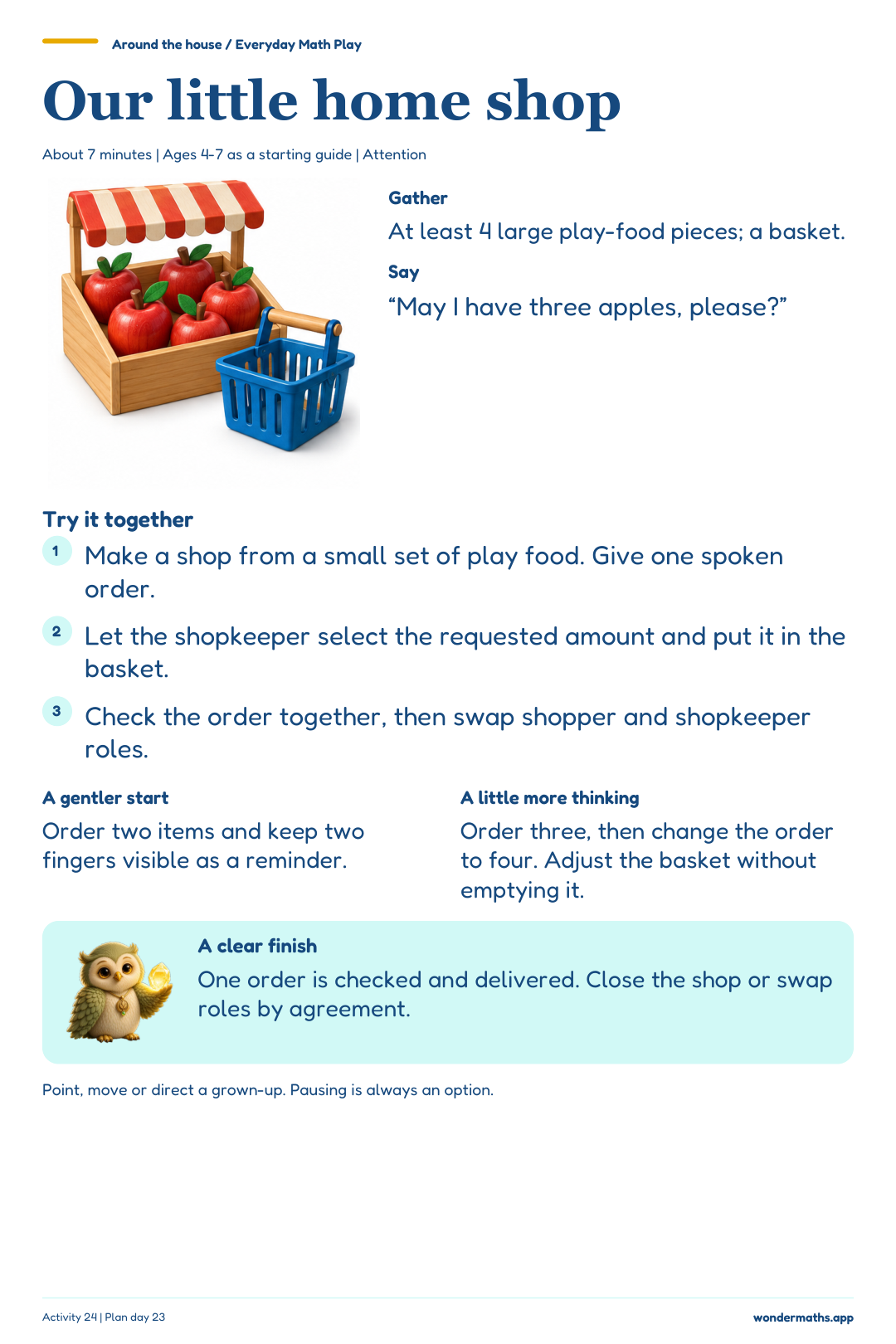
At least 4 large play-food pieces; a basket.
Plan day 23 · Attention
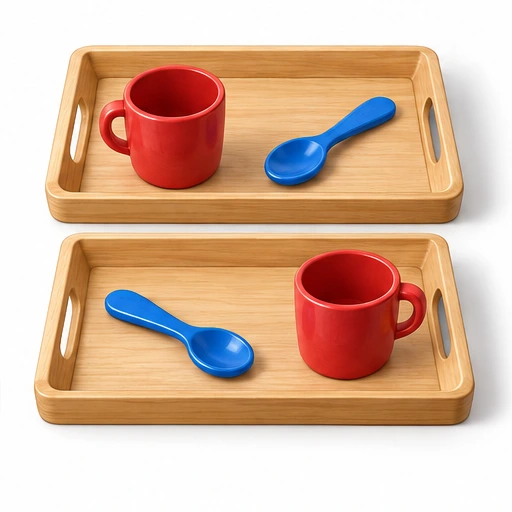
Around the house · 5 min
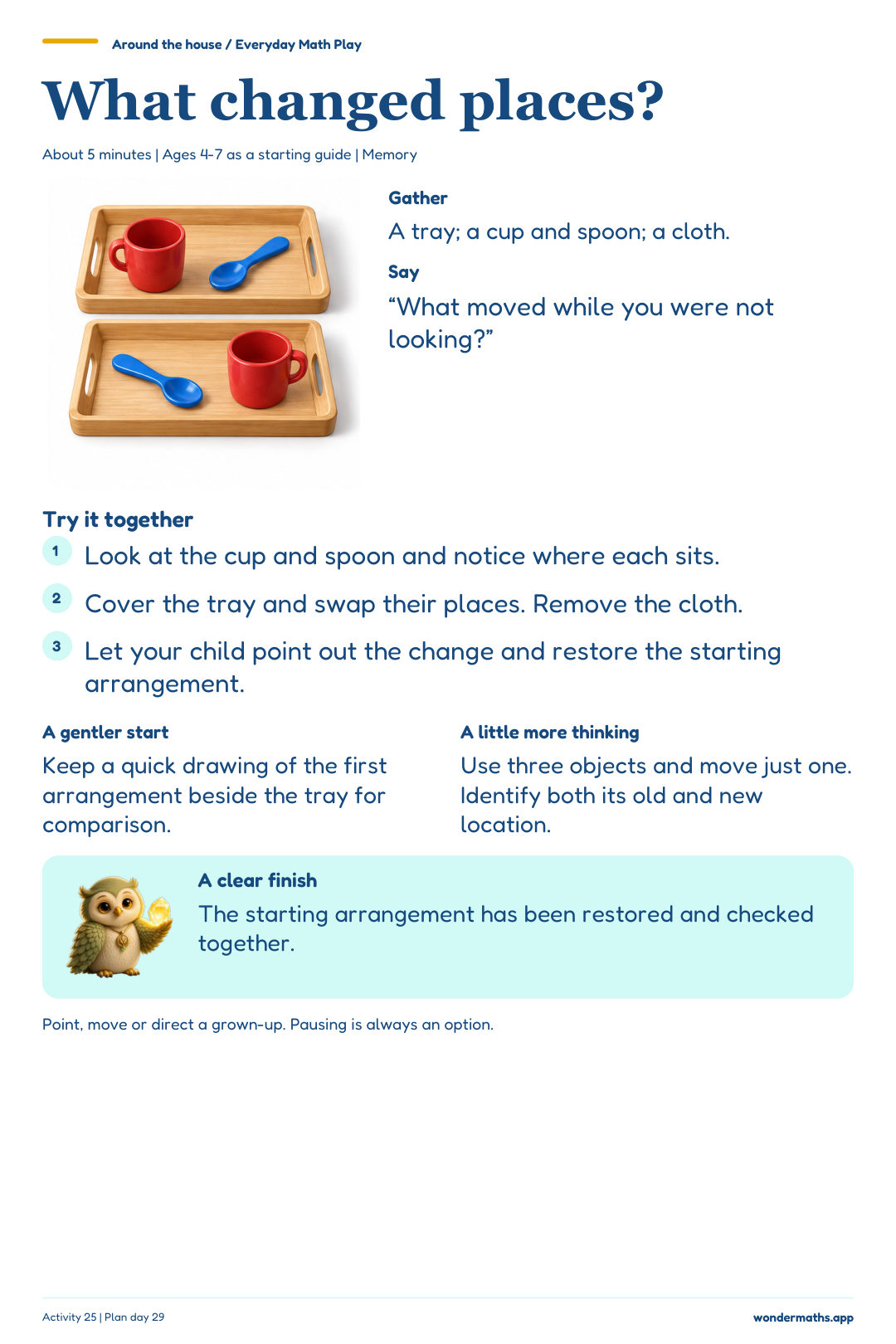
A tray; a cup and spoon; a cloth.
Plan day 29 · Memory
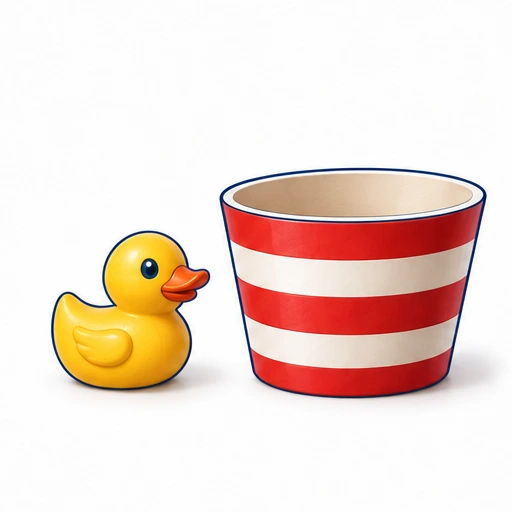
Move & imagine · 5 min
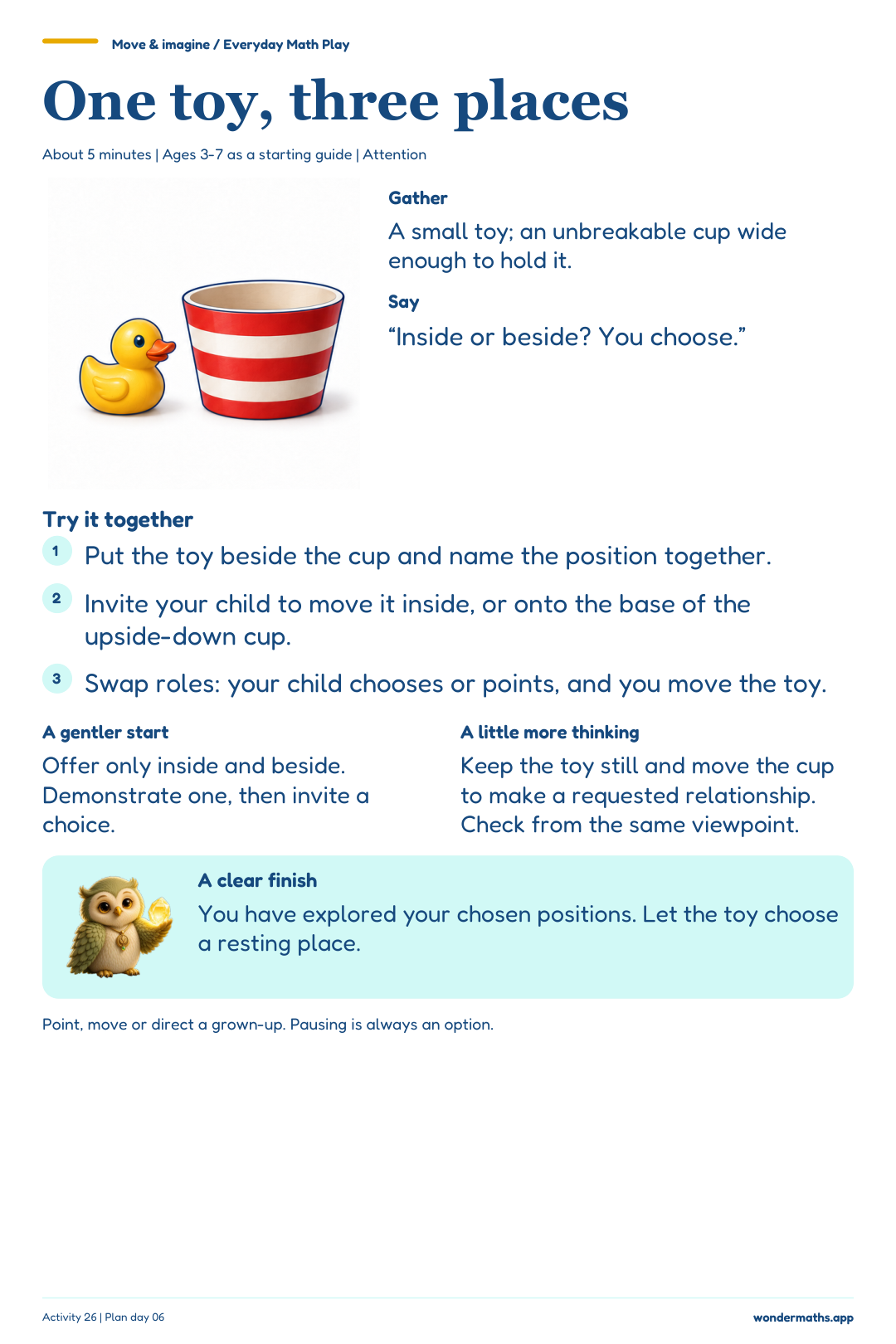
A small toy; an unbreakable cup wide enough to hold it.
Plan day 6 · Attention
Move & imagine · 5 min
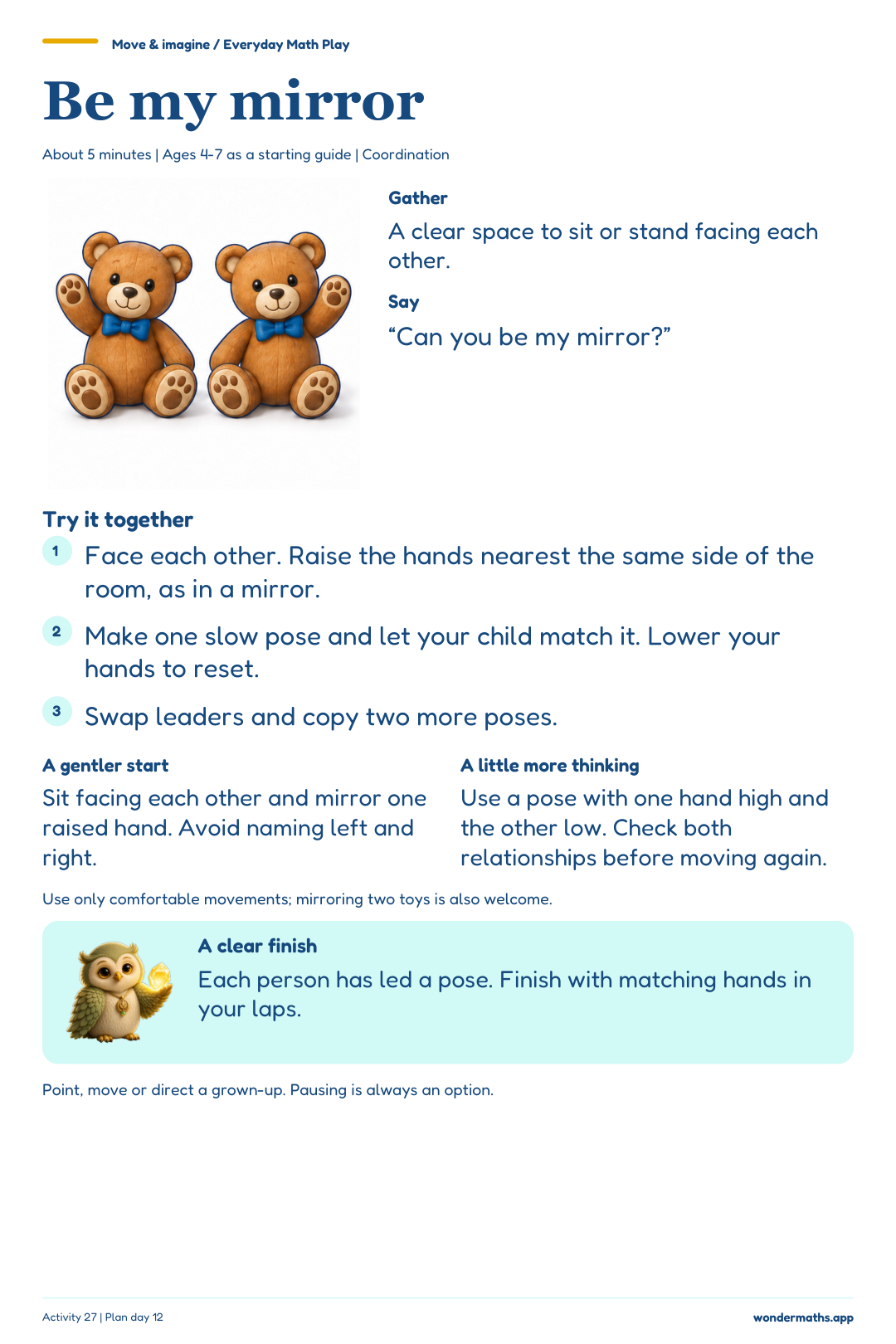
A clear space to sit or stand facing each other.
Plan day 12 · Coordination
Move & imagine · 10 min
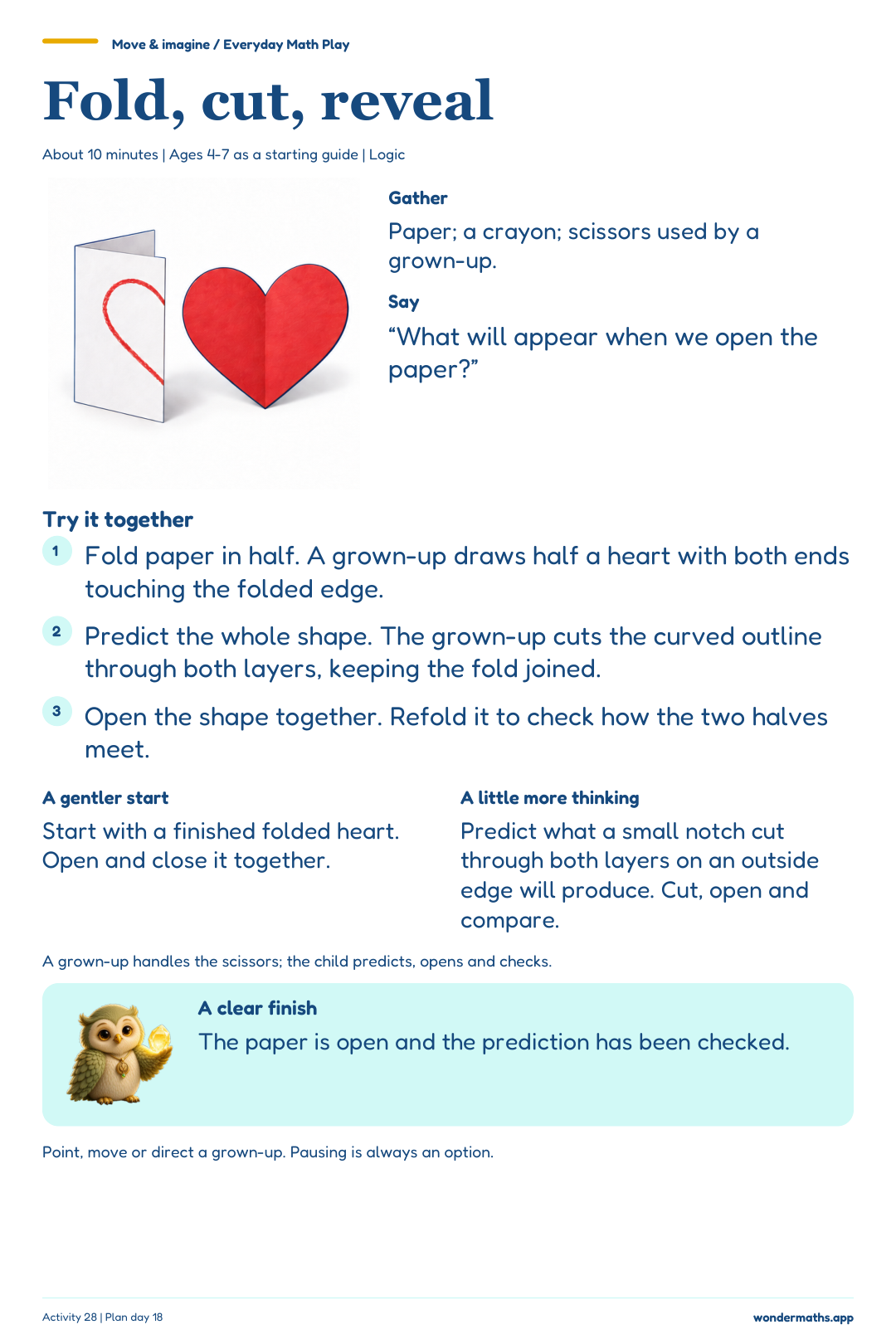
Paper; a crayon; scissors used by a grown-up.
Plan day 18 · Logic
Move & imagine · 7 min
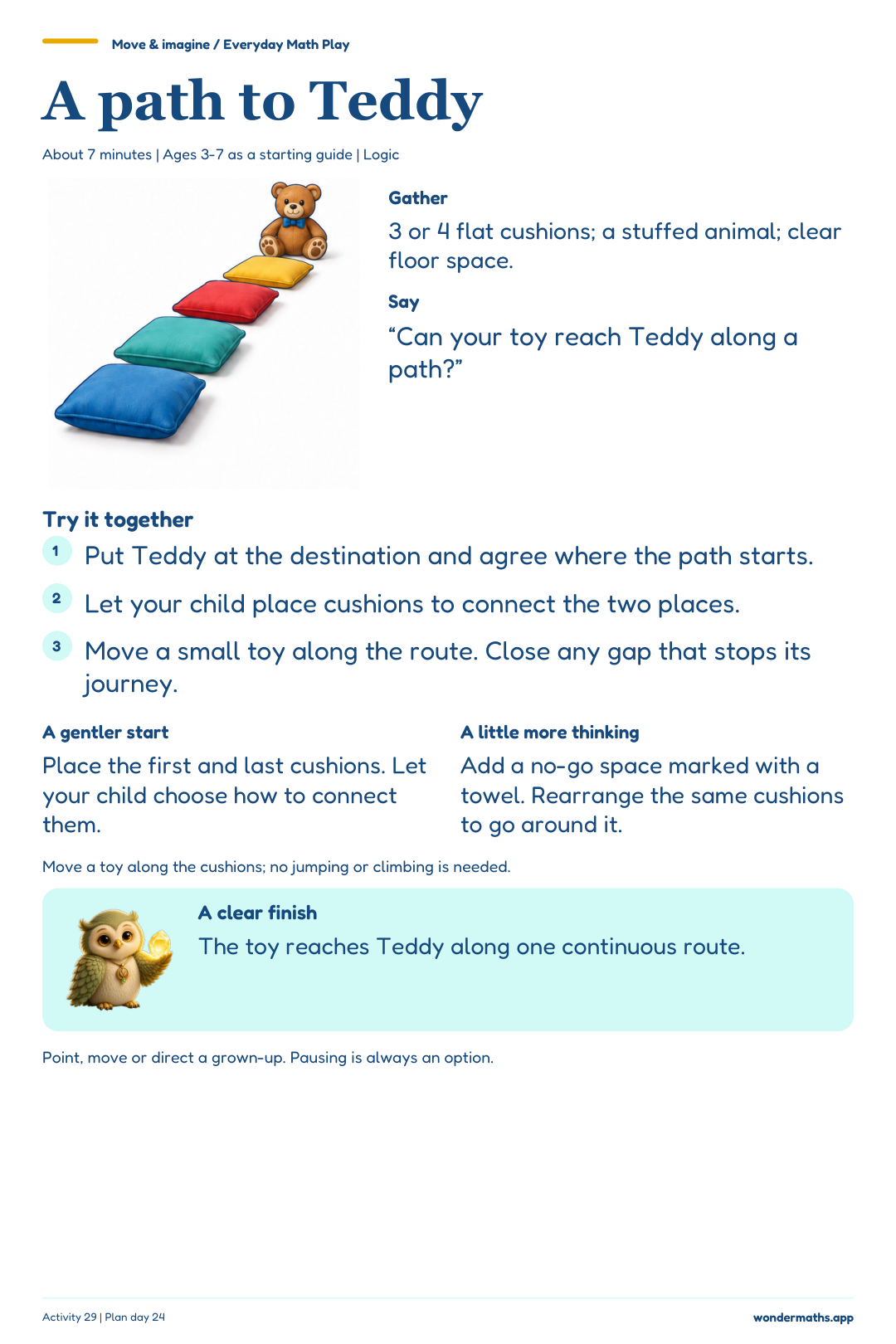
3 or 4 flat cushions; a stuffed animal; clear floor space.
Plan day 24 · Logic
Move & imagine · 5 min
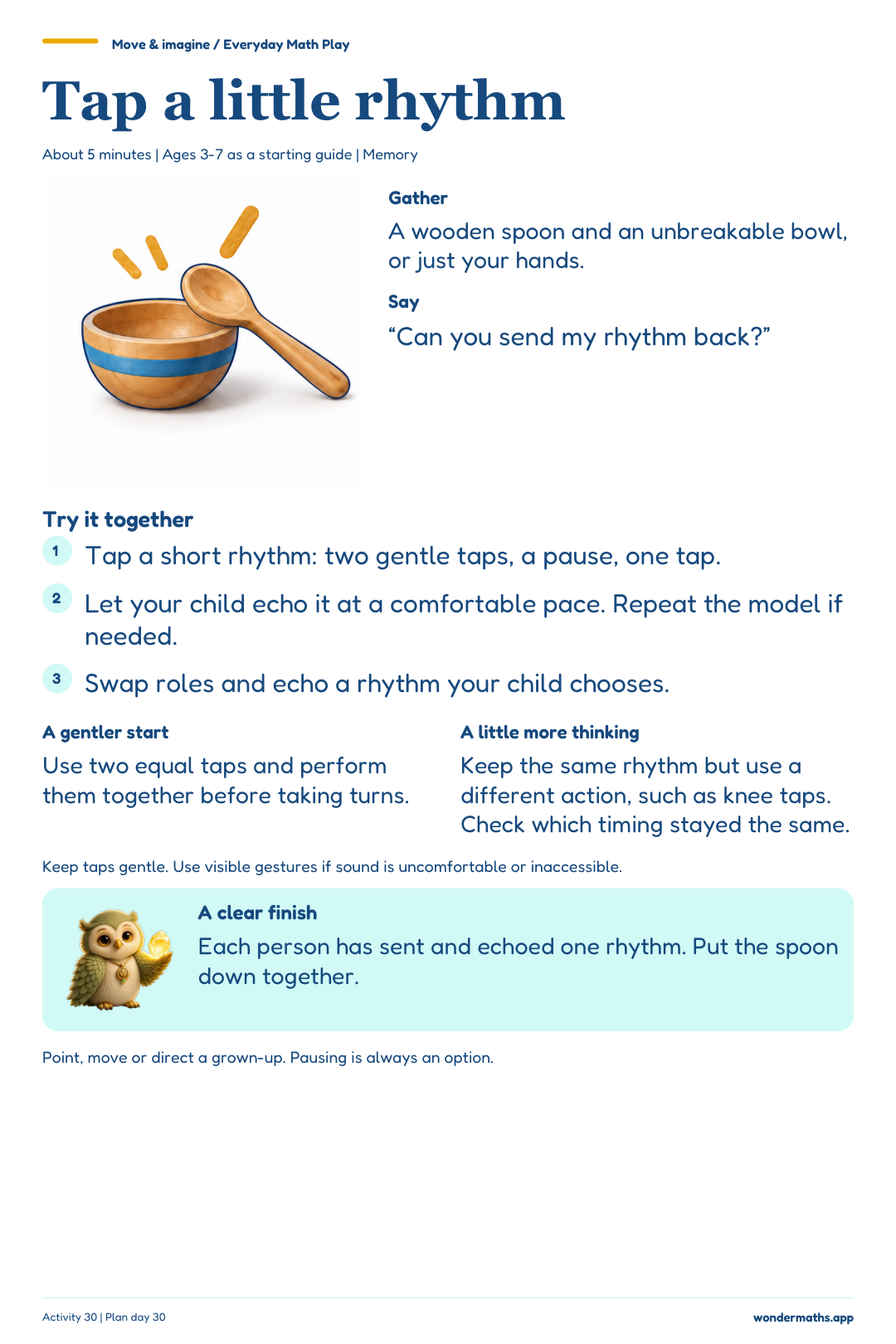
A wooden spoon and an unbreakable bowl, or just your hands.
Plan day 30 · Memory
No activities match these choices. Try another setting or clear the filters.
Read on your phone, save an illustrated card, or print only what you want.
At the table / Plan day 1
3 stuffed animals; 3 unbreakable plates.
“Can you give every guest a place?”
Start with two guests. Put down one plate together; let your child place the other.
Add a guest after setting the table. Predict what must change, then check without starting over.
Wait while your child is trying an idea. If they want help, offer one clue and pause:
If needed, show one move, then let your child make the next choice. They can point, act or direct you.
Keep the four parent quick cards nearby →Every guest has exactly one plate. Invite the toys to eat.
You can also pause or stop earlier.
Does your child match one plate to one guest, rather than only recite numbers?
One-to-one matching makes a complete set visible.
One moment is a clue, not a label.
At the table / Plan day 7
5 or more large spoons; a basket.
“Can you bring four spoons?”
Ask for two spoons. Move and count them together, then let your child carry the basket.
Ask for four, then request one more. Predict the new total and check the set.
Wait while your child is trying an idea. If they want help, offer one clue and pause:
If needed, show one move, then let your child make the next choice. They can point, act or direct you.
Keep the four parent quick cards nearby →The basket holds the requested spoons. Deliver it to the table.
You can also pause or stop earlier.
Does each spoon get one number word? Does the final number describe the whole set?
Counting connects number words to objects and a total.
One moment is a clue, not a label.
At the table / Plan day 13
3 placemats; 3 plates; 3 spoons, all unbreakable.
“Is every place ready?”
Use two places. Keep the complete place beside the unfinished one.
Leave out a plate at one place and a spoon at another. Find both gaps using the rule.
Wait while your child is trying an idea. If they want help, offer one clue and pause:
If needed, show one move, then let your child make the next choice. They can point, act or direct you.
Keep the four parent quick cards nearby →Each placemat has a plate and spoon. Announce that the table is ready.
You can also pause or stop earlier.
Does your child compare items systematically and check after changing the arrangement?
Checking a set against a rule supports attention to missing parts.
One moment is a clue, not a label.
At the table / Plan day 19
3 spoons and 3 blunt forks.
“Can you keep my pattern going?”
Keep a separate spoon-fork pair above the row as a visible model.
Make the same rule using two movements, such as tap-clap. Show what stayed the same.
Wait while your child is trying an idea. If they want help, offer one clue and pause:
If needed, show one move, then let your child make the next choice. They can point, act or direct you.
Keep the four parent quick cards nearby →Your chosen pattern has been continued and checked. Repeat it once, then finish.
You can also pause or stop earlier.
Does your child use the repeating pair to predict, instead of guessing from one object?
Repeating units let a child predict and transfer a rule.
One moment is a clue, not a label.
At the table / Plan day 25
2 toy bears; 2 bowls; 6 large play-food pieces.
“How can both bears have the same number?”
Use four pieces. Give one to each bear in turn together.
Start with five pieces and ask whether all can be shared equally without splitting. Decide what to do with the extra.
Wait while your child is trying an idea. If they want help, offer one clue and pause:
If needed, show one move, then let your child make the next choice. They can point, act or direct you.
Keep the four parent quick cards nearby →Both bears have the same number of pieces. Let them enjoy their picnic.
You can also pause or stop earlier.
Does your child check equality by matching or counting, and adjust an unequal share?
Equal sharing can be checked by pairing the two groups.
One moment is a clue, not a label.
Blocks & toys / Plan day 2
Large blocks, including 2 supports and a long beam; a toy car.
“Can we make a bridge the car fits under?”
Set out two possible support heights. Compare each with the car before choosing.
Use the same blocks to make room for a larger car. Predict which dimension needs to change.
Wait while your child is trying an idea. If they want help, offer one clue and pause:
If needed, show one move, then let your child make the next choice. They can point, act or direct you.
Keep the four parent quick cards nearby →The chosen car passes underneath without knocking the bridge down.
You can also pause or stop earlier.
Does your child use the failed test to change the opening?
Testing clearance links spatial comparison with a useful change.
One moment is a clue, not a label.
Blocks & toys / Plan day 8
4 large blocks with different base widths.
“Which block could help our tower stand?”
Use two blocks and a broad, level base. Place the first together.
Build two towers from the same blocks in different orders. Predict which will stand, then test.
Wait while your child is trying an idea. If they want help, offer one clue and pause:
If needed, show one move, then let your child make the next choice. They can point, act or direct you.
Keep the four parent quick cards nearby →The tower stands while you count slowly to three together. Photograph it only if your child wants.
You can also pause or stop earlier.
Does your child adjust support or position instead of repeating the same unstable arrangement?
Stacking makes balance and support observable.
One moment is a clue, not a label.
Blocks & toys / Plan day 14
2 toy cars of different sizes; paper; a crayon.
“Which parking space fits this car?”
Offer one car and two spaces with a very clear size difference.
Draw a new space just large enough for the bigger car. Test and revise the outline.
Wait while your child is trying an idea. If they want help, offer one clue and pause:
If needed, show one move, then let your child make the next choice. They can point, act or direct you.
Keep the four parent quick cards nearby →Both cars are parked completely within their outlines.
You can also pause or stop earlier.
Does your child check more than one dimension?
Fitting objects into boundaries uses spatial comparison.
One moment is a clue, not a label.
Blocks & toys / Plan day 20
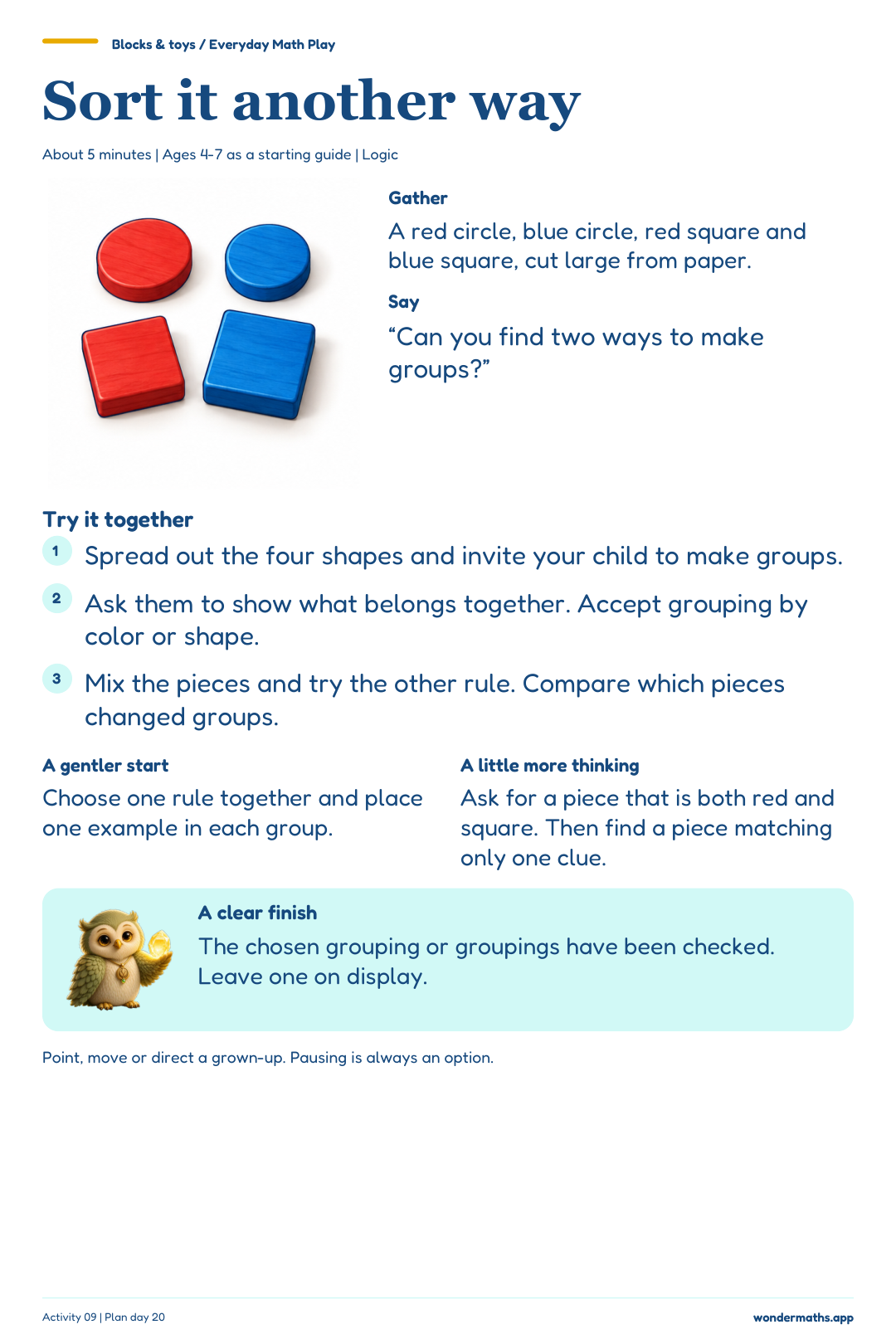
A red circle, blue circle, red square and blue square, cut large from paper.
“Can you find two ways to make groups?”
Choose one rule together and place one example in each group.
Ask for a piece that is both red and square. Then find a piece matching only one clue.
Wait while your child is trying an idea. If they want help, offer one clue and pause:
If needed, show one move, then let your child make the next choice. They can point, act or direct you.
Keep the four parent quick cards nearby →The chosen grouping or groupings have been checked. Leave one on display.
You can also pause or stop earlier.
Does your child keep one rule consistent, then deliberately change it?
Changing a sorting rule separates an object's different attributes.
One moment is a clue, not a label.
Blocks & toys / Plan day 26
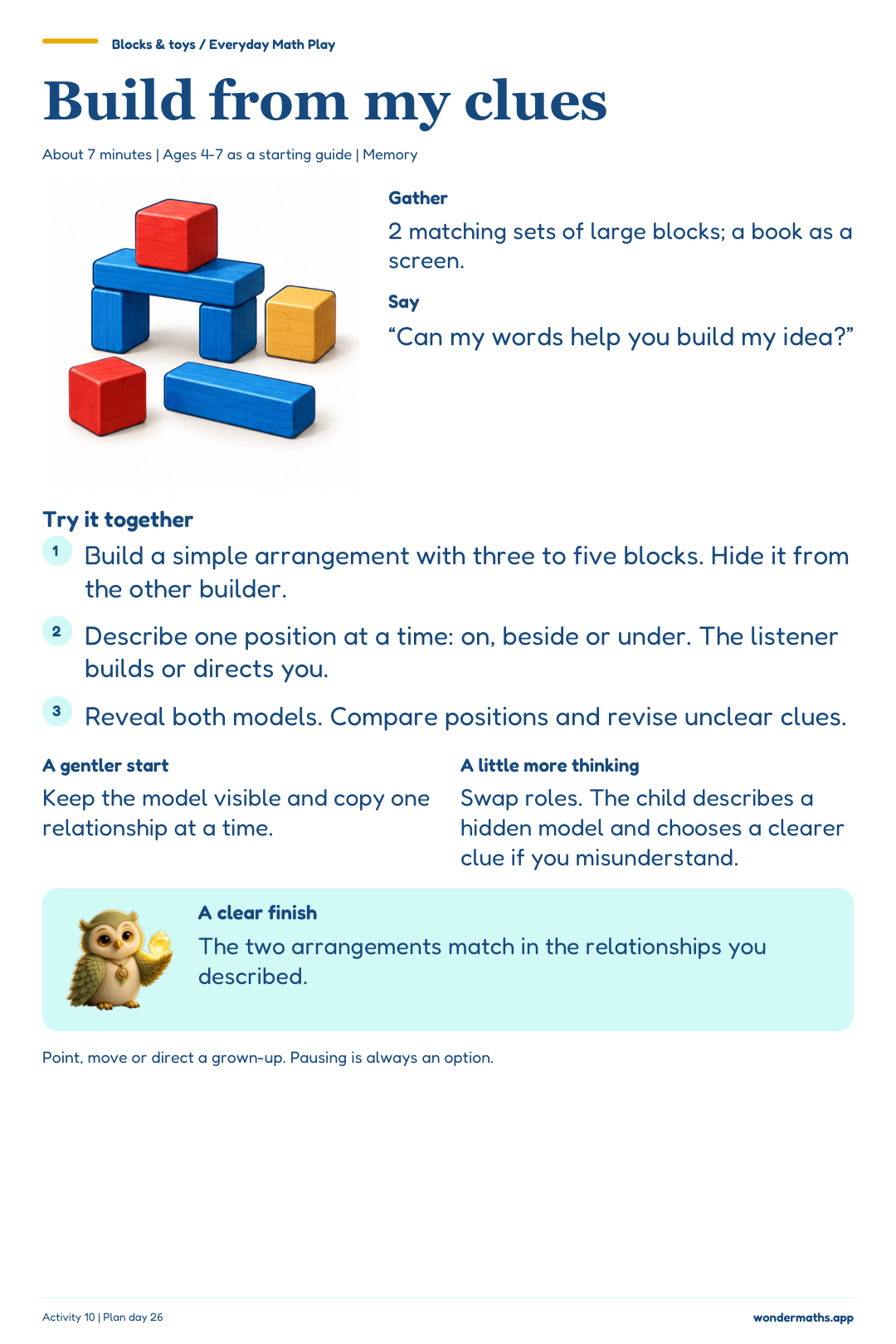
2 matching sets of large blocks; a book as a screen.
“Can my words help you build my idea?”
Keep the model visible and copy one relationship at a time.
Swap roles. The child describes a hidden model and chooses a clearer clue if you misunderstand.
Wait while your child is trying an idea. If they want help, offer one clue and pause:
If needed, show one move, then let your child make the next choice. They can point, act or direct you.
Keep the four parent quick cards nearby →The two arrangements match in the relationships you described.
You can also pause or stop earlier.
Does your child remember a position and use a reference object?
Spatial language connects a description with a construction.
One moment is a clue, not a label.
Getting dressed / Plan day 3
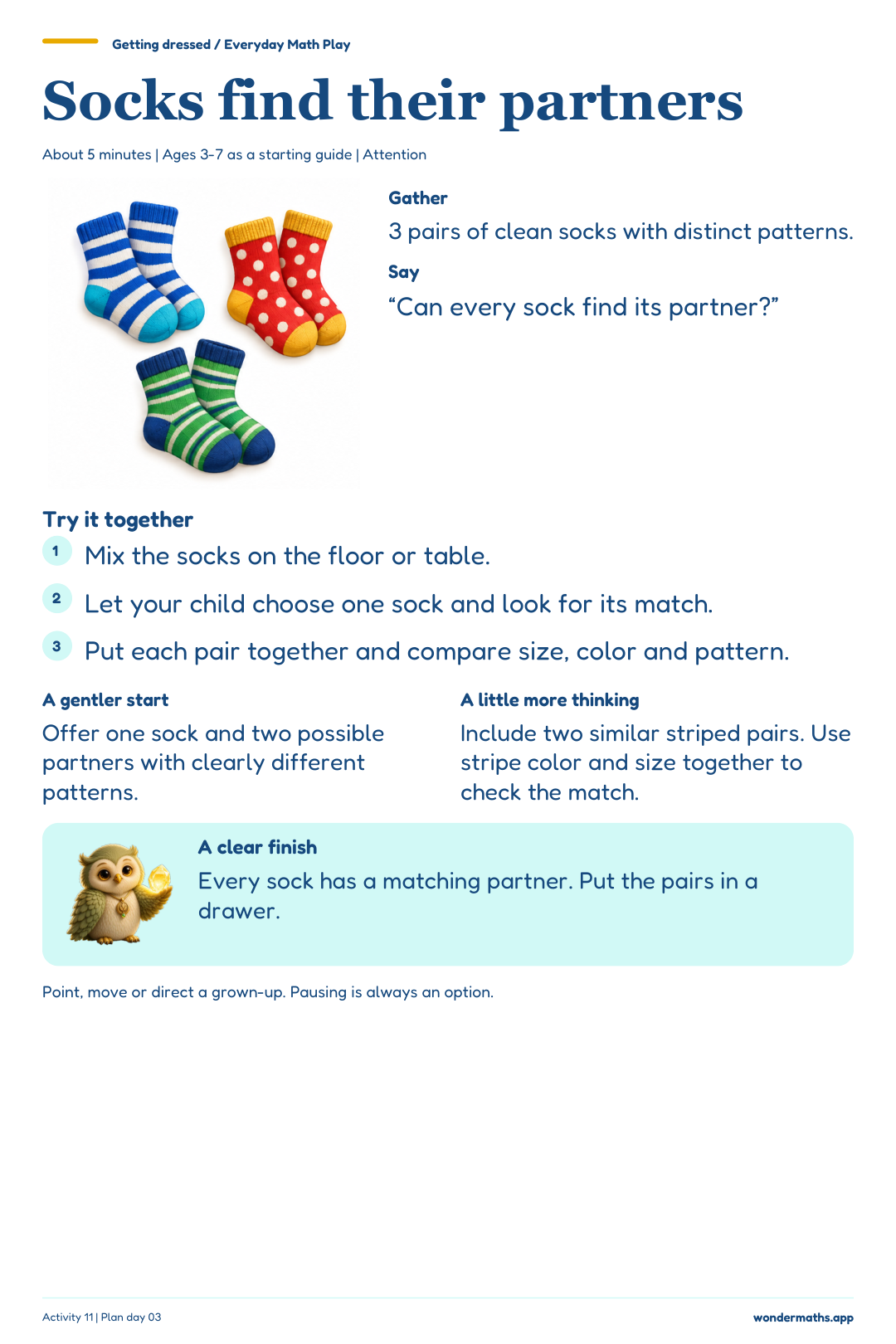
3 pairs of clean socks with distinct patterns.
“Can every sock find its partner?”
Offer one sock and two possible partners with clearly different patterns.
Include two similar striped pairs. Use stripe color and size together to check the match.
Wait while your child is trying an idea. If they want help, offer one clue and pause:
If needed, show one move, then let your child make the next choice. They can point, act or direct you.
Keep the four parent quick cards nearby →Every sock has a matching partner. Put the pairs in a drawer.
You can also pause or stop earlier.
Does your child compare several details rather than pick the first similar sock?
Matching uses attention to similarities and differences.
One moment is a clue, not a label.
Getting dressed / Plan day 9
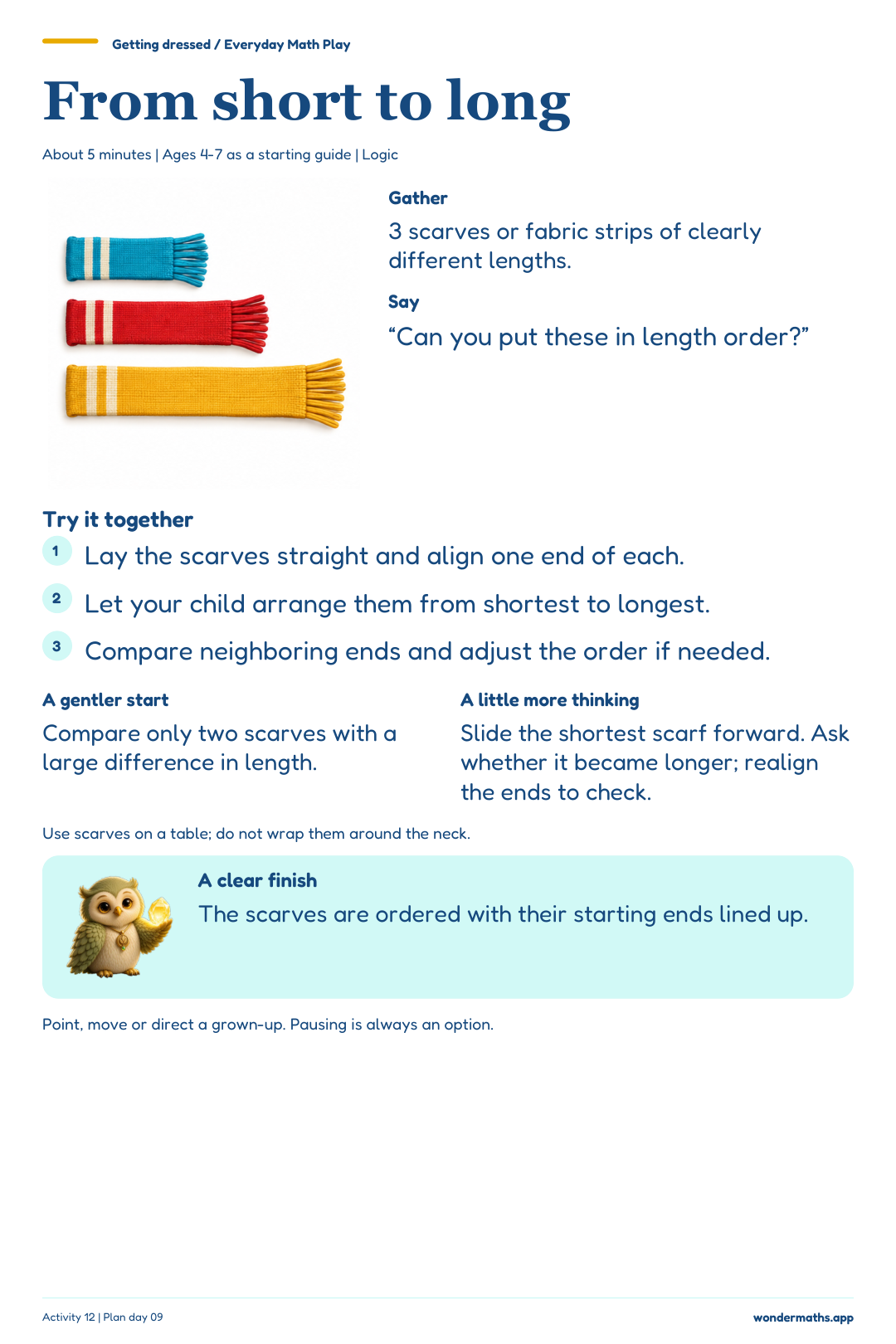
3 scarves or fabric strips of clearly different lengths.
“Can you put these in length order?”
Compare only two scarves with a large difference in length.
Slide the shortest scarf forward. Ask whether it became longer; realign the ends to check.
Wait while your child is trying an idea. If they want help, offer one clue and pause:
If needed, show one move, then let your child make the next choice. They can point, act or direct you.
Keep the four parent quick cards nearby →The scarves are ordered with their starting ends lined up.
You can also pause or stop earlier.
Does your child align starting points rather than judge from an uneven layout?
A shared starting point makes length comparison fair.
One moment is a clue, not a label.
Before you begin: Use scarves on a table; do not wrap them around the neck.
Getting dressed / Plan day 15
A sock and shoe; optional jacket.
“What needs to happen before the shoe goes on?”
Offer just two choices and demonstrate putting a sock near the foot.
Add a jacket. Decide which step can move in the order and which must stay before another.
Wait while your child is trying an idea. If they want help, offer one clue and pause:
If needed, show one move, then let your child make the next choice. They can point, act or direct you.
Keep the four parent quick cards nearby →The sock and shoe are on comfortably. You are ready for the next part of your day.
You can also pause or stop earlier.
Does your child distinguish a necessary order from a flexible one?
Sequencing includes understanding which steps depend on earlier ones.
One moment is a clue, not a label.
Getting dressed / Plan day 21
A stuffed animal; 2 soft hats of different sizes.
“Which hat could fit Teddy?”
Use one clearly oversized hat and one that fits easily.
Find a second stuffed animal for the other hat. Predict both matches before trying them.
Wait while your child is trying an idea. If they want help, offer one clue and pause:
If needed, show one move, then let your child make the next choice. They can point, act or direct you.
Keep the four parent quick cards nearby →Teddy has a hat that fits comfortably and leaves the face visible.
You can also pause or stop earlier.
Does your child revise a size prediction after trying it?
Size comparison becomes meaningful through fitting and testing.
One moment is a clue, not a label.
Getting dressed / Plan day 27
Clean red and blue socks, including stripes and dots; 2 baskets.
“What rule should our baskets use?”
Use two plain colors with no extra pattern to distract.
Re-sort by stripes and dots. Notice which socks now belong together.
Wait while your child is trying an idea. If they want help, offer one clue and pause:
If needed, show one move, then let your child make the next choice. They can point, act or direct you.
Keep the four parent quick cards nearby →Every chosen sock fits the agreed rule. Put the baskets away.
You can also pause or stop earlier.
Does your child maintain the current rule when another feature competes for attention?
Sorting requires selecting a relevant attribute and ignoring others.
One moment is a clue, not a label.
Out for a walk / Plan day 4
A familiar walking route; no extra materials.
“Can you spot a round shape and a shape with corners?”
Search for one shape in a small area. Point out one example first.
Find the same shape turned another way. Decide what stayed the same despite its position.
Wait while your child is trying an idea. If they want help, offer one clue and pause:
If needed, show one move, then let your child make the next choice. They can point, act or direct you.
Keep the four parent quick cards nearby →Your chosen shapes have been found. Continue your walk without another search.
You can also pause or stop earlier.
Does your child compare outlines instead of relying only on an object's name?
Recognizing shapes includes attending to their features in everyday objects.
One moment is a clue, not a label.
Before you begin: Stay on your normal safe route; observe objects without climbing.
Out for a walk / Plan day 10
A safe open space with a visible tree or other landmark.
“Which way could take us there?”
Offer two short routes, both safe, and let your child choose.
Plan a different return route. Predict where it joins the first path.
Wait while your child is trying an idea. If they want help, offer one clue and pause:
If needed, show one move, then let your child make the next choice. They can point, act or direct you.
Keep the four parent quick cards nearby →You reach the agreed landmark together.
You can also pause or stop earlier.
Does your child plan around an obstacle and check direction while moving?
Route planning links position, direction and a destination.
One moment is a clue, not a label.
Before you begin: An adult checks the route and stays beside the child; avoid roads and water.
Out for a walk / Plan day 16
A short level path with the same visible start and finish.
“Will smaller steps take more steps?”
Use a very short path and count aloud together as your child moves.
Predict the result before the second trip and explain or show why the same distance needs a different count.
Wait while your child is trying an idea. If they want help, offer one clue and pause:
If needed, show one move, then let your child make the next choice. They can point, act or direct you.
Keep the four parent quick cards nearby →Both trips are complete and their counts have been compared.
You can also pause or stop earlier.
Does your child connect a smaller step size with needing more steps over the same distance?
Informal measurement depends on the size of the unit used.
One moment is a clue, not a label.
Before you begin: Walk at a comfortable pace. A toy making long and short moves is an alternative.
Out for a walk / Plan day 22
3 fallen leaves of similar shape but clearly different lengths.
“Which leaf reaches the farthest?”
Use two clearly different leaves and align them together.
Find a fourth leaf and predict where it belongs before placing it in the row.
Wait while your child is trying an idea. If they want help, offer one clue and pause:
If needed, show one move, then let your child make the next choice. They can point, act or direct you.
Keep the four parent quick cards nearby →The selected leaves form a checked row from shortest to longest.
You can also pause or stop earlier.
Does your child use the agreed dimension, rather than switching between width and length?
Ordering uses repeated comparisons under one consistent rule.
One moment is a clue, not a label.
Before you begin: Use fallen leaves only; leave unfamiliar berries and plants untouched.
Out for a walk / Plan day 28
A clear level space; no equipment.
“Can you join my repeating move?”
Use tap-clap while seated and keep demonstrating alongside your child.
Let your child invent a new three-action unit. Repeat it twice and take turns leading.
Wait while your child is trying an idea. If they want help, offer one clue and pause:
If needed, show one move, then let your child make the next choice. They can point, act or direct you.
Keep the four parent quick cards nearby →Repeat the agreed unit three times, then make a shared stop gesture.
You can also pause or stop earlier.
Does your child remember the whole unit rather than copy only the last action?
A movement sequence gives a repeating pattern a rhythm.
One moment is a clue, not a label.
Before you begin: Use seated taps or toy movements if stepping is uncomfortable.
Around the house / Plan day 5
3 clean, unbreakable containers and their large lids.
“Can you find a lid for each container?”
Use one container with two very different lid shapes.
Use two similar rectangular lids. Predict which fits by comparing both length and width.
Wait while your child is trying an idea. If they want help, offer one clue and pause:
If needed, show one move, then let your child make the next choice. They can point, act or direct you.
Keep the four parent quick cards nearby →Every container has its matching lid resting in place.
You can also pause or stop earlier.
Does your child use shape and orientation to guide the next try?
Matching outlines and rotating objects support spatial reasoning.
One moment is a clue, not a label.
Before you begin: Choose lids that rest easily; avoid sharp edges and tight snap closures.
Around the house / Plan day 11
2 unbreakable containers; a small scoop; water; a tray and towel.
“Which container do you think holds more?”
Fill one container, then pour it into the other. Look for extra space or overflow on the tray.
Choose a tall narrow and short wide container. Check whether height alone predicted capacity.
Wait while your child is trying an idea. If they want help, offer one clue and pause:
If needed, show one move, then let your child make the next choice. They can point, act or direct you.
Keep the four parent quick cards nearby →Both containers have been compared. Empty the water and dry the tray.
You can also pause or stop earlier.
Does your child use the measured result to revise a first visual guess?
Capacity comparisons need the same unit and a consistent filling point.
One moment is a clue, not a label.
Before you begin: An adult stays beside the water activity and empties containers immediately afterward.
Around the house / Plan day 17
2 trays or placemats; 2 cups, 2 bowls and 2 spoons.
“Can you make your tray look like mine?”
Use only two objects and leave the model visible throughout.
Look together, cover the model, then rebuild from memory. Uncover it to check.
Wait while your child is trying an idea. If they want help, offer one clue and pause:
If needed, show one move, then let your child make the next choice. They can point, act or direct you.
Keep the four parent quick cards nearby →Both trays match in position. Use one for a pretend snack.
You can also pause or stop earlier.
Does your child use relationships between objects to remember the arrangement?
Copying and recalling an arrangement connect attention with location memory.
One moment is a clue, not a label.
Around the house / Plan day 23
At least 4 large play-food pieces; a basket.
“May I have three apples, please?”
Order two items and keep two fingers visible as a reminder.
Order three, then change the order to four. Adjust the basket without emptying it.
Wait while your child is trying an idea. If they want help, offer one clue and pause:
If needed, show one move, then let your child make the next choice. They can point, act or direct you.
Keep the four parent quick cards nearby →One order is checked and delivered. Close the shop or swap roles by agreement.
You can also pause or stop earlier.
Does your child connect a requested total with a selected set and adjust a changed order?
A pretend order gives counting and adjusting a set a purpose.
One moment is a clue, not a label.
Around the house / Plan day 29
A tray; a cup and spoon; a cloth.
“What moved while you were not looking?”
Keep a quick drawing of the first arrangement beside the tray for comparison.
Use three objects and move just one. Identify both its old and new location.
Wait while your child is trying an idea. If they want help, offer one clue and pause:
If needed, show one move, then let your child make the next choice. They can point, act or direct you.
Keep the four parent quick cards nearby →The starting arrangement has been restored and checked together.
You can also pause or stop earlier.
Does your child recall a relationship or use the comparison drawing to check?
Comparing before and after uses attention and spatial memory.
One moment is a clue, not a label.
Move & imagine / Plan day 6
A small toy; an unbreakable cup wide enough to hold it.
“Inside or beside? You choose.”
Offer only inside and beside. Demonstrate one, then invite a choice.
Keep the toy still and move the cup to make a requested relationship. Check from the same viewpoint.
Wait while your child is trying an idea. If they want help, offer one clue and pause:
If needed, show one move, then let your child make the next choice. They can point, act or direct you.
Keep the four parent quick cards nearby →You have explored your chosen positions. Let the toy choose a resting place.
You can also pause or stop earlier.
Does your child connect a position word with the relationship between two objects?
Changing relative position makes spatial words visible.
One moment is a clue, not a label.
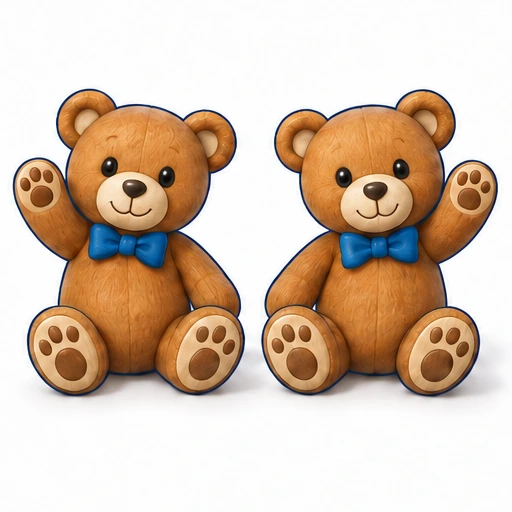
Move & imagine / Plan day 12
A clear space to sit or stand facing each other.
“Can you be my mirror?”
Sit facing each other and mirror one raised hand. Avoid naming left and right.
Use a pose with one hand high and the other low. Check both relationships before moving again.
Wait while your child is trying an idea. If they want help, offer one clue and pause:
If needed, show one move, then let your child make the next choice. They can point, act or direct you.
Keep the four parent quick cards nearby →Each person has led a pose. Finish with matching hands in your laps.
You can also pause or stop earlier.
Does your child compare positions across the space between you?
Mirroring uses reflected position rather than copying the same named hand.
One moment is a clue, not a label.
Before you begin: Use only comfortable movements; mirroring two toys is also welcome.
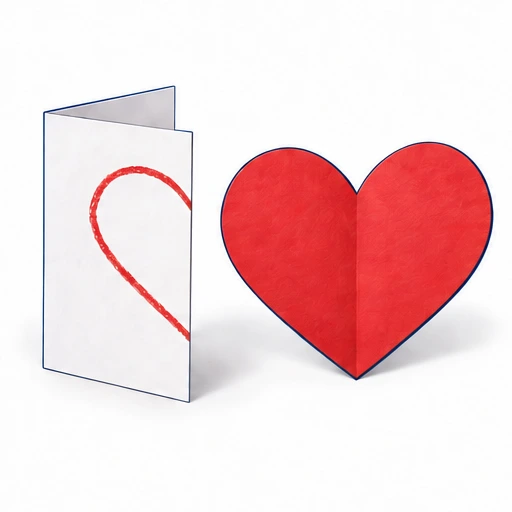
Move & imagine / Plan day 18
Paper; a crayon; scissors used by a grown-up.
“What will appear when we open the paper?”
Start with a finished folded heart. Open and close it together.
Predict what a small notch cut through both layers on an outside edge will produce. Cut, open and compare.
Wait while your child is trying an idea. If they want help, offer one clue and pause:
If needed, show one move, then let your child make the next choice. They can point, act or direct you.
Keep the four parent quick cards nearby →The paper is open and the prediction has been checked.
You can also pause or stop earlier.
Does your child connect the fold with matching halves?
Folding and unfolding make reflection symmetry observable.
One moment is a clue, not a label.
Before you begin: A grown-up handles the scissors; the child predicts, opens and checks.
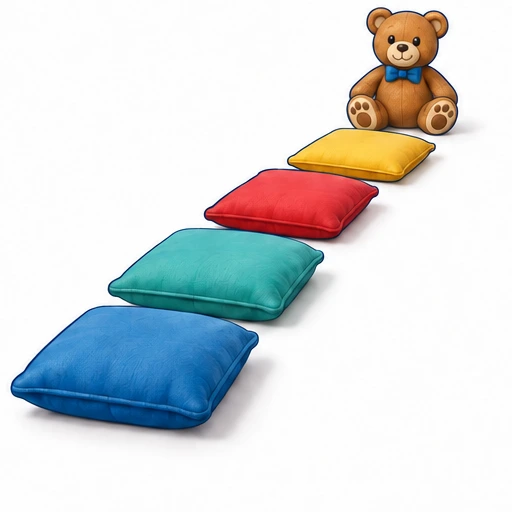
Move & imagine / Plan day 24
3 or 4 flat cushions; a stuffed animal; clear floor space.
“Can your toy reach Teddy along a path?”
Place the first and last cushions. Let your child choose how to connect them.
Add a no-go space marked with a towel. Rearrange the same cushions to go around it.
Wait while your child is trying an idea. If they want help, offer one clue and pause:
If needed, show one move, then let your child make the next choice. They can point, act or direct you.
Keep the four parent quick cards nearby →The toy reaches Teddy along one continuous route.
You can also pause or stop earlier.
Does your child notice a gap and repair the route after testing?
Connecting a route combines planning with checking continuity.
One moment is a clue, not a label.
Before you begin: Move a toy along the cushions; no jumping or climbing is needed.
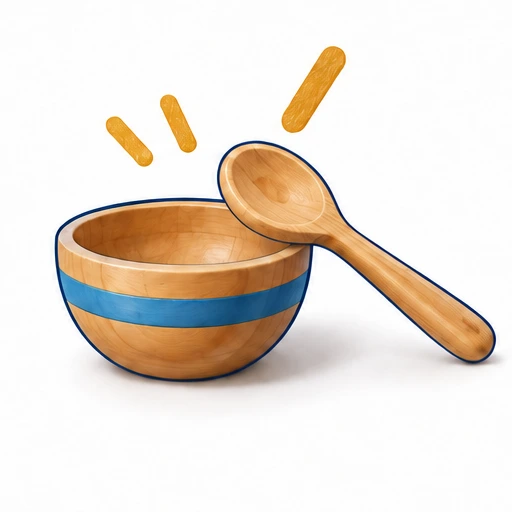
Move & imagine / Plan day 30
A wooden spoon and an unbreakable bowl, or just your hands.
“Can you send my rhythm back?”
Use two equal taps and perform them together before taking turns.
Keep the same rhythm but use a different action, such as knee taps. Check which timing stayed the same.
Wait while your child is trying an idea. If they want help, offer one clue and pause:
If needed, show one move, then let your child make the next choice. They can point, act or direct you.
Keep the four parent quick cards nearby →Each person has sent and echoed one rhythm. Put the spoon down together.
You can also pause or stop earlier.
Does your child remember timing and pauses, as well as the number of taps?
Remembering a sound sequence includes its order and timing.
One moment is a clue, not a label.
Before you begin: Keep taps gentle. Use visible gestures if sound is uncomfortable or inaccessible.
PDF and ZIP downloads marked “email access” require a grown-up’s email. Free sample pages open without email. Newsletter signup is optional and separate.