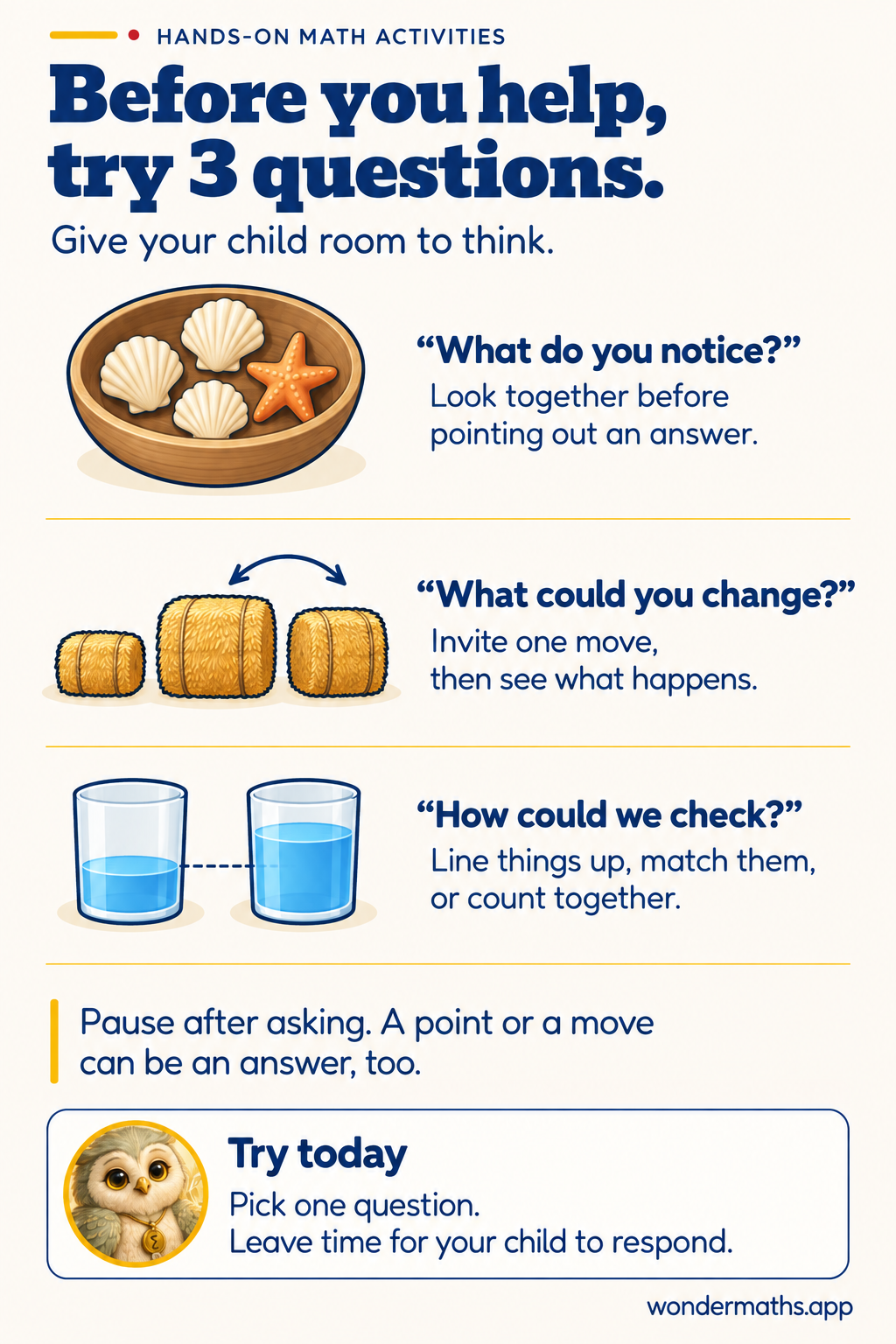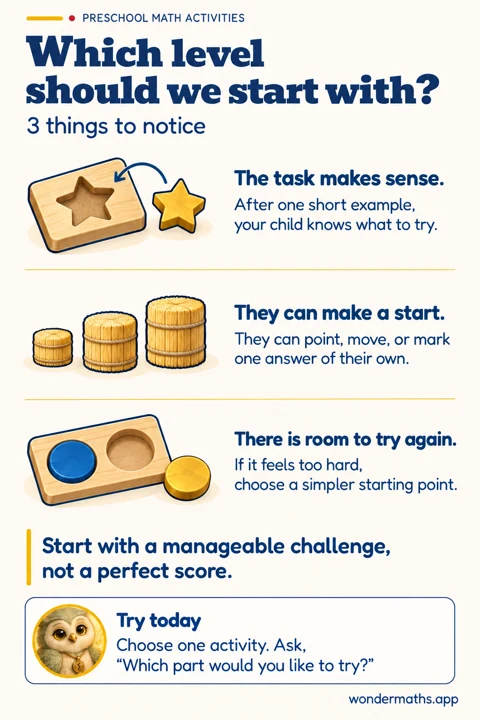
Which level should we start with?
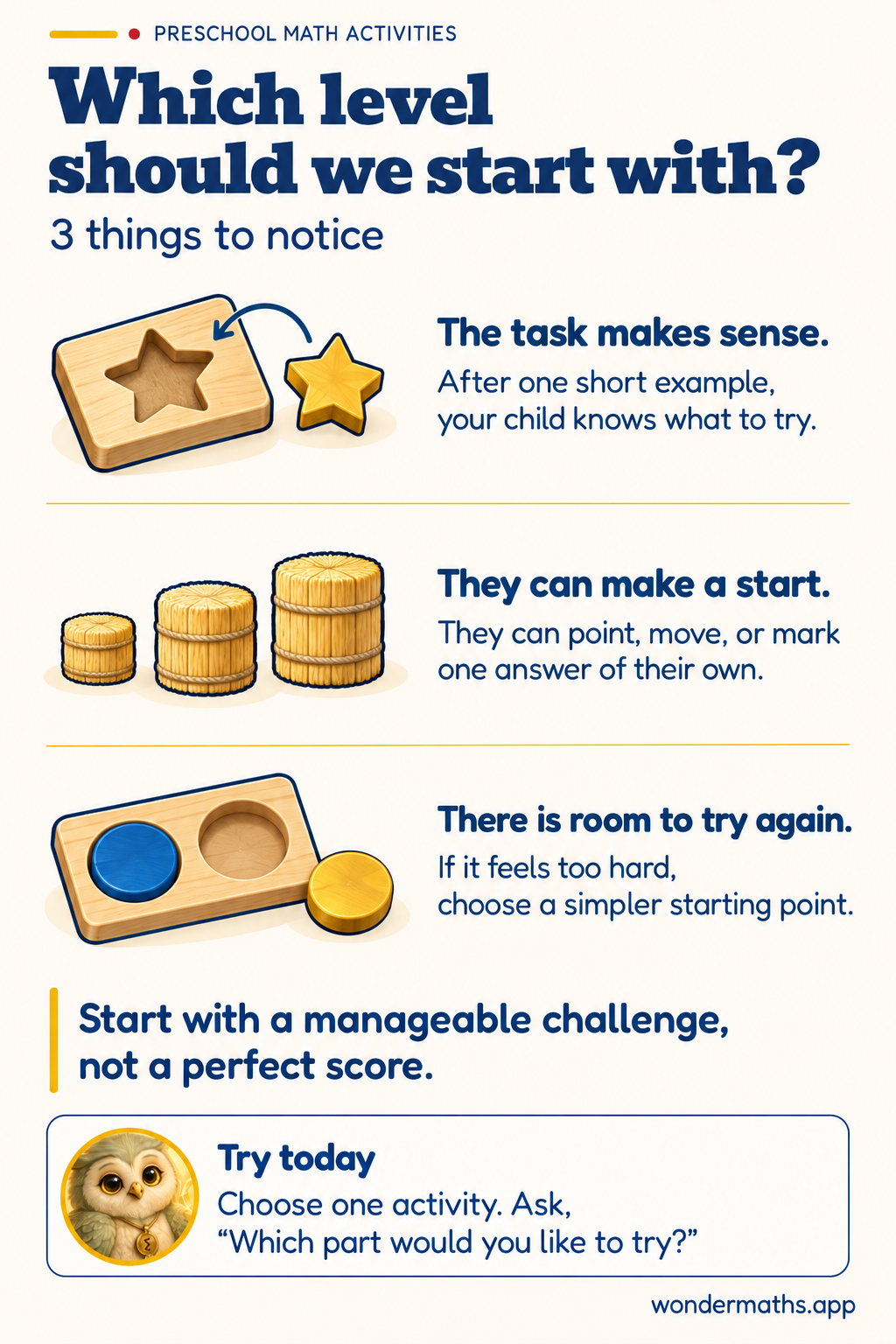
3 things to notice when choosing a starting point.
Read the tips: Which level should we start with?
- The task makes sense.
After one short example, your child knows what to try.
- They can make a start.
They can point, move, or mark one answer of their own.
- There is room to try again.
If it feels too hard, choose a simpler starting point.
Start with a manageable challenge, not a perfect score.
Try today
Choose one activity. Ask, “Which part would you like to try?”
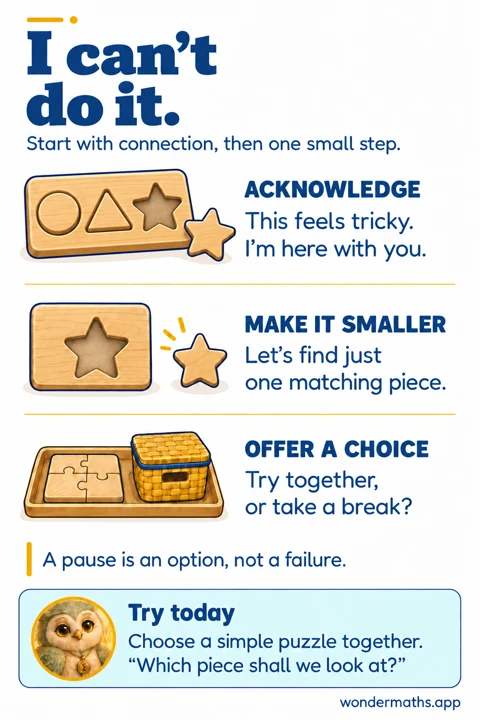
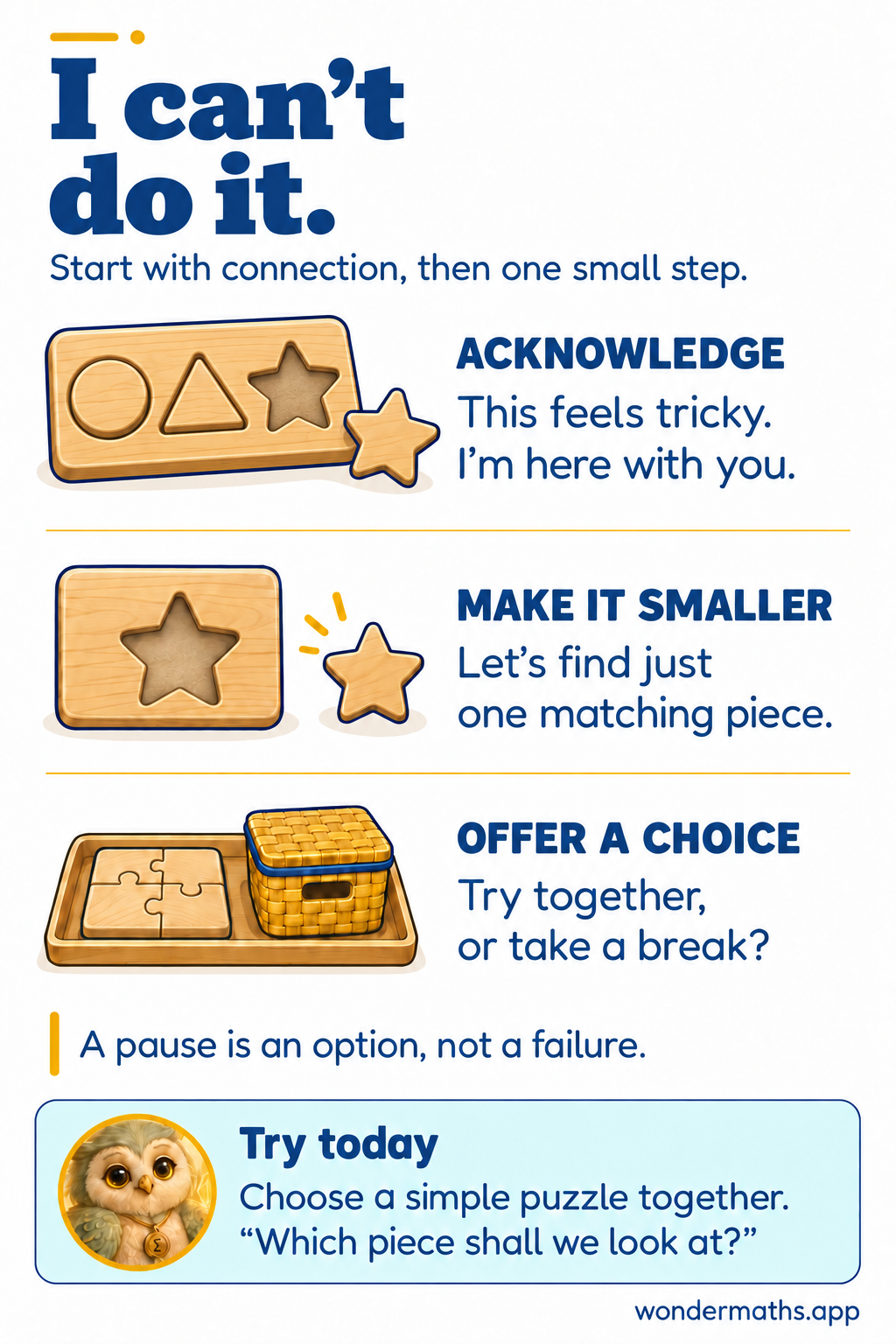
“I can’t do it.”
Start with connection, then one small step.
Read the tips: “I can’t do it.”
- Acknowledge
“This feels tricky.
I’m here with you.”
- Make It Smaller
“Let’s find just
one matching piece.”
- Offer A Choice
“Try together,
or take a break?”
A pause is an option, not a failure.
Try today
Choose a simple puzzle together.
“Which piece should we look at?”
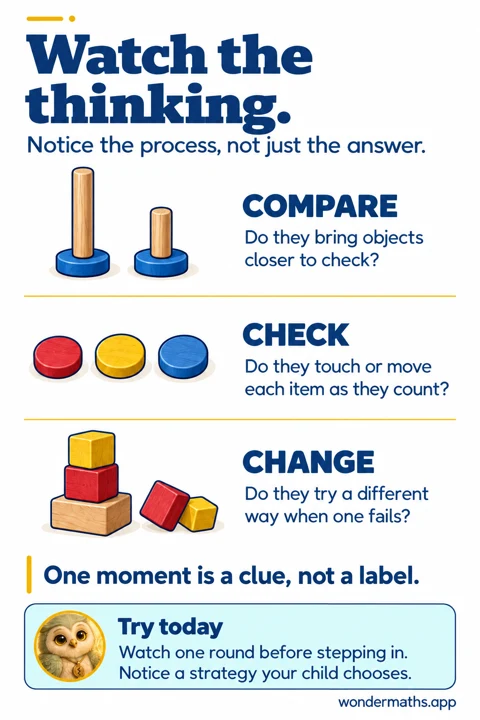
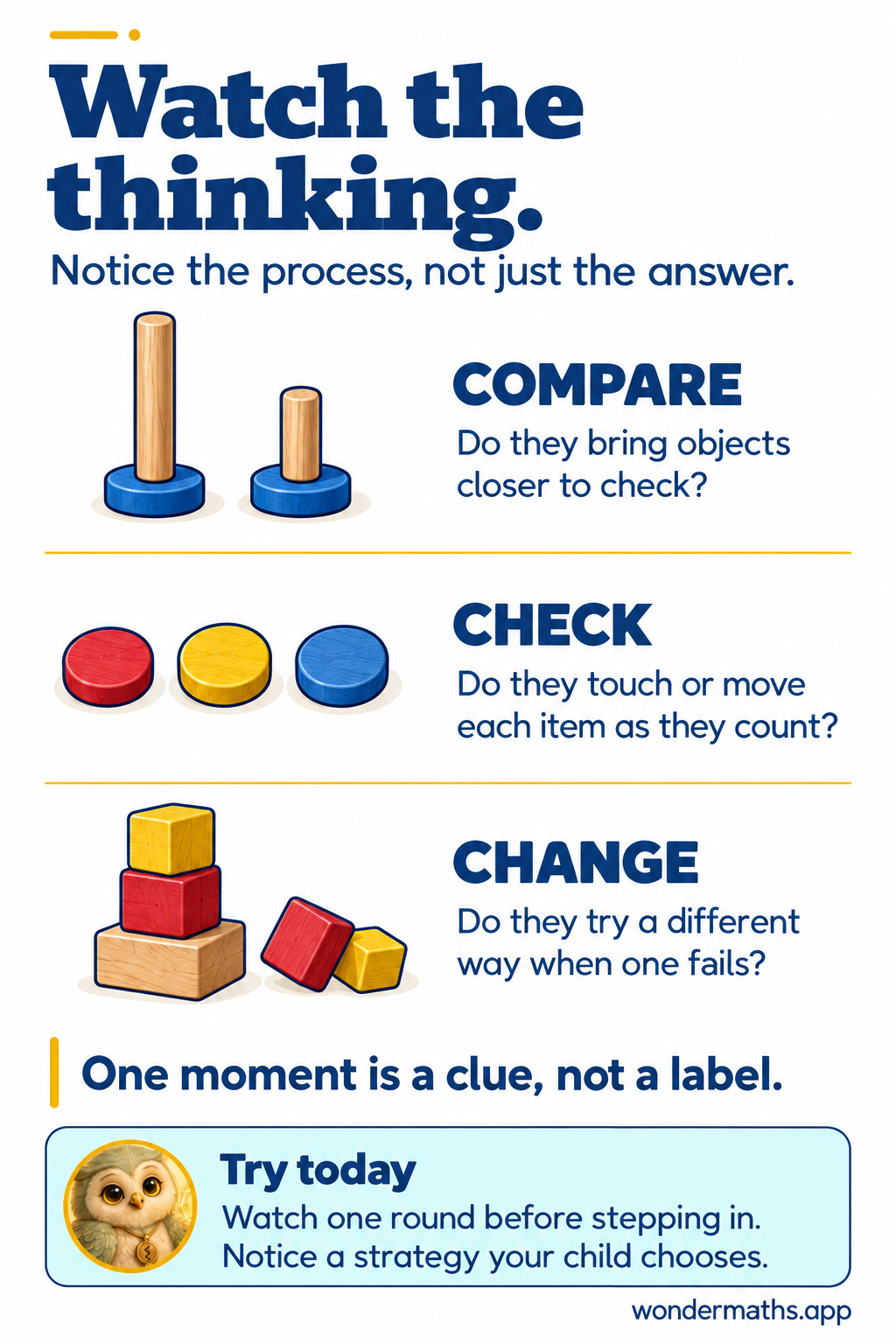
Watch the thinking
Notice the process, not just the answer.
Read the tips: Watch the thinking.
- Compare
Do they bring objects
closer to check?
- Check
Do they touch or move
each item as they count?
- Change
Do they try a different
way when one fails?
One moment is a clue, not a label.
Try today
Watch one round before stepping in.
Notice a strategy your child chooses.
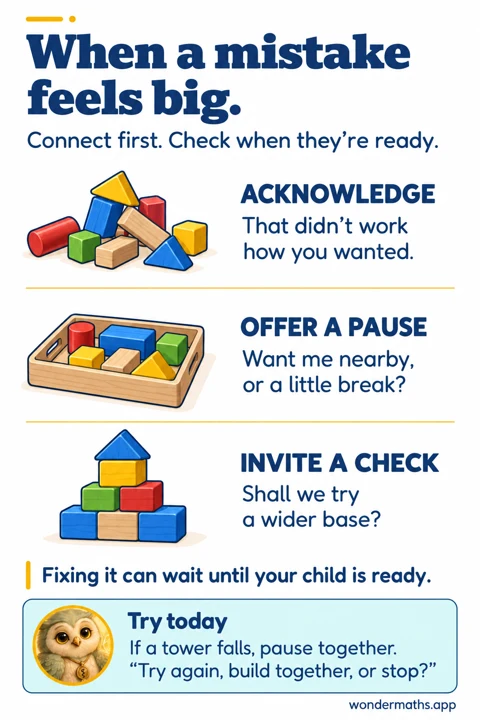
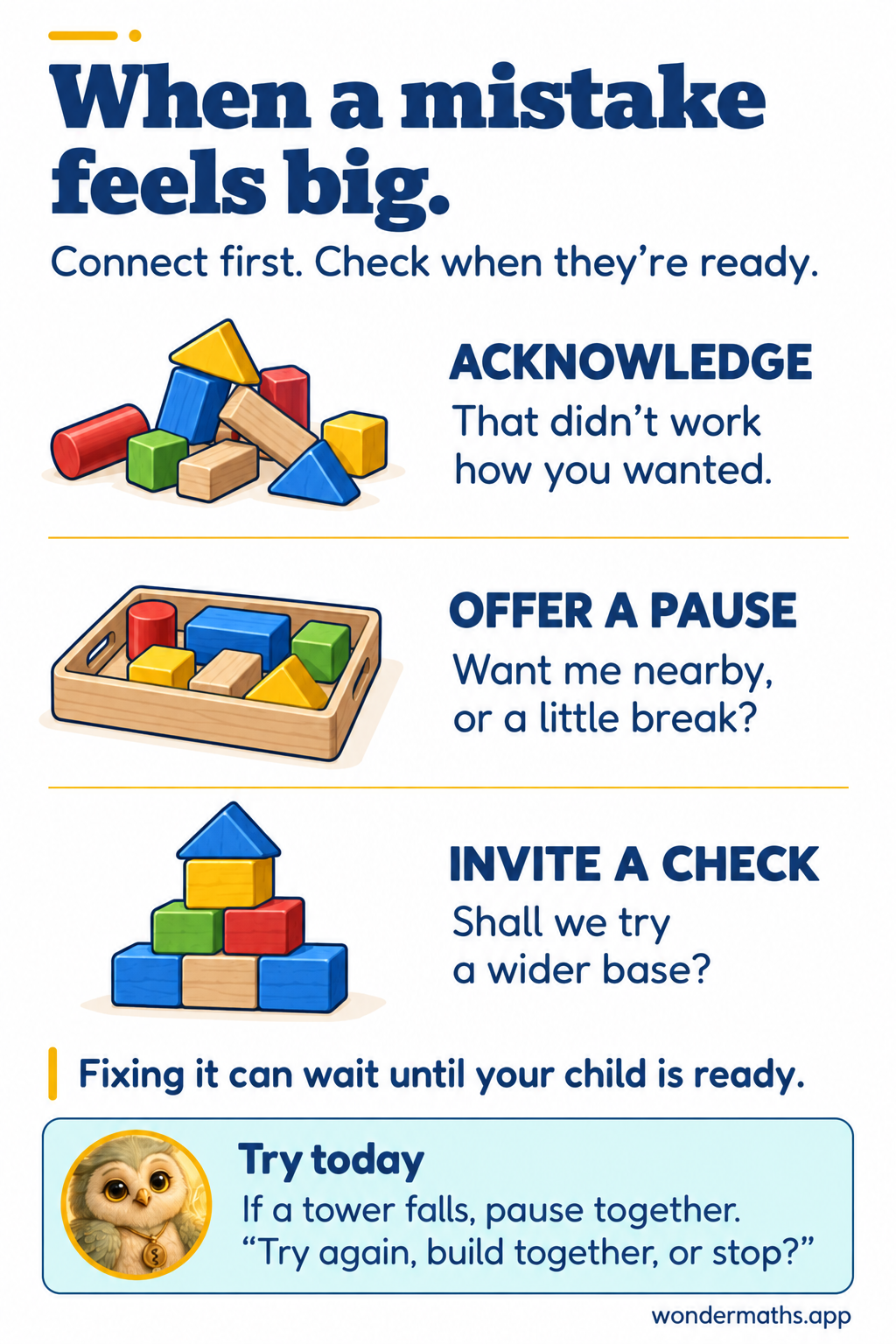
When a mistake feels big
Connect first. Check when they’re ready.
Read the tips: When a mistake feels big.
- Acknowledge
“That didn’t work
how you wanted.”
- Offer A Pause
“Want me nearby,
or a little break?”
- Invite A Check
“Shall we try
a wider base?”
Fixing it can wait until your child is ready.
Try today
If a tower falls, pause together.
“Try again, build together, or stop?”
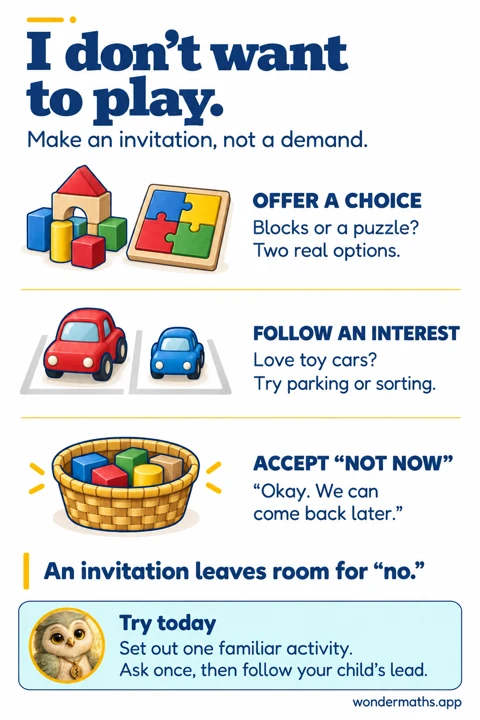
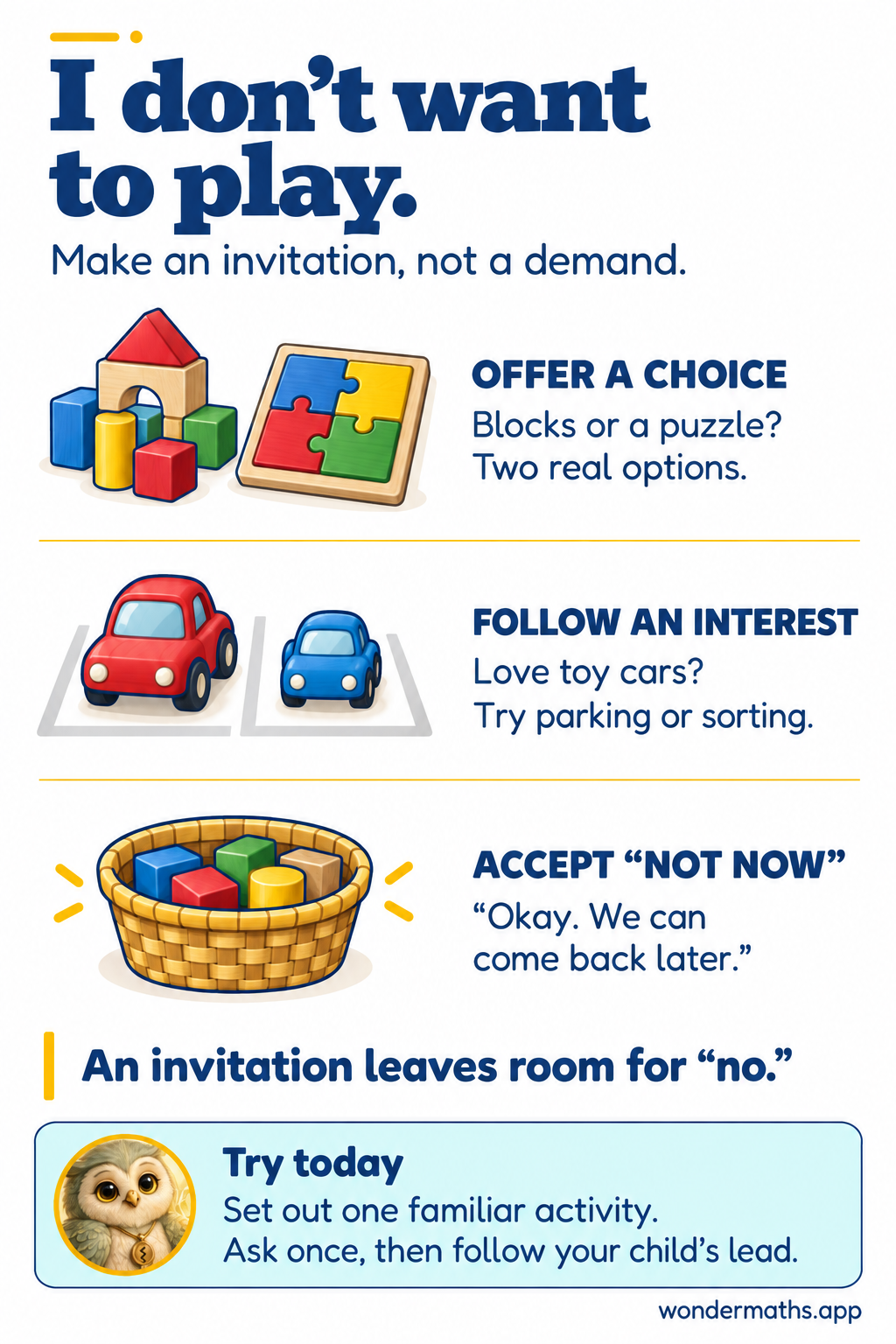
“I don’t want to play.”
Make an invitation, not a demand.
Read the tips: “I don’t want to play.”
- Offer A Choice
“Blocks or a puzzle?”
Two real options.
- Follow An Interest
Love toy cars?
Try parking or sorting.
- Accept “Not Now”
“Okay. We can
come back later.”
An invitation leaves room for “no.”
Try today
Set out one familiar activity.
Ask once, then follow your child’s lead.
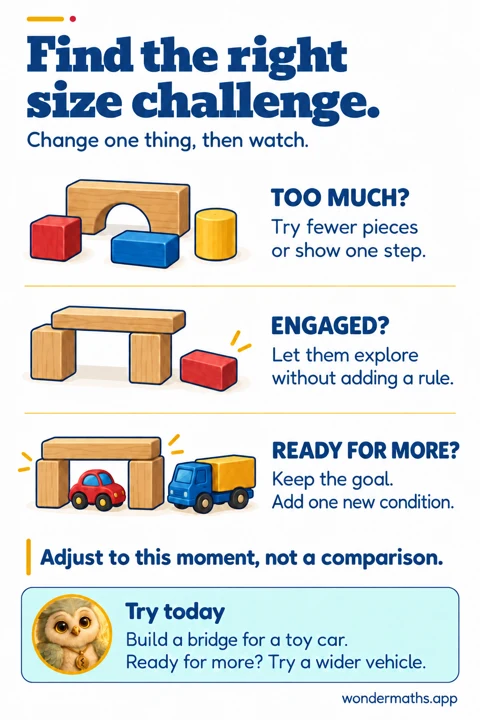
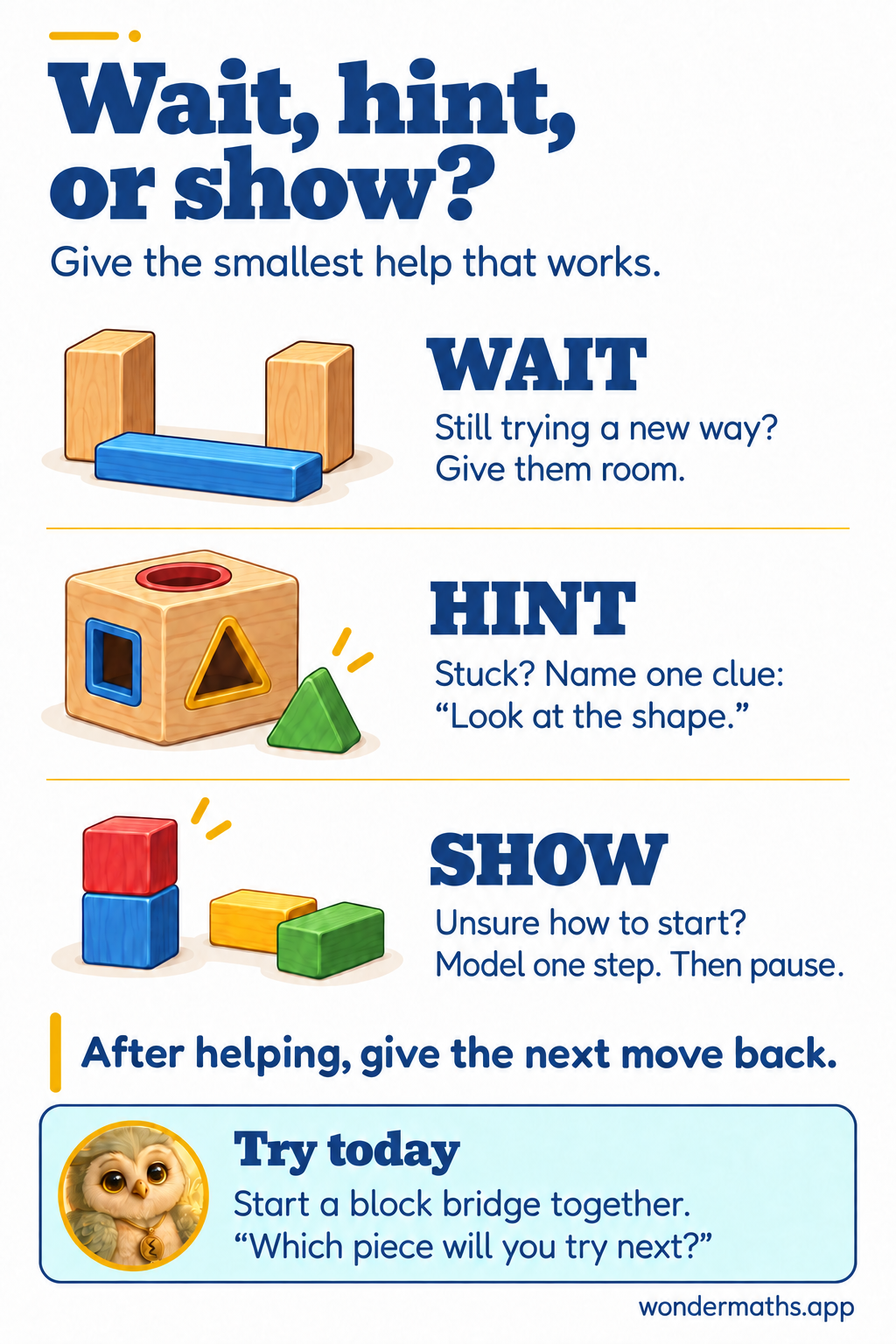
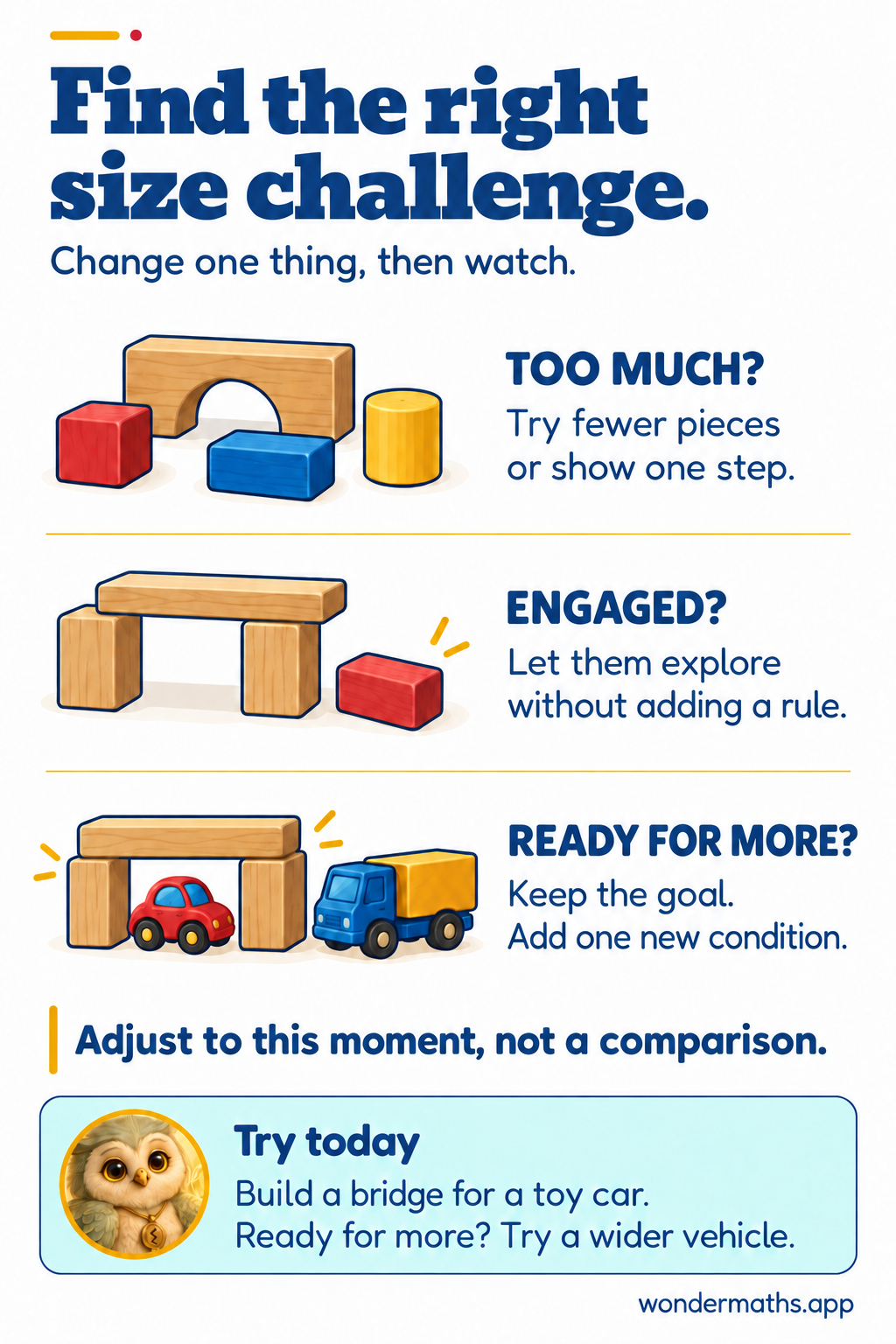
Find the right size challenge
Change one thing, then watch.
Read the tips: Find the right size challenge.
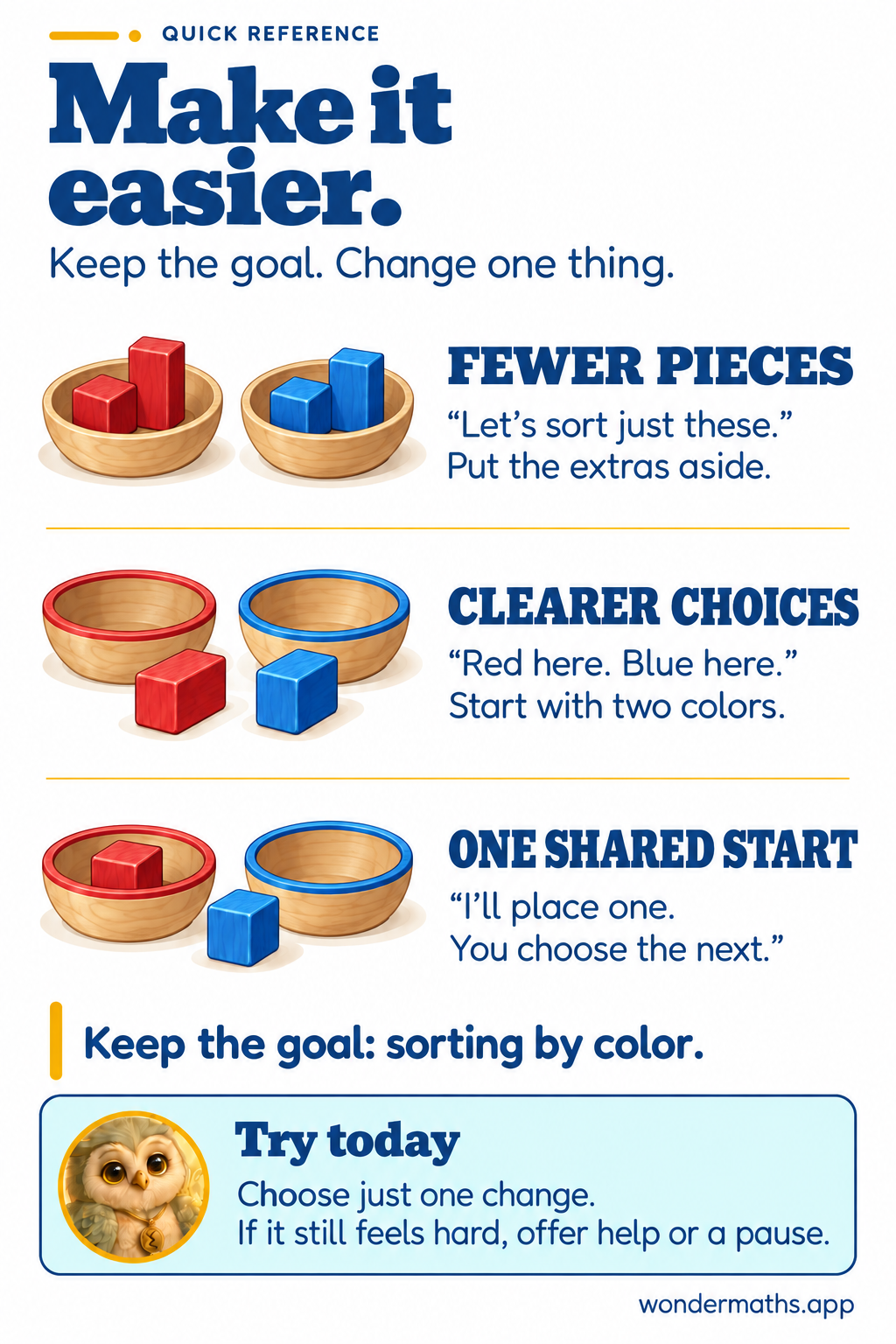
- Too Much?
Try fewer pieces
or show one step.
- Engaged?
Let them explore
without adding a rule.
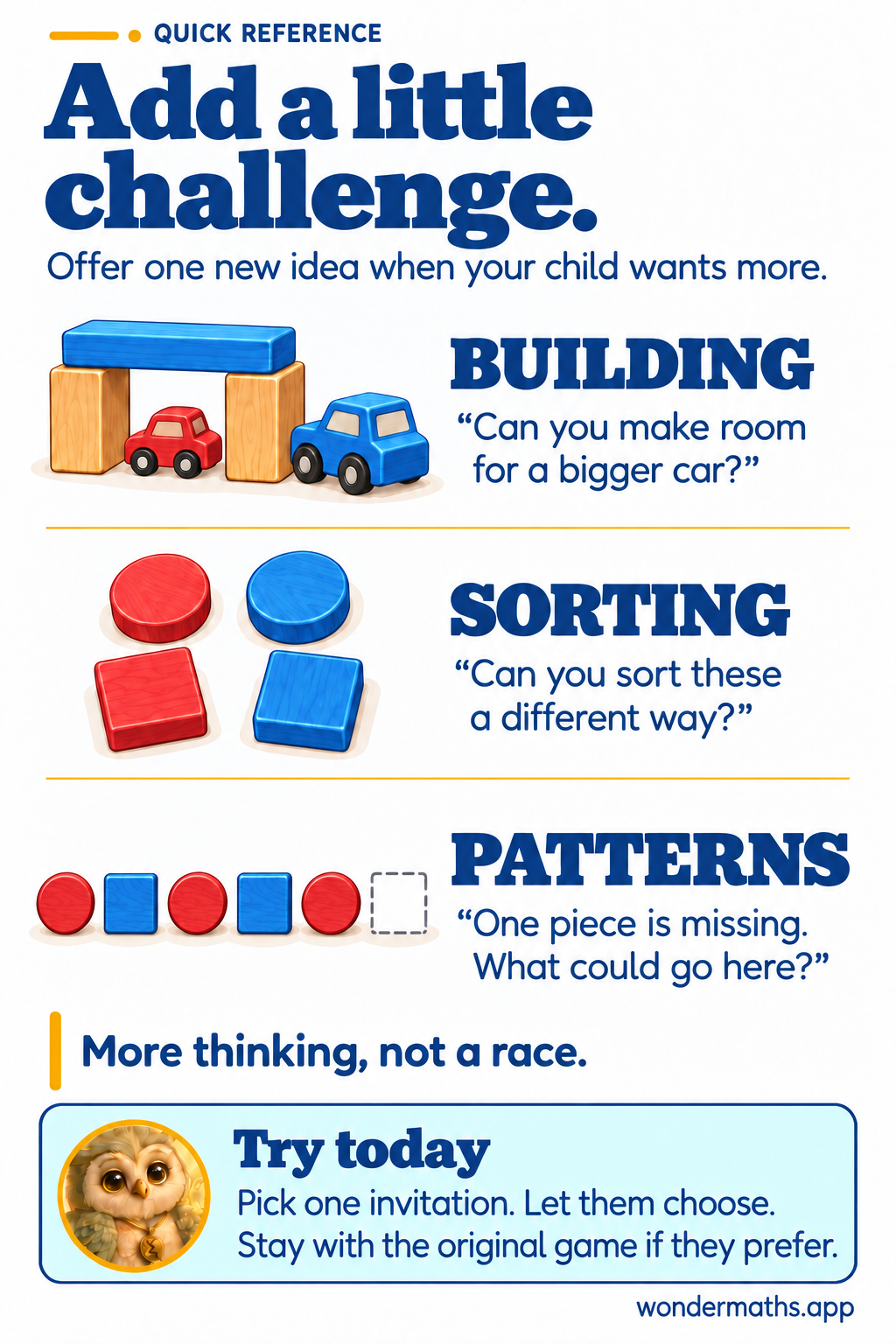
- Ready For More?
Keep the goal.
Add one new condition.
Adjust to this moment, not a comparison.
Try today
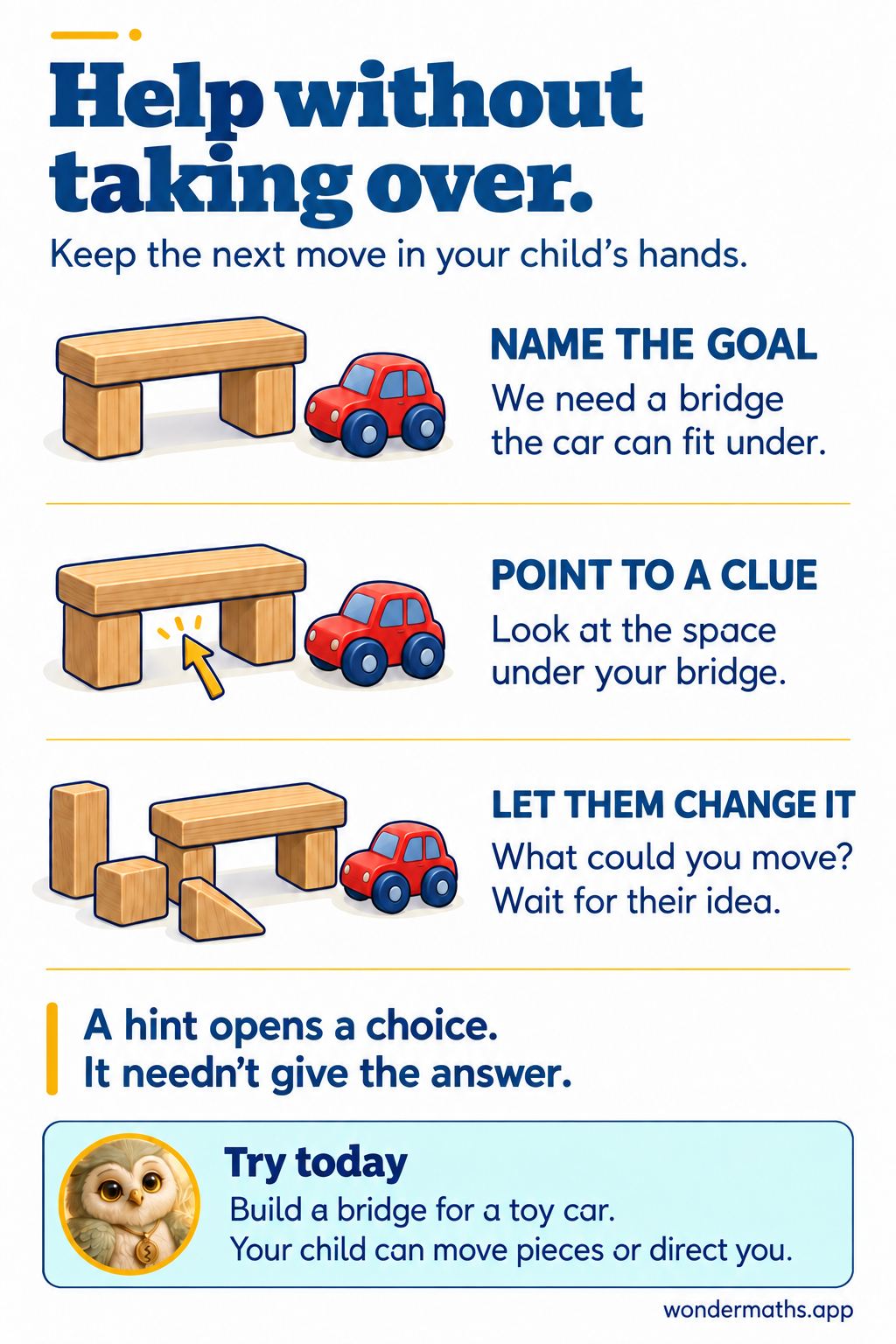
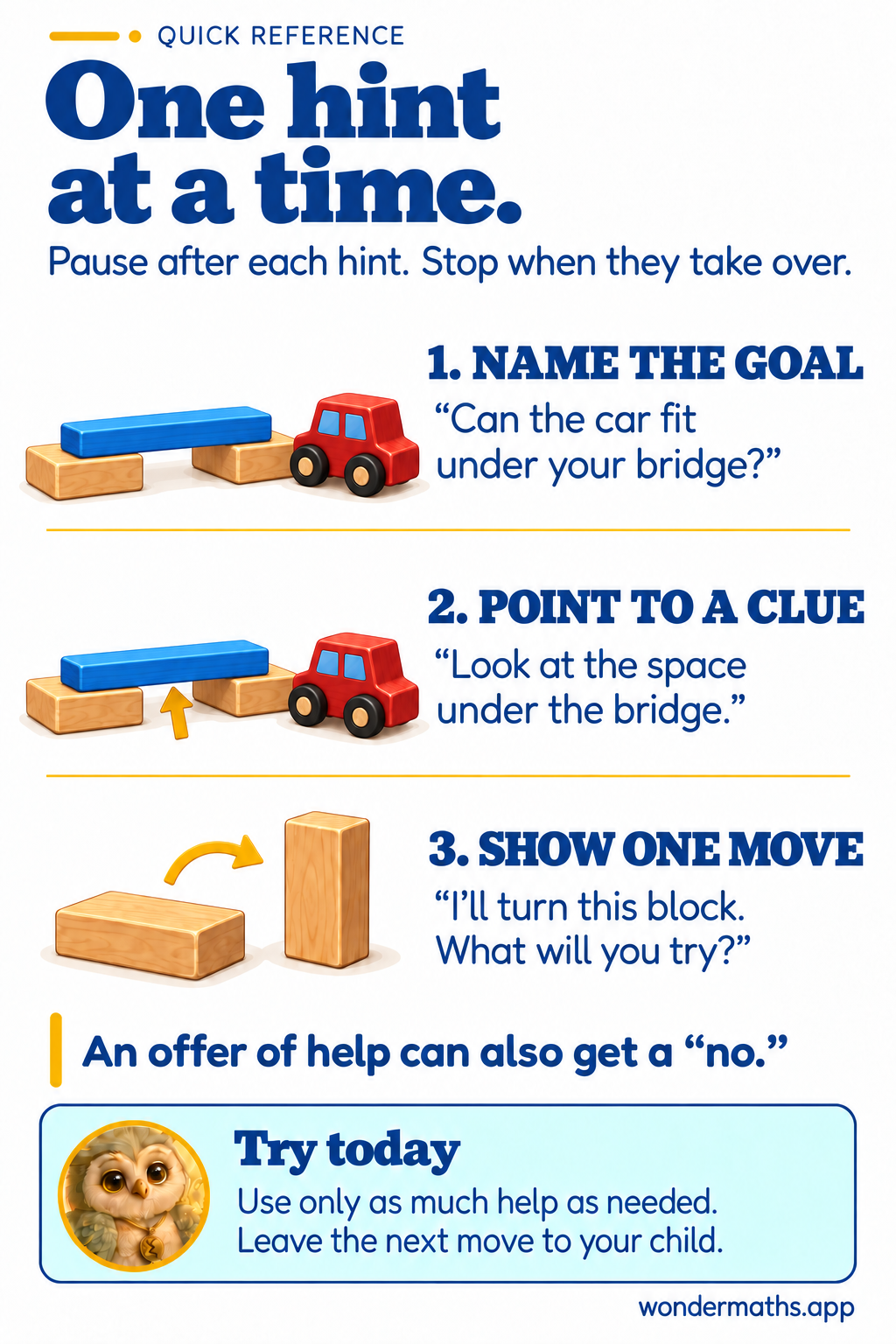
Build a bridge for a toy car.
Ready for more? Try a wider vehicle.
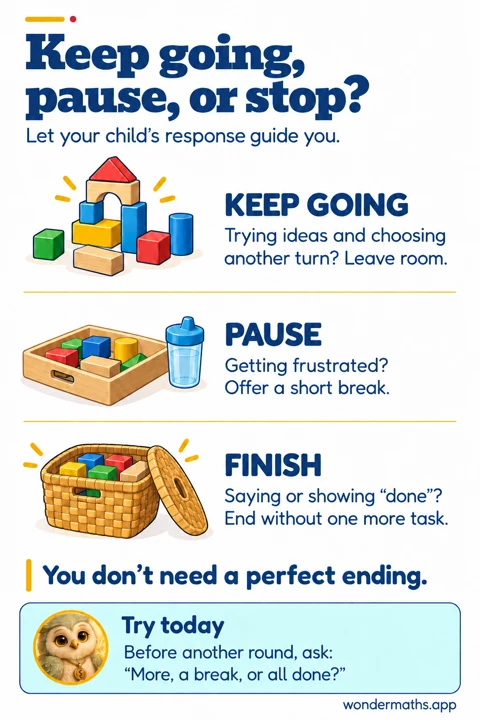
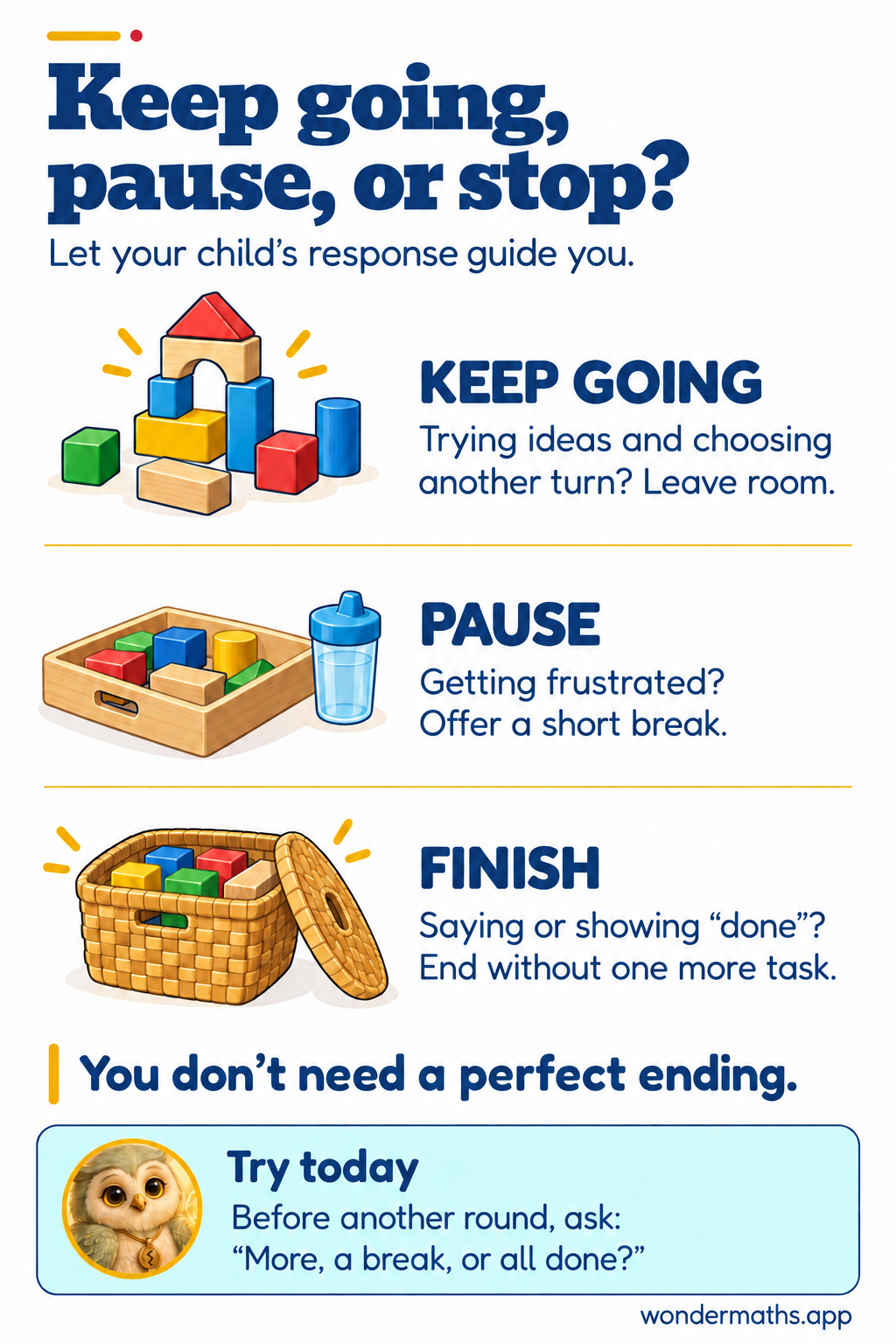
Keep going, pause, or stop?
Let your child’s response guide you.
Read the tips: Keep going, pause, or stop?
- Keep Going
Trying ideas and choosing
another turn? Leave room.
- Pause
Getting frustrated?
Offer a short break.
- Finish
Saying or showing “done”?
End without one more task.
You don’t need a perfect ending.
Try today
Before another round, ask:
“More, a break, or all done?”
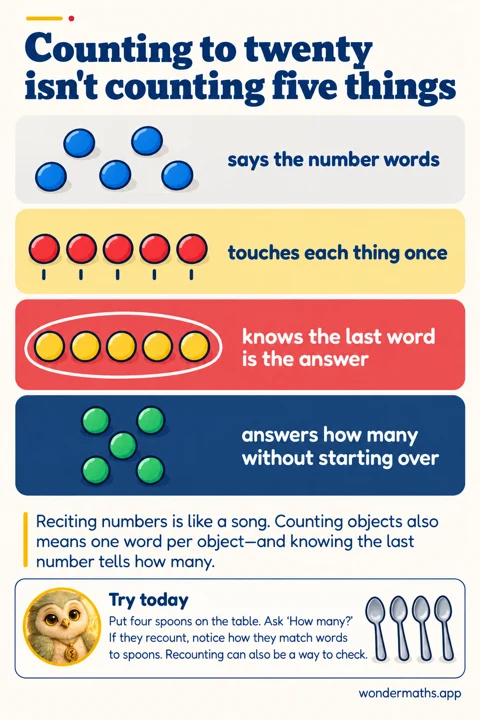
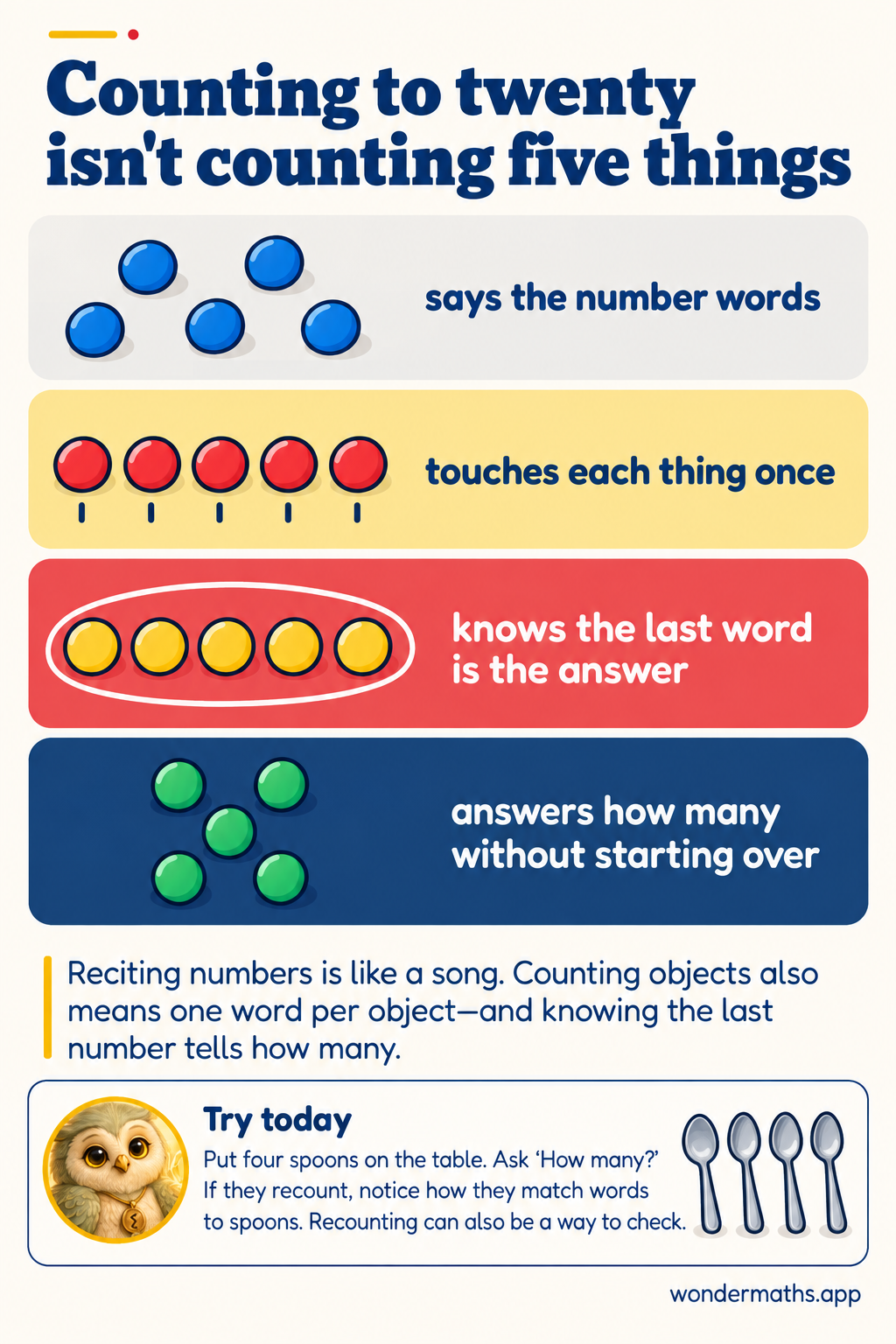
Counting to twenty isn't counting five things
Counting words and counting objects are different skills.
Read the tips: Counting to twenty isn't counting five things
- says the number words
- touches each thing once
- knows the last word is the answer
- answers how many without starting over
Reciting numbers is like a song. Counting objects also means one word per object—and knowing the last number tells how many.
Try today
Put four spoons on the table. Ask ‘How many?’ If they recount, notice how they match words to spoons. Recounting can also be a way to check.
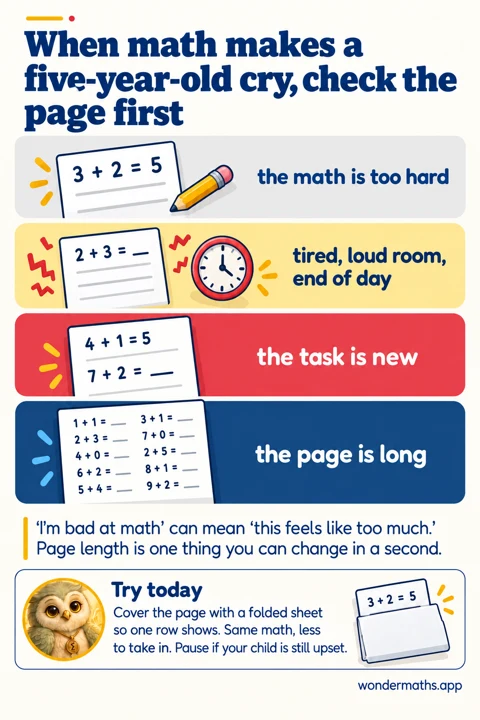
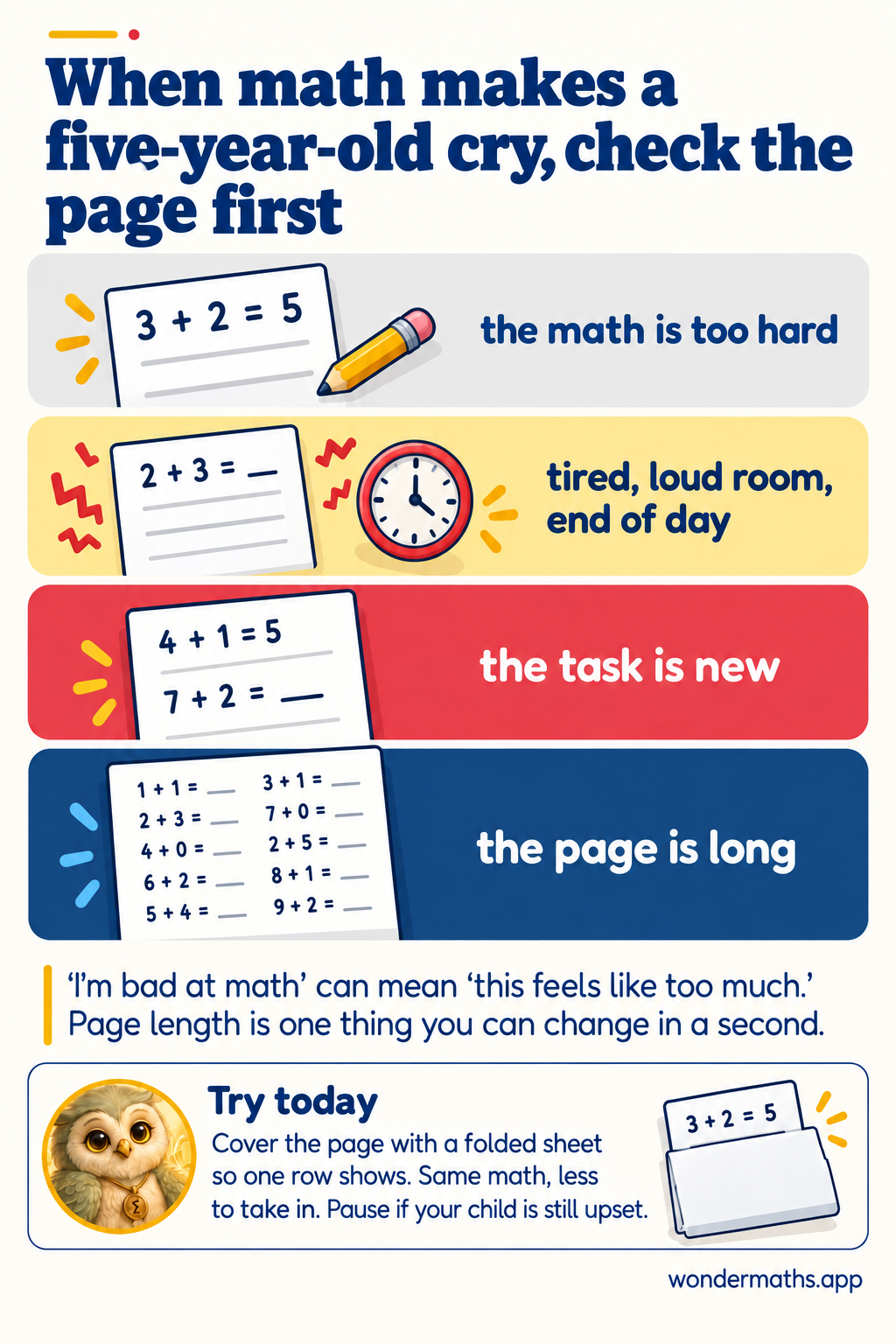
When math makes a five-year-old cry, check the page first
Check the amount on the page as well as the math.
Read the tips: When math makes a five-year-old cry, check the page first
- the math is too hard
- tired, loud room, end of day
- the task is new
- the page is long
‘I'm bad at math’ can mean ‘this feels like too much.’ Page length is one thing you can change in a second.
Try today
Cover the page with a folded sheet so one row shows. Same math, less to take in. Pause if your child is still upset.
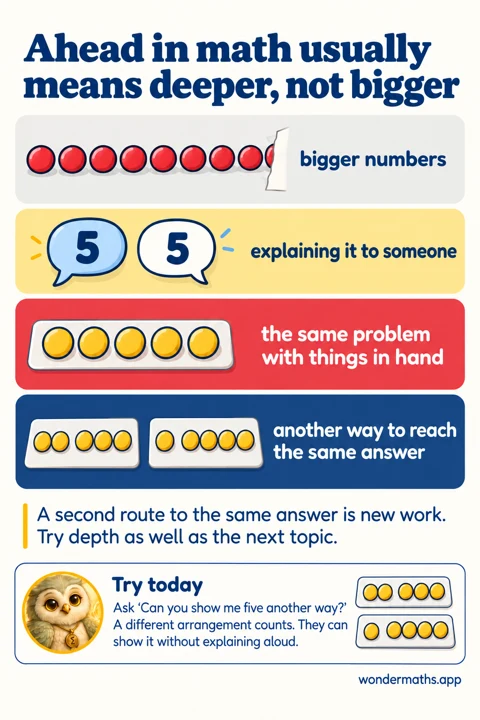
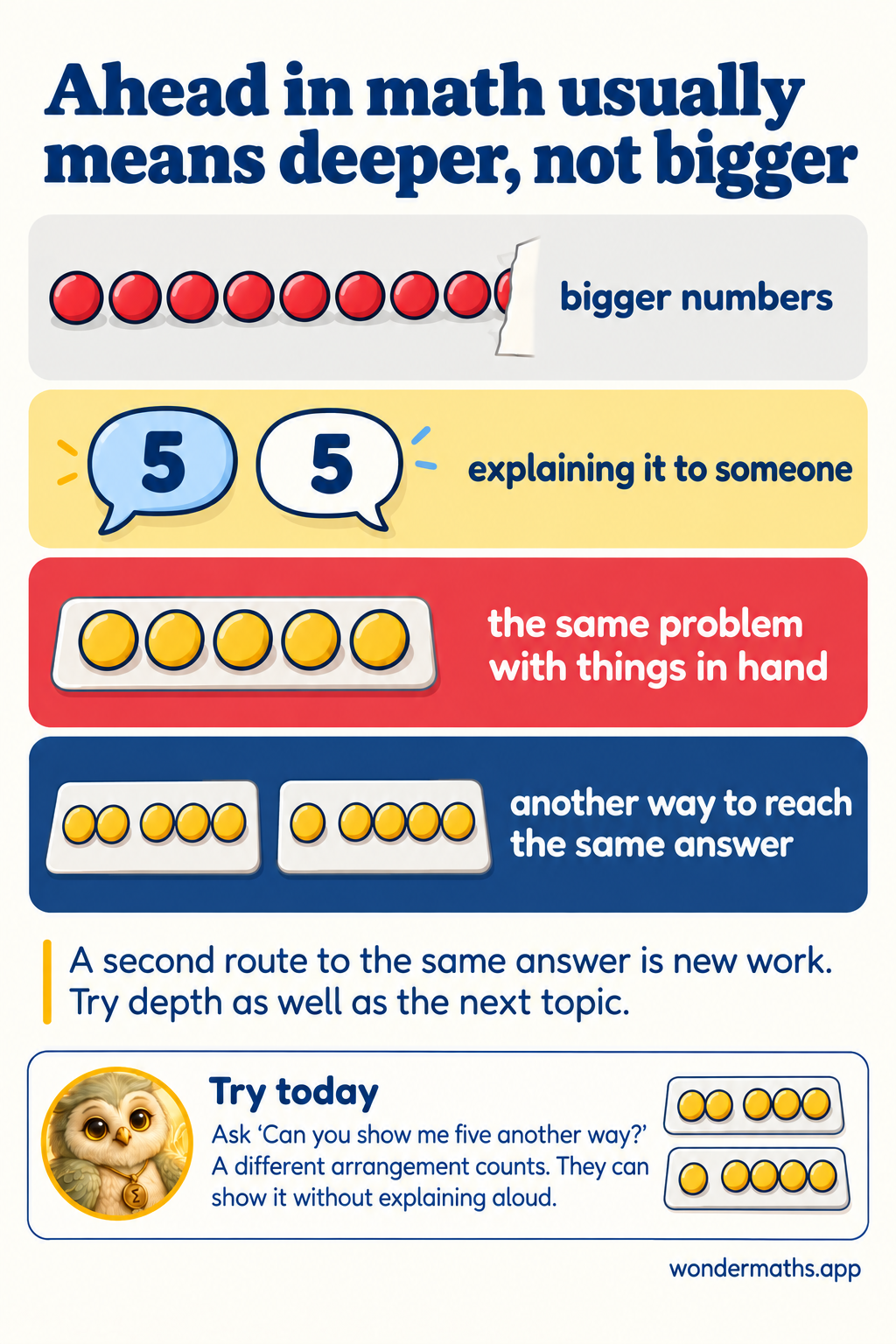
Ahead in math usually means deeper, not bigger
Explore another way to make the same amount.
Read the tips: Ahead in math usually means deeper, not bigger
- bigger numbers
- explaining it to someone
- the same problem with things in hand
- another way to reach the same answer
A second route to the same answer is new work. Try depth as well as the next topic.
Try today
Ask ‘Can you show me five another way?’ A different arrangement counts. They can show it without explaining aloud.
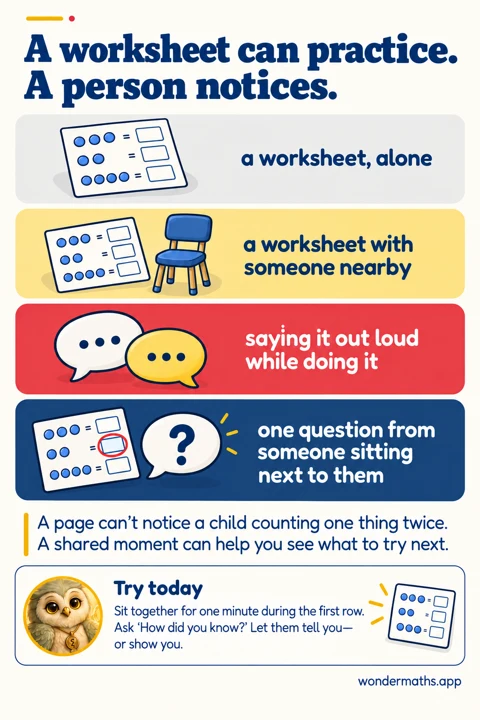
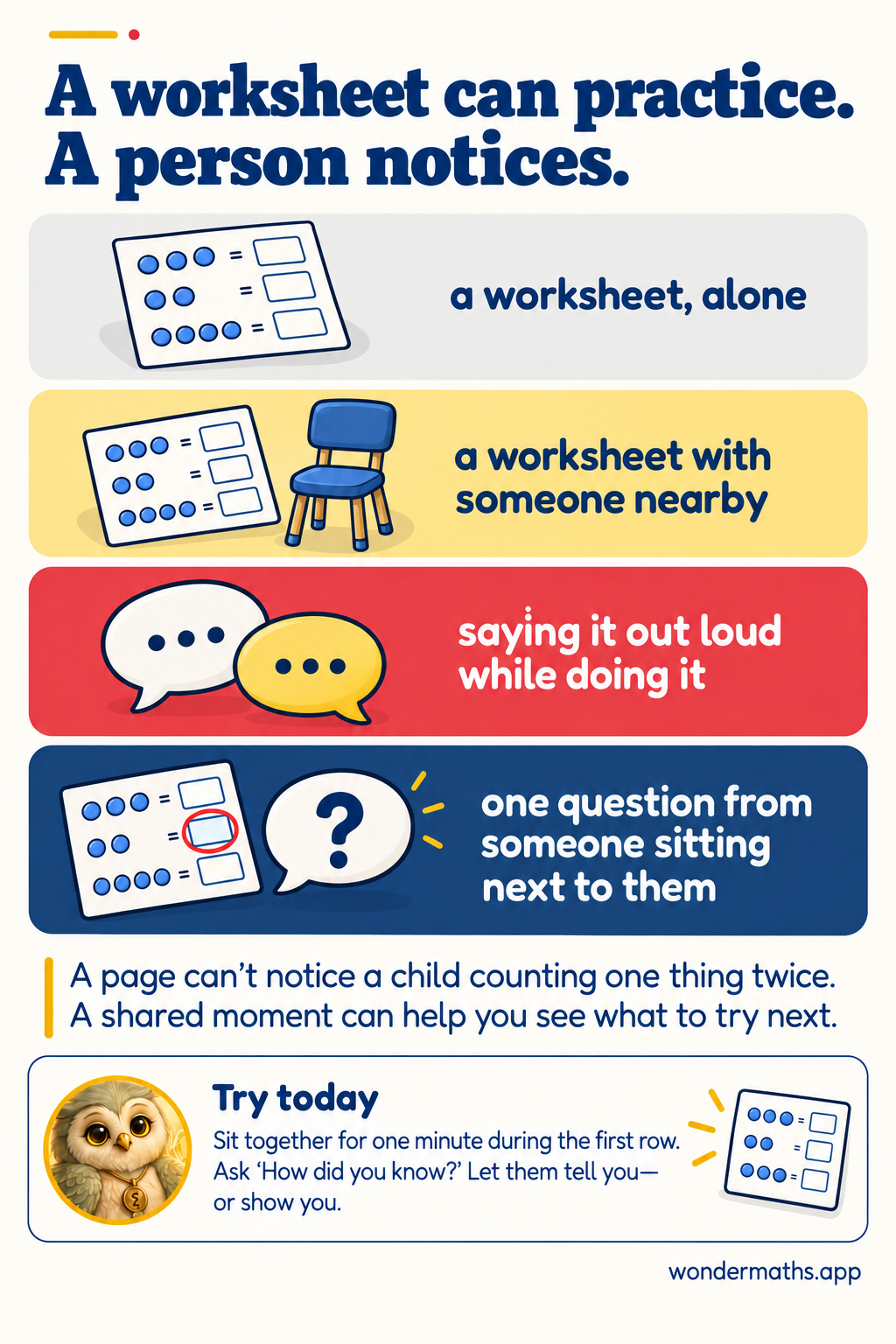
A worksheet can practice. A person notices
One shared minute can reveal the next useful question.
Read the tips: A worksheet can practice. A person notices.
- a worksheet, alone
- a worksheet with someone nearby
- saying it out loud while doing it
- one question from someone sitting next to them
A page can't notice a child counting one thing twice. A shared moment can help you see what to try next.
Try today
Sit together for one minute during the first row. Ask ‘How did you know?’ Let them tell you—or show you.
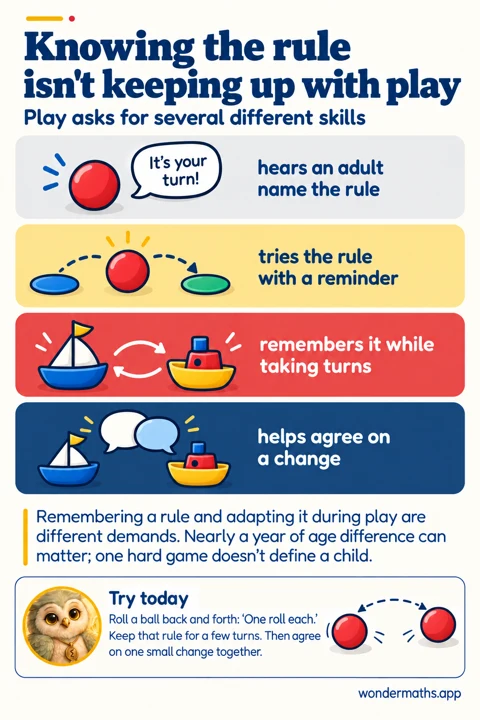
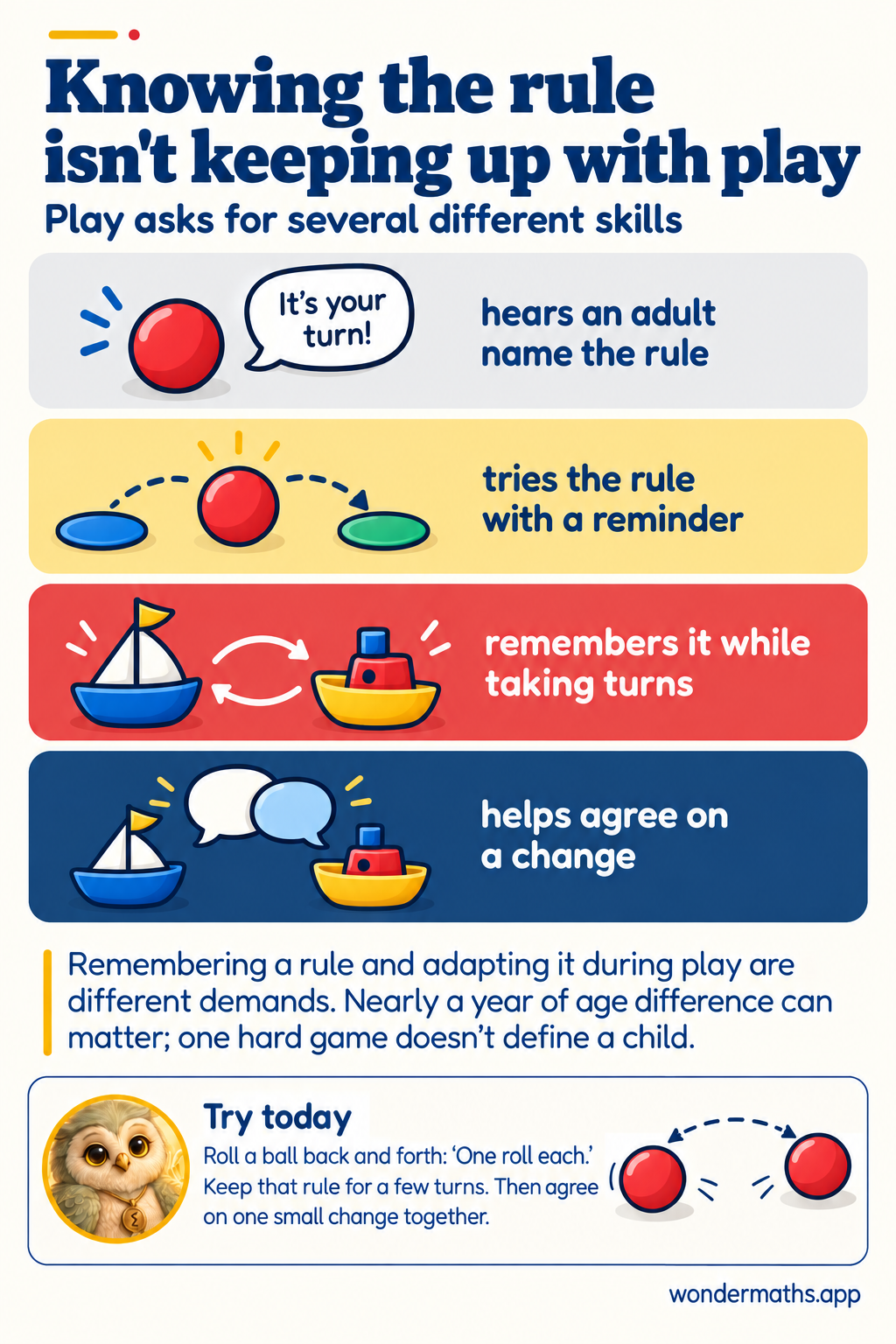
Knowing the rule isn't keeping up with play
Play asks for several different skills.
Read the tips: Knowing the rule isn't keeping up with play
- hears an adult name the rule
- tries the rule with a reminder
- remembers it while taking turns
- helps agree on a change
Remembering a rule and adapting it during play are different demands. Nearly a year of age difference can matter; one hard game doesn't define a child.
Try today
Roll a ball back and forth: ‘One roll each.’ Keep that rule for a few turns. Then agree on one small change together.