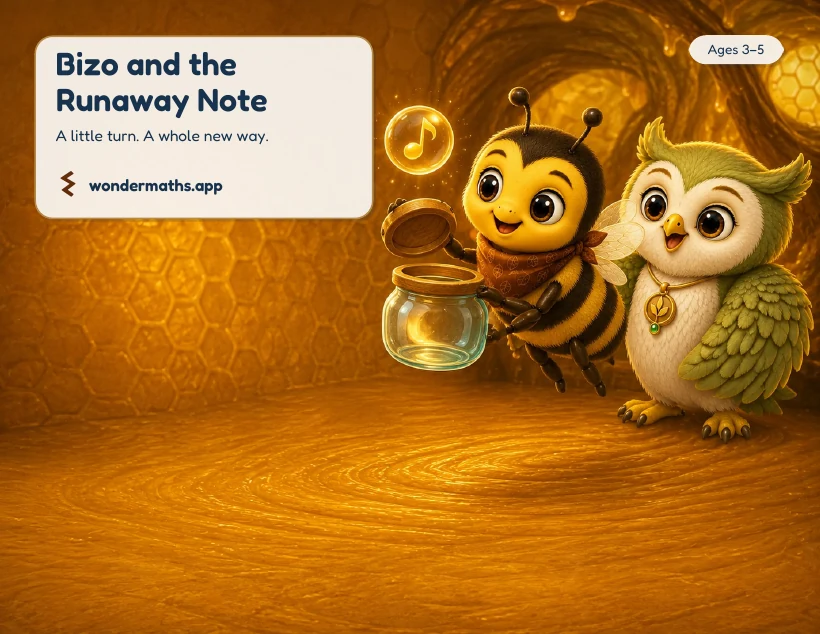
← Forest adventures · Forest
Bizo: Hive Match
Turn Bizo’s tile to find the matching arrangement.
Free adventures and tablet activities. PDF and ZIP downloads marked “email access” require a grown-up’s email. Free sample pages open without email. Newsletter signup is optional and separate.
Ages 3–6 · 5 levels
Matching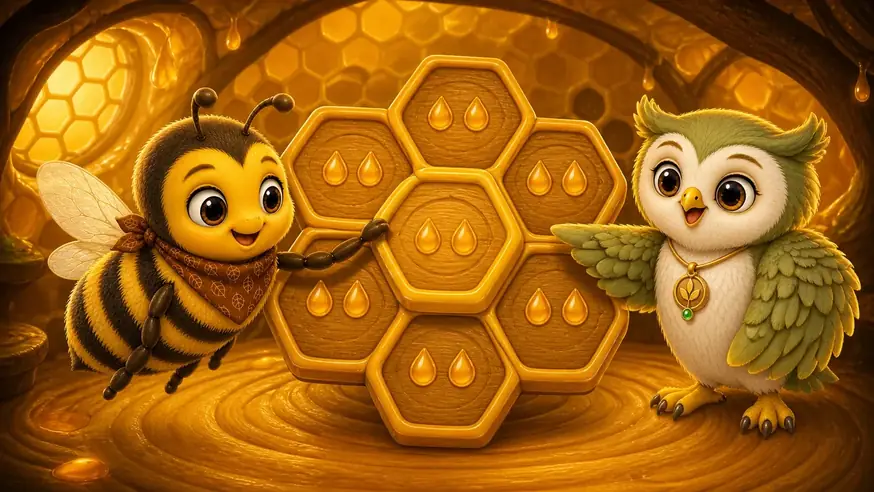 Bizo: Hive Match
Bizo: Hive MatchFind the matching tile
Bring the adventure along
One adventure.
More ways to play
Choose a story, an activity, or a little help. Every download is free.
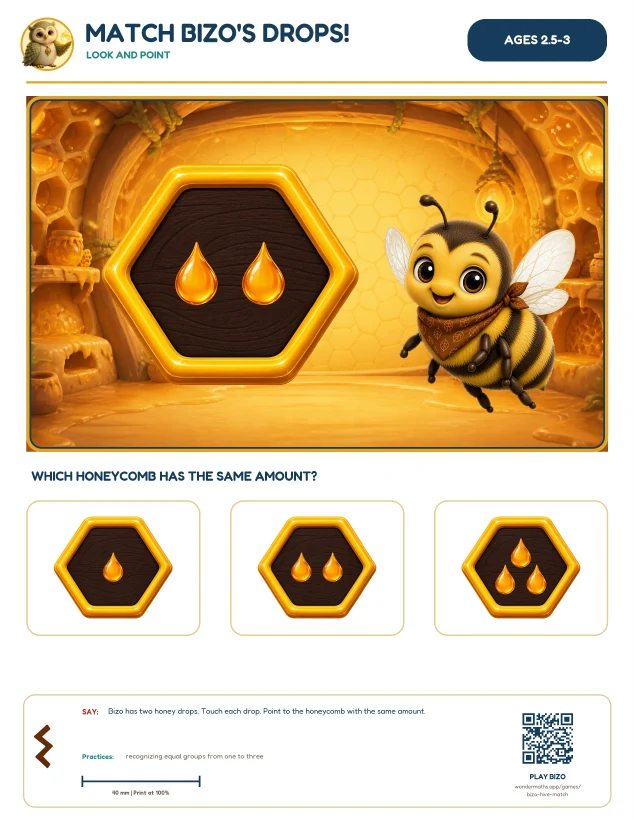
Activity sheets
Download PDF ↓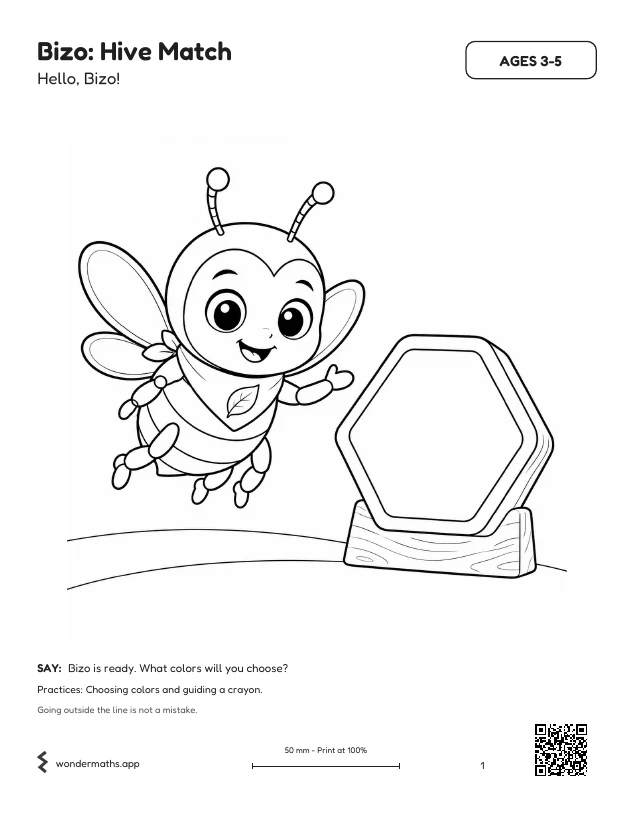
Coloring pages
Download PDF ↓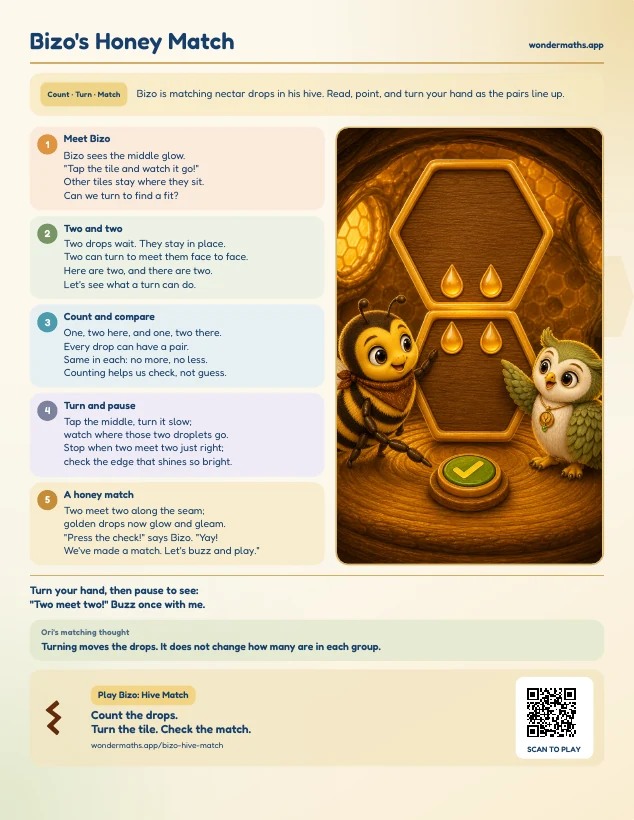
A rhyme to try together
Download PDF ↓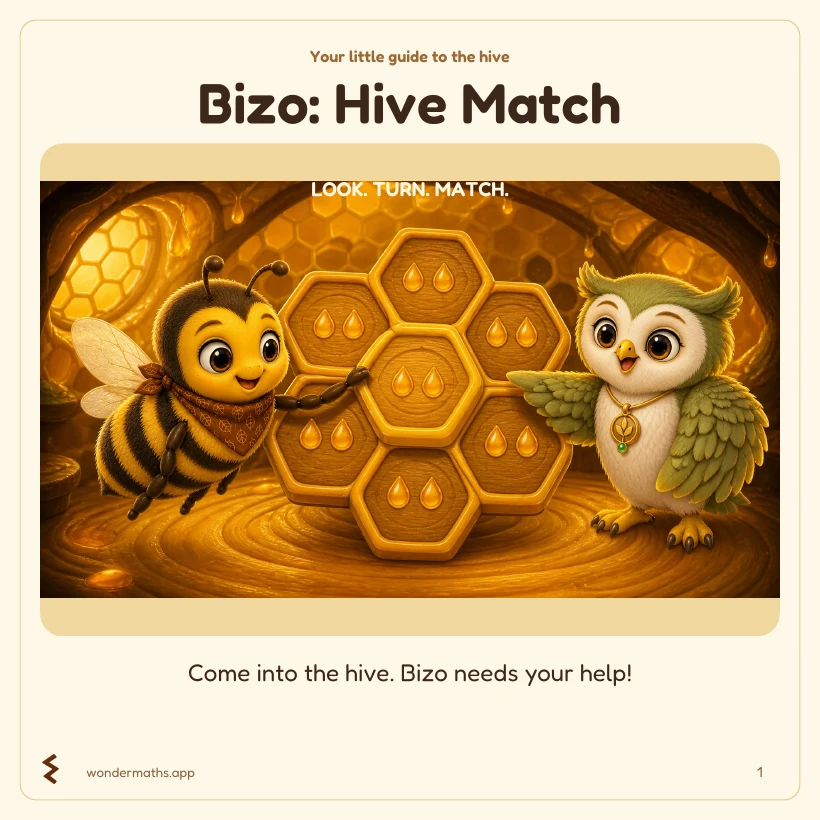
How to play
Download PDF ↓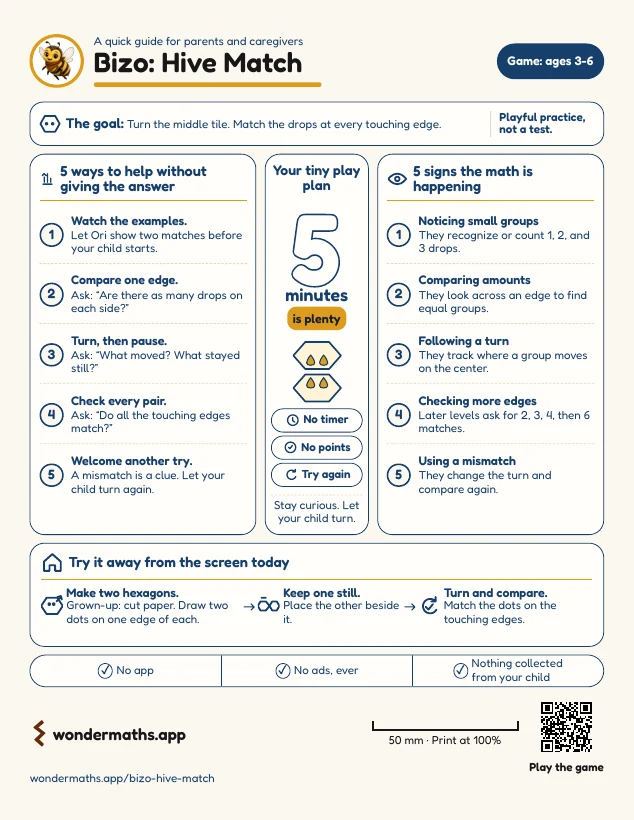
For grown-ups
Download PDF ↓Ages are a starting point. Individual activities may have a different age guide from the adventure.
For the grown-ups
A little room
to explore
Turn Bizo’s tile to find the matching arrangement.
Choose a comfortable starting level and explore together. Check the adventure’s controls and its guides for the ways your child can take part.
Explore the parent hub →Another adventure?
Back to the collection →Help for grown-ups
How to start
Watch the two opening examples. Turn the middle tile until the drops match across every touching edge. Check all required edges before confirming the match.
What your child practices
Comparing equal quantities while mentally tracking a rotation and satisfying several conditions together.
Make it easier or try a challenge
A gentler start
Start with one touching edge. Compare the two groups of drops after each turn.
A little more thinking
Before turning, predict where a chosen group of drops will move. On later levels, check whether a turn that fixes one edge also preserves the other matches.
These are ways to support or extend play together. Your child can point, act, or explain; saying the answer aloud is optional.
Little hints & worksheet answers
These drops match. What happened to the drops at the other touching edge?
For a worksheet, match its picture and age before opening a hint or answer.
Open worksheet answersTry it away from the screen
A grown-up makes two paper hexagons and draws dots beside their edges. Keep one still and turn the other to match the dot groups on the touching edges.