Wondermaths - Let Me Try
Contents


Wondermaths - Let Me Try
A simple guide for parents of children about 4–7
Wondermaths - Let Me Try
A calm reading guide
Read the short page. Look at the picture together.
Choose one Try this idea with things you already have.
Come back to the same number another day.
One idea to carry through the book

Counting to 20 is not the same as understanding each number. Fourteen means one group of ten and four more.
The child says a string of number words.
The child makes 14 as a ten and four.
Skills can grow side by side

These skills may grow side by side. Use the path to choose play—not to grade your child.
A path, not a report card
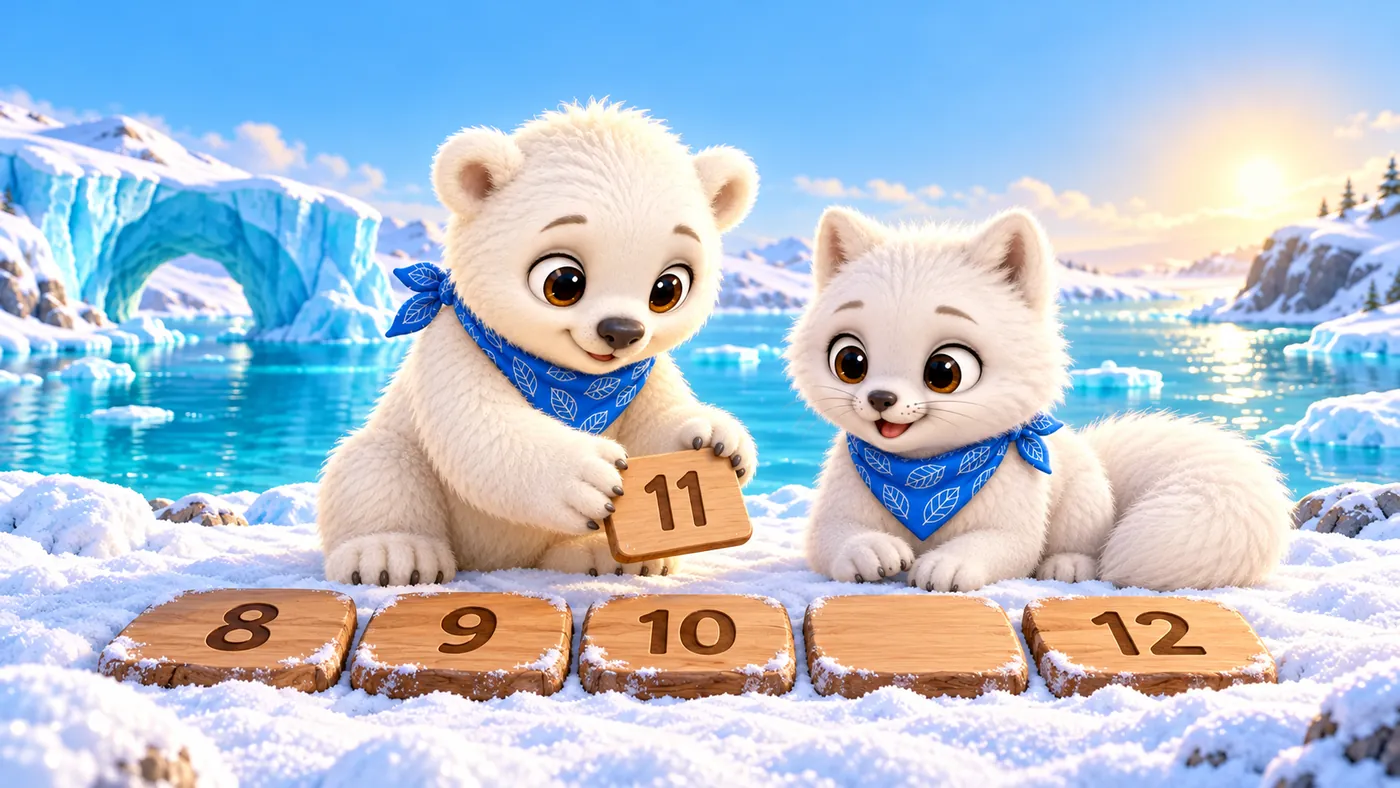
Module 1 of 12

One move. One number.
Each thing gets one number word. Your child may skip a block or count it twice.
Practice 1 of 12

Move five LEGO blocks into a cup, counting each move. Or set out five cups and add one penny to each.
Rushing, or moving the items while your child counts.
Say it
“Move one. Say one number.”
Module 2 of 12

5 altogether
After counting each thing once, the last number tells the whole amount. Your child may count again when asked, “How many?”
Practice 2 of 12
Count five LEGO blocks. Circle the group with your hands and say, “Five altogether.” Later, ask for five Cheerios from a larger serving.
Banning a recount, or judging understanding from one answer.
Say it
“Five altogether. Can you give me five?”
Module 3 of 12
6, however you arrange them
Moving things apart does not change how many there are. Count the coins; dimes are coins, not cents.
Practice 3 of 12

Count six dimes. Spread them out and count again. Then arrange six Cheerios in a row, the same six in a circle, and check.
Adding or removing things, or expecting an answer without a check.
Say it
“Did we add any? Let’s check.”
Module 4 of 12

5 + 2 = 7
A familiar group of five can help your child see the parts inside a larger number. With seven, they may still count from one.
Practice 4 of 12

Show three Cheerios and ask what your child sees. Then hold up five fingers on one hand and two on the other; rebuild the groups with blocks.
A speed contest, or expecting instant recognition of seven.
Say it
“I see five and two more. What do you see?”
Module 5 of 12

Two rows of five
Two rows of five show a full ten and the empty places. Your child may count every object even when only one space is empty.
Practice 5 of 12
Cover the last two spots of a 12-egg carton so two rows of five remain. Fill them with LEGO. Then start with eight filled spaces and add until ten.
Calling twelve spaces a ten, or asking for a quick answer.
Say it
“There are ten spaces. How many more will fill it?”
Module 6 of 12

One group. Ten things.
One package of ten still holds ten separate things. Your child may say “one” for the package but not yet show what is inside.
Practice 6 of 12

Build a tower from ten matching LEGO blocks. Take it apart and join it again. Trade the tower for ten loose blocks, then trade back.
Calling the package one block, or stopping your child from opening it.
Say it
“One group of ten. Ten blocks are still here.”
Module 7 of 12
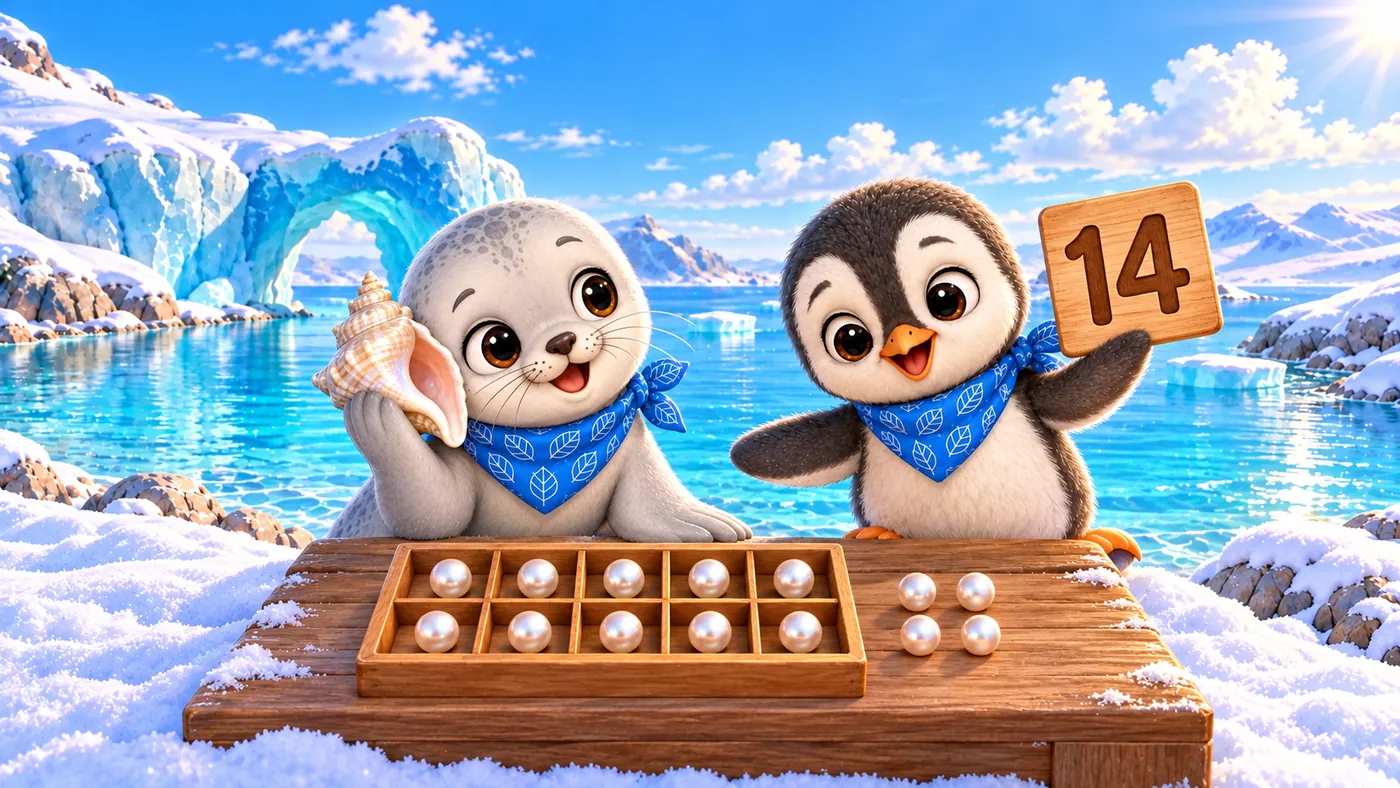
10 + 4 = 14
Numbers from 11 to 19 can be built from one ten and some single things. Your child may know “fourteen” but still count all fourteen blocks.
Practice 7 of 12
Add four loose LEGO blocks to a ten-block tower. Show ten fingers and let your child add four more. Then change the extra number.
Counting the package as one item, or hiding what is inside it.
Say it
“Ten and four more. That’s fourteen.”
Module 8 of 12

14: one ten, four ones
Eleven to nineteen do not say “ten and…” clearly. “Fourteen” starts with “four,” but we write 14.
Practice 8 of 12

Place ten blocks and four loose blocks beside the card 14. Point to the 1 and the 4. Then say “eleven” or “twelve” and let your child build it.
Treating every mix-up as a language problem, or replacing everyday number names.
Say it
“Fourteen: ten and four. Show me the ten.”
Module 9 of 12
5 ... 6, 7
When adding, your child can start with a known number and name only the new things. They may still count everything from the start.
Practice 9 of 12
Count five LEGO blocks. Add two and say, “six, seven.” Or put a token on 8 of a straight board and move it two spaces, naming nine and ten.
Forbidding a start from one, or counting the starting space as the first move.
Say it
“We have five. Six, seven—two more.”
Module 10 of 12
19 + 1 = 20
Twenty is two full groups of ten. Your child may stop at nineteen or keep counting all twenty things one by one.
Practice 10 of 12
Fill two prepared ten-spot cartons. At nineteen, add the final block. Then place cards 18, 19, and 20 in a row and move a block along them.
Requiring counting by tens, or skipping the moment the second ten fills.
Say it
“Nineteen. One more makes twenty.”
Module 11 of 12
14, shown another way
Showing a number in more than one way tells you more than copying one pattern. Your child may know fourteen in a carton but get confused by loose objects.
Practice 11 of 12
Build fourteen with LEGO as ten and four. Rebuild it with pennies. Then let your child draw the groups and match them to card 14.
Changing the number, material, and request all at once.
Say it
“Can you show fourteen another way? Where is the ten?”
Module 12 of 12
Pause. Show. Hand back.
Give your child time. Show one helpful move. Then let them try the next move alone.
Practice 12 of 12
Your child chooses fingers or LEGO to show six; wait and listen. Then swap roles: your child asks you for four things and shows you how to check.
Saying “You already know this,” or finishing every task for your child.
Say it
“Show me your way. We can stop.”
Two quick distinctions
Myth
Fact
Saying number words and making an amount are different skills.
Myth
Fact
A recount alone does not show what a child understands.
Two quick distinctions
Myth
Fact
Fingers can help show an amount and track what is added.
Myth
Fact
A child can copy the layout without yet knowing a package of ten.
Keep observing
Myth
Fact
One answer does not explain why a mix-up happened.
Myth
Fact
Skills may develop in different orders and at different rates.
Keep observing
Myth
Fact
What matters is what the child understands with the tool.
Myth
Fact
Speed alone does not show whether a child can build and explain a number.
Observe the method, not a score
Ask your child to…
Count six LEGO blocks. Notice how they keep track.
Ask your child to…
Give you five Cheerios from a larger serving.
Observe the method, not a score

Ask your child to…
Say how many the same six blocks are after you spread them out.
Ask your child to…
Show seven with fingers or blocks. Ask what parts they see.
Observe the method, not a score
Ask your child to…
Make a group of ten, then open it and talk about the blocks.
Ask your child to…
Show 14 as a ten and four more. Point to the digits in 14.
Quick reminder 1 of 2
Keep the amount steady. Let your child check. Build the ten first.
Move one thing; say one number.
After the last number, say the whole amount.
Spread things out, then check.
Look for five and some more.
Quick reminder 2 of 2
Ten spots: two rows of five.
A package of ten still holds ten.
For 14: one ten and four more.
Help with one move, then wait.
Reference aid - phone reading
Look at these numbers together. Use the US Letter edition for cut-out cards.
Count the large circles. A full frame has two rows of five.
From eight to ten
8 + 2 = 10
Start with eight filled spaces. Ask how many more fill the ten.
A twelve-space carton
12 - 2 = 10
For the small twelve-spot carton, mark or cover the last two spots so two rows of five remain.
Reference deck - page 1 of 5
Reference deck - page 2 of 5
Reference deck - page 3 of 5
Reference deck - page 4 of 5
Reference deck - page 5 of 5
Reference aid - count on
Show ten, then count on to the total.
Reference aid - count on
Show ten, then count on to the total.
Board practice - start
Count each new space after moving. Do not count the start as the first move.
Board practice - finish
At nineteen, one more space reaches twenty. Stop there if a roll goes beyond.
Board rules
Roll, move, and count together.
Use your own die and token. Start on 1. Roll, move one space for each dot on the die, and count the new spaces—not the start. Stop at 20. If you roll beyond 20, stop there.
Plain-language glossary 1 of 3
Plain-language glossary 2 of 3
Plain-language glossary 3 of 3
Bibliography 1 of 2
Sarnecka, B. W., & Carey, S. (2008). How counting represents number: What children must learn and when they learn it.
Ho, C. S.-H., & Fuson, K. C. (1998). Children’s Knowledge of Teen Quantities as Tens and Ones: Comparisons of Chinese, British, and American Kindergartners.
Kullberg, A., et al. (2020). Effects of learning addition and subtraction in preschool by making the first ten numbers and their relations visible with finger patterns.
Bibliography 2 of 2
Laski, E. V., et al. (2015). What Makes Mathematics Manipulatives Effective? Lessons From Cognitive Science and Montessori Education.
Frye, D., et al.; IES/WWC (2013). Teaching Math to Young Children.